Buying Guide
Choosing among the best fruit chef’s knives starts with deciding whether you want a small paring knife or a broader kitchen knife. Fruit preparation includes several different jobs: peeling an apple, coring a pear, trimming a strawberry, slicing a melon, dicing citrus, and cutting fruit alongside vegetables or other ingredients. A 3.5- to 4-inch paring knife gives better control close to the hand. A 5.5- to 8-inch utility, santoku, or chef knife covers larger pieces and more general prep.
Match blade length to the task
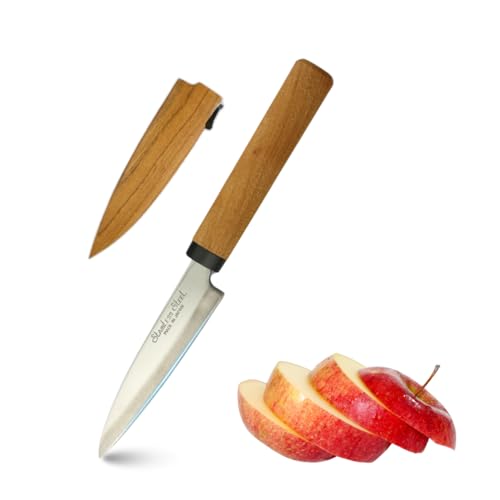
Short blades are the most direct fit for peeling, coring, trimming, and decorative work. The MOSFiATA and JapanBargain models both use 4-inch blades, while the MAD SHARK uses a 3.5-inch blade. These dimensions keep the cutting edge relatively close to the handle and make them suitable for small fruit and detail work. The Chef Craft set goes shorter at 2.5 inches, which may help with delicate shaping but gives up reach.
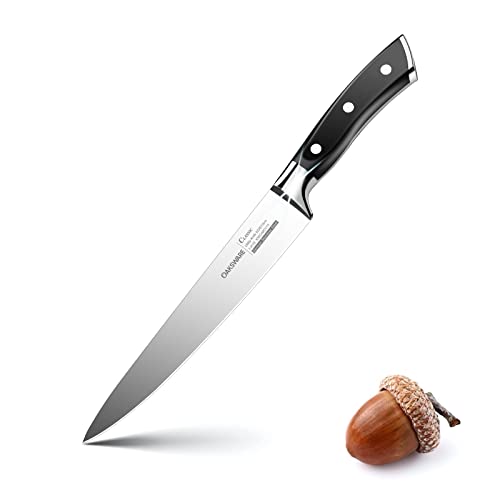
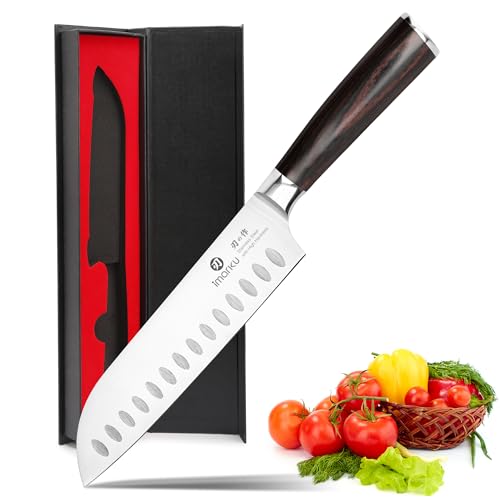
Mid-size blades can be more versatile. OAKSWARE lists a 5.5-inch utility knife and explicitly includes fruit, vegetables, bread, and deboning among its uses. The Messermeister set includes a folding 6-inch chef’s knife, making it a useful middle option for outdoor cooking. A 7-inch santoku such as the imarku model is better suited to larger slicing and dicing motions, while the 8-inch KEEMAKE and imarku chef knife are designed for broader prep surfaces and larger ingredients.
The supplied listings vary considerably in how much technical information they provide. KEEMAKE documents a VG10 core, 67 layers of Damascus steel, a 10-degree edge, and 60±2 HRC hardness. OAKSWARE lists German 1.4116 X50CrMOV15 steel, a 14-16-degree edge per side, and 57+ Rockwell hardness. MOSFiATA gives German EN1.4116 steel, HRC 56+, and a 14-degree edge per side. These details make comparisons more concrete, although they are listing specifications rather than independent test results.
The imarku santoku lists a 15-18-degree edge and Japanese high-carbon stainless steel. The JapanBargain knife identifies a high-carbon stainless blade and Japanese manufacture but does not provide a numeric edge angle. Chef Craft identifies stainless steel and rust resistance but supplies fewer details about hardness or edge geometry. A listing with fewer specifications is not automatically unsuitable; it simply offers less technical information for a specification-based comparison.
Evaluate handle construction and control
Handle design matters when fruit preparation involves repeated peeling or slicing. Full-tang construction is documented for KEEMAKE, MOSFiATA, and OAKSWARE, while the Amazon-style compact choices use other handle constructions. The KEEMAKE and imarku chef knife listings specify pakkawood handles, and OAKSWARE describes a full-tang handle with triple rivets and a bolster. MOSFiATA describes an ergonomic handle and full tang.
Wood handles can offer a traditional feel, as shown by JapanBargain, but the listing does not establish dishwasher suitability. Synthetic handles may be easier to maintain. MAD SHARK and VITUER describe ergonomic handles, and VITUER uses PP plastic. Chef Craft gives color variation but does not provide comparable handle construction details. When choosing, prioritize a secure grip and a size that feels manageable rather than selecting by material name alone.
Decide how much versatility you need
A dedicated paring knife is efficient for peeling and detail work but will not replace a chef knife for large fruit. A broad blade can handle fruit while also covering vegetables, herbs, meat, or bread when the listing supports those uses. KEEMAKE is described as a versatile kiritsuke-style chef knife for vegetables, fruit, meat, and fish. The imarku santoku is listed for meat, vegetables, fruits, and bread, while the imarku gyutou is described for slicing, dicing, chopping, and cutting meat from bones.
The OAKSWARE utility knife is a useful compromise for shoppers who do not want either extreme. Its 5.5-inch length is longer than a typical paring knife but shorter than a full-size chef knife. The Messermeister set takes a different approach by combining a folding chef’s knife with other outdoor tools. That makes it relevant for camping or travel, but unnecessary if the goal is simply one kitchen knife.
Plan for storage and cleaning
Blade covers and sheaths are practical for compact knives. MOSFiATA includes a blade cover, JapanBargain includes a sheath, and VITUER supplies four sheaths for its four knives. KEEMAKE includes a freestanding ash wood sheath, while the Messermeister set includes a waxed canvas case. These features can help protect edges and make transport easier, but they do not replace careful knife handling.
Cleaning instructions differ. MAD SHARK describes its knife as dishwasher safe. OAKSWARE advises rinsing and drying promptly. Follow the individual listing’s care direction, especially for carbon-containing steels and wooden or wood-based handles. Storage should keep the edge separated from loose utensils and place the knife where its size and folding mechanism, if any, can be managed safely.
How the rankings were calculated
The editorial criteria emphasize fruit-prep precision, blade material and edge details, handling and control, versatility, and storage or portability. Each selected product receives a score from 0.0 to 10.0 on every criterion, with the published weights totaling 100. The rankings use only supplied listing evidence. They do not incorporate customer opinions, star ratings, current listing information, purchase activity, marketplace badges, or hands-on testing.
Final Recommendation
KEEMAKE 8-Inch Damascus Gyuto Chef Knife ranks first overall in this specification-based comparison under the published weighted criteria.
KEEMAKE 8-Inch Damascus Gyuto Chef Knife is the first overall specification-based choice among the best fruit chef’s knives. Its VG10 core, 67-layer Damascus construction, listed 10-degree edge, full tang, balanced pakkawood handle, and ash wood sheath give it the most specification-aligned documented combination of precision, materials, versatility, and storage.
For a portable setup, the Messermeister Adventure Chef Summit Set is the most complete option because it combines a folding chef’s knife with a case, board, and additional tools. For a dedicated small fruit knife, MOSFiATA offers a strong balance of 4-inch control, a documented 14-degree-per-side edge, full-tang construction, and a cover. OAKSWARE is the practical middle-ground pick for shoppers who want one compact knife for fruit and other kitchen tasks.
The top fruit chef’s knives are not identical in purpose. Choose KEEMAKE or an imarku chef knife for broad slicing, MOSFiATA or JapanBargain for peeling and coring, and VITUER or Chef Craft when multiple short knives are more useful than one premium blade. These recommendations reflect listed specifications, not independent performance testing.
Frequently Asked Questions
Among the best fruit chef’s knives, what size knife is best for fruit?
A 3.5- to 4-inch paring knife is generally the most focused format for peeling, coring, trimming, and small fruit. The MOSFiATA, JapanBargain, and MAD SHARK listings document this type of use. A 5.5- to 8-inch knife is more suitable for slicing large fruit or combining fruit preparation with general cooking tasks.
Are chef knives or paring knives better for fruit?
It depends on the preparation. Paring knives offer closer control for small fruit and detail work, while chef, gyuto, santoku, and utility knives provide more blade length for larger pieces. The best fruit chef’s knives category therefore includes both formats rather than treating one shape as universally better.
Does a sharper listed edge make a knife better?
A numeric edge angle can make specifications easier to compare, but it is not a hands-on performance result. KEEMAKE lists a 10-degree edge, MOSFiATA lists 14 degrees per side, and OAKSWARE lists 14-16 degrees per side. Those details help describe the products, but actual cutting results can also depend on maintenance, technique, and the condition of the blade.
Is a folding fruit knife useful for travel?
A folding design can be useful when portability is important. The Messermeister set includes a folding 6-inch chef’s knife and case, although it is a broader outdoor kit rather than a simple paring knife. The supplied selections also show that sheaths and covers can support travel or drawer storage for fixed-blade models.
Should fruit knives go in the dishwasher?
Follow the specific product instructions. MAD SHARK is listed as dishwasher safe, while VITUER recommends hand washing and the imarku listings do not establish a universal dishwasher policy. When the evidence is limited, hand washing and prompt drying are the cautious approach.