Buying Guide
Choosing among the best gluten-free lutein supplements requires more than confirming that the word “gluten-free” appears in a product title. The useful comparison points are the strength of the dietary declaration, the amounts of lutein and zeaxanthin, the form of the capsule, additional ingredients, and the amount of manufacturing information supplied.
Confirm the gluten-free evidence
Look first for a direct gluten-free statement in the title or features. The most specification-aligned documentation in this comparison includes Country Life’s certified gluten-free wording, Garden of Life’s NSF Certified Gluten-Free description, and Bluebonnet’s explicit gluten-free and dairy-free declaration. Sports Research, Nutricost, Doctor’s Best, VitaCosmoX, Micro Ingredients, Life Extension, and BulkSupplements also identify their listed products as gluten-free.
A gluten-free declaration does not answer every dietary question. Bluebonnet gives the broadest exclusion list in the supplied evidence, including wheat, soy, dairy, nuts, sesame, rice, and other ingredients. VitaCosmoX identifies gluten, soy, and dairy exclusions, while Country Life lists wheat, milk, yeast, and corn exclusions. If cross-contact or a particular allergen is important to you, check the current package and manufacturer information rather than relying on a general category label.
Compare lutein and zeaxanthin amounts
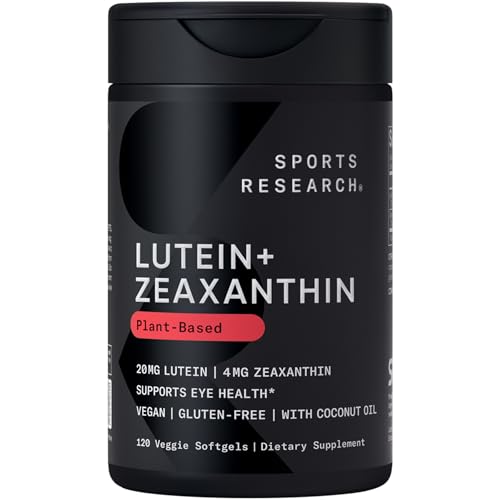
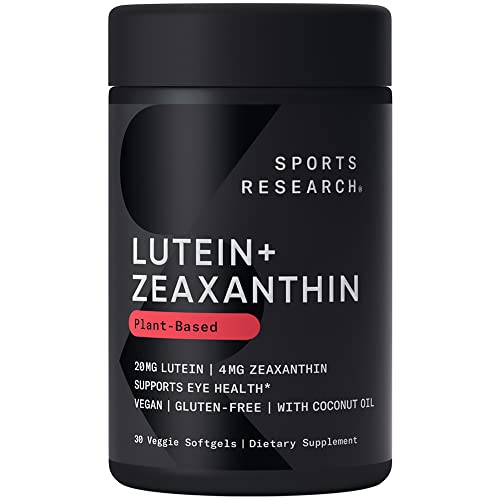
The central specification is how much of each carotenoid appears per serving. Sports Research, Doctor’s Best, VitaCosmoX, and Nutricost each document a 20 mg lutein and 4 mg zeaxanthin combination. Bluebonnet lists 12 mg of lutein and 4 mg of zeaxanthin. BulkSupplements lists 8.8 mg of lutein and 0.2 mg of zeaxanthin.
Micro Ingredients lists 40 mg of lutein and 1,600 mcg of zeaxanthin per serving, along with other ingredients. These amounts should not be compared without checking the serving definition: some products use one softgel, while others may define a serving differently. VitaCosmoX’s supplied evidence contains a serving-description inconsistency, so its current label deserves particular attention.
Some formulas do not provide a complete milligram breakdown in the supplied listing. Life Extension identifies lutein, zeaxanthin, and meso-zeaxanthin but does not state a simple lutein amount in the evidence here. Garden of Life identifies lutein and zeaxanthin without listing their amounts. Country Life states 20 mg of lutein but not the zeaxanthin amount. Those products can still be considered, but they are less directly comparable on dose.
A focused formula centers on lutein and zeaxanthin. Doctor’s Best, Nutricost, Country Life, and BulkSupplements fit that simpler pattern based on the supplied descriptions. This design may be preferable when you want fewer named ingredients and an easier label comparison.
Expanded formulas add other components. Life Extension includes saffron, meso-zeaxanthin, and phospholipids. Micro Ingredients combines carotenoids with omega-3 fatty acids, phospholipids, and astaxanthin. Garden of Life adds black currant, bilberry, sunflower oil, and safflower oil. Sports Research includes organic coconut oil alongside its two carotenoids.
Additional ingredients are not automatically better or worse. They change the dietary and formulation profile. Micro Ingredients uses krill-derived omega-3s, which may not suit people avoiding shellfish or animal-derived ingredients. Garden of Life and Sports Research document vegan-friendly designs, while Bluebonnet specifies vegetarian softgels. Match the formula to your own ingredient requirements.
Consider capsule material and routine fit
Daily directions and capsule construction can make a practical difference. Sports Research, Doctor’s Best, and VitaCosmoX document one-capsule daily formats in the supplied evidence. Garden of Life also lists one vegan softgel daily and adds a berry flavor. BulkSupplements lists one softgel daily, while its separate 40 mg capsule product requires two capsules per serving.
The products use different formats, including softgels, plantgels, and vegan capsules. A plant-based capsule may be important to vegan shoppers, while a softgel may be the preferred format for others. Do not infer capsule ingredients when the listing does not state them. For example, the evidence identifies Sports Research’s plantgel and VitaCosmoX’s vegetable cellulose capsule, but it does not provide equivalent capsule-material details for every product.
Review quality and transparency statements
Quality information is useful when it is specific. Sports Research and Micro Ingredients mention third-party testing and cGMP-compliant manufacturing. Nutricost cites third-party testing by independent ISO-accredited laboratories and an NSF-certified, GMP-compliant, FDA-registered facility. BulkSupplements describes cGMP manufacturing and repeated third-party testing. VitaCosmoX identifies a GMP-certified US facility and third-party testing.
Life Extension states that a Certificate of Analysis is available for every product it produces, while Bluebonnet provides detailed ingredient-source information for its carotenoids. These statements describe supplied manufacturing or documentation features; they are not independent verification of product performance. Read them alongside the current label and any available certificate or testing information.
Final Recommendation
Sports Research Lutein + Zeaxanthin ranks first overall in this specification-based comparison under the published weighted criteria.
Sports Research Lutein + Zeaxanthin is the first overall specification-based choice among these best gluten-free lutein supplements because it combines a clear 20 mg/4 mg carotenoid profile, one-a-day plantgel format, organic coconut oil, vegan-friendly construction, and documented quality testing. The top gluten-free lutein supplements differ considerably, however. Choose Bluebonnet for extensive allergen exclusions, Life Extension for a phospholipid-assisted multi-carotenoid design, Micro Ingredients for its detailed combination formula, or Garden of Life for a berry-flavored vegan softgel. Nutricost and Doctor’s Best offer straightforward 20 mg/4 mg options, while Country Life emphasizes certified gluten-free status. BulkSupplements is the simpler lower-dose alternative when its stated amounts fit your needs.
These rankings are based on supplied public listing specifications, not hands-on testing, clinical assessment, or customer opinion. Confirm the current package directions, ingredient list, allergen statement, and serving size before use. If you have an eye condition, take medication, are pregnant, or are managing a restricted diet, discuss the choice with a qualified healthcare professional.
Frequently Asked Questions
What should I check first in the best gluten-free lutein supplements?
Start with the product’s current gluten-free statement and then check the complete ingredient and allergen information. A certified claim, such as the one listed for Country Life or Garden of Life, provides a different type of documentation from a general title statement. Also confirm the serving size and whether the product contains dairy, soy, shellfish-derived ingredients, or animal-derived components if those exclusions matter to you.
No. A lutein-only product does not provide the same listed carotenoid profile as a formula that includes both lutein and zeaxanthin. In this comparison, Sports Research, Nutricost, Doctor’s Best, VitaCosmoX, and Bluebonnet state amounts for both carotenoids. Country Life states a lutein amount but does not provide the zeaxanthin amount in the supplied evidence, so its label should be checked for a precise comparison.
Are vegan capsules necessary for a gluten-free supplement?
No. Gluten-free status and vegan status describe different attributes. Sports Research and VitaCosmoX document vegan or plant-based capsule features, and Garden of Life lists vegan softgels. Other selected products document gluten-free status without establishing that they are vegan. If you need both characteristics, look for both statements rather than assuming one from the other.
Why do some products include saffron, oils, or omega-3 ingredients?
Those ingredients create a broader formula design rather than a basic two-carotenoid supplement. Life Extension includes saffron and phospholipids, Sports Research includes organic coconut oil, Garden of Life includes botanical and oil ingredients, and Micro Ingredients includes omega-3s, phospholipids, and astaxanthin. They may affect dietary suitability and label complexity, so compare the complete formula with your preferences.
Should I choose the highest listed dose?
Not necessarily. A higher listed amount is only one specification and does not establish that a product is appropriate for every person. Compare the full carotenoid profile, serving directions, capsule type, allergen information, and supporting ingredients. The evidence also uses different serving definitions, so verify whether an amount applies to one capsule or a multi-capsule serving before drawing conclusions.