Buying Guide
This guide compares the best granule pool chlorine using documented available chlorine strength, chemistry profile and stabilization, dissolution and residue behavior, surface and system compatibility, package size and coverage scope, and algicide and clarifier scope.
How Granule Pool Chlorine Works
Granular chlorine dissolves directly into pool or spa water to release hypochlorous acid, the active sanitizer that oxidizes bacteria, destroys organic contaminants, and controls algae. Because granules are measured by weight and broadcast or pre-dissolved, they allow precise control of free chlorine levels, which is helpful for both weekly maintenance and one-time shock treatments. Choosing the best granule pool chlorine starts with understanding which chemistry fits your water.
Dichlor Versus Cal-Hypo: Pick the Right Chemistry
Sodium dichlor (often labeled as sodium dichloro-s-triazinetrione) contains cyanuric acid, which shields chlorine from sunlight and makes it well suited to outdoor pools. Calcium hypochlorite (cal-hypo) is unstabilized and adds calcium to the water instead of CYA, making it a good choice when you want to avoid stabilizer buildup or when opening a pool each season. Several options here, including the In The Swim Sodium Dichlor Chlorine Shock Granules and the Puri Tech Sodium Dichlor Chlorine Shock Granules, show the stabilized side, while the In The Swim Cal-Hypo Pool Shock and the POOL SHARK 68% Calcium Hypochlorite Pool Shock represent the unstabilized side.
Read the Available Chlorine Percentage
The available chlorine number tells you how much active chlorine is in the product by weight. Cal-hypo products in this list run up to 68%, while dichlor products typically sit around 55% to 56%. Higher concentrations mean smaller doses for the same chlorine lift, which is helpful for larger pools and for treating heavy algae events after rain or heavy use.
Watch for Calcium and Residue
Cal-hypo granules add calcium to the water each time you dose, which can lead to scaling on tile, heaters, and salt cells over time. Dichlor granules are calcium-free and often recommended for hard-water regions.
Vinyl liners, painted pools, and fiberglass shells all react differently to concentrated chlorine. Most cal-hypo labels recommend pre-dissolving before application to avoid bleaching or fading. The Clorox Pool&Spa Shock XtraBlue Plus Granular explicitly lists compatibility with vinyl, plaster, fiberglass, and tile, while the Poolife Active Cleaning Granules Chlorinator is documented for vinyl-lined and painted pools when broadcast evenly.
Match Package Size to Water Volume
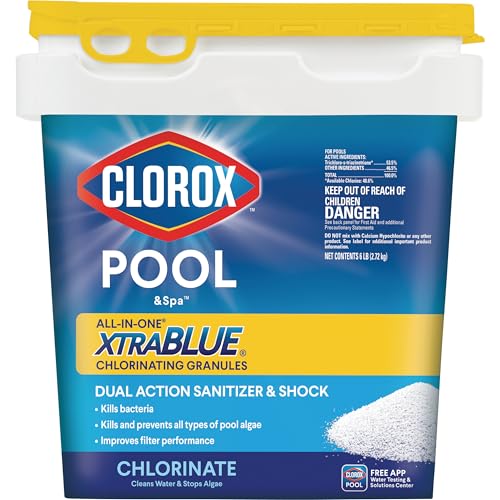
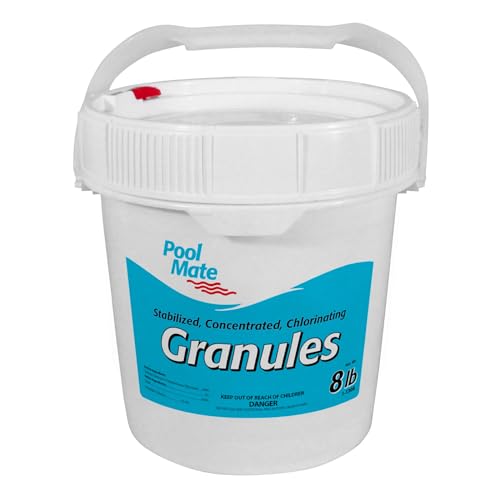
A 5-pound tub is reasonable for a small spa or hot tub, while a 25-pound bucket is geared toward full-size residential pools or seasonal maintenance. Mid-range sizes such as the 6-pound Clorox Pool&Spa All-in-One XtraBlue Chlorinating Granules or the 8-pound Pool Mate Premium Pool Chlorine Granules fit typical backyard pool schedules without leaving heavy buckets to store.
Look for Multi-Function Granules
Some products combine sanitizer, algaecide, clarifier, and stain-and-scale prevention in one formula. The HTH 22017R Chlorine Granules Ultra documents all-in-one functionality including built-in clarification and scale prevention, while the Clorox Pool&Spa All-in-One XtraBlue Chlorinating Granules markets bacteria killing, algae control, and filter performance in one tub. These blends can simplify routine care when you want fewer separate bottles on the shelf.
Keep an Eye on Stabilizer Buildup
Because dichlor adds cyanuric acid with every dose, pools using dichlor exclusively may see CYA climb over a season. Testing CYA and partially draining and refilling may be required if levels get too high. Cal-hypo products such as the Poolife Active Cleaning Granules Chlorinator avoid this issue but require balancing calcium hardness instead.
Final Recommendation
Clorox Pool&Spa Shock XtraBlue Plus Granular, 12-Pack ranks first overall in this specification-based comparison under the published weighted criteria.
The Clorox Pool&Spa All-in-One XtraBlue Chlorinating Granules is the first overall specification-based choice among the best granule pool chlorine options because it combines stabilized chlorine, multi-algae coverage, and clarifier support in a documented routine-friendly format. For shoppers comparing the top granule pool chlorine picks, the Clorox Pool&Spa Shock XtraBlue Plus Granular is the most specification-aligned fast-dissolving runner-up, and the POOL SHARK 68% Calcium Hypochlorite Pool Shock is the leading unstabilized option for owners who want maximum available chlorine without adding cyanuric acid.
Frequently Asked Questions
What is the best granule pool chlorine for an outdoor residential pool?
Outdoor pools benefit from stabilized dichlor products such as the Clorox Pool&Spa All-in-One XtraBlue Chlorinating Granules or the In The Swim Sodium Dichlor Chlorine Shock Granules, which resist sunlight loss and keep residual chlorine active longer.
Should I use cal-hypo or dichlor granules?
Use cal-hypo when you want to avoid cyanuric acid buildup or when opening a pool for the season, and use dichlor when you want stabilized residual protection in sunny outdoor conditions. Several top granule pool chlorine options in this guide represent each chemistry.
How much granular chlorine do I need for a typical backyard pool?
Most products in this guide recommend around 1 pound per 10,000 to 12,000 gallons for weekly shocking, with smaller daily doses of roughly 3 ounces per 10,000 gallons for routine chlorination. Always confirm against the specific product label before dosing.
Can I use granular chlorine in a vinyl liner pool?
Yes, but pre-dissolve cal-hypo granules or broadcast dichlor evenly to avoid concentrated bleach spots. Products such as the Clorox Pool&Spa Shock XtraBlue Plus Granular list vinyl compatibility, and the Poolife Active Cleaning Granules Chlorinator notes safe use on vinyl-lined and painted pools.
Are granular chlorine products safe for saltwater pools and hot tubs?
Several options here, including the HTH 22017R Chlorine Granules Ultra and the POOL SHARK 68% Calcium Hypochlorite Pool Shock, list saltwater pool and spa compatibility. Hot tubs benefit from smaller containers such as the Eeziblue Dichlor Pool Shock Sodium DiChlor Granules for easier handling.