Buying Guide
This guide compares the best graphite golf club drivers using documented face technology and ball speed engineering, forgiveness and moi design, graphite shaft weight and swing profile, adjustability and loft range, head construction and materials, and tournament conformance and build quality.
Why Graphite Shafts Change the Equation for Drivers
Graphite shafts weigh far less than steel, which lets a driver swing faster with the same effort and helps moderate swing speeds reach a higher launch window. Lower total swing weight also reduces strain through the hands and wrists, which is why senior and women’s graphite drivers are typically lighter than their stiff counterparts. Even within a single brand family, the loft and flex combination can vary widely, so the shaft and head choice should be considered together rather than separately.
How to Read the Specifications in This Guide
Every product below lists an explicit loft, a flex designation, and a head construction note. Look first at the loft range, since 9° heads suit faster swingers seeking a lower spin window while 10.5° to 12° heads suit moderate swingers seeking higher launch. Next, identify the head volume: 460cc is the USGA maximum and is common across most conforming drivers, while 515cc to 520cc heads are non-conforming designs built for recreational distance.
Forgiveness and MOI, Explained
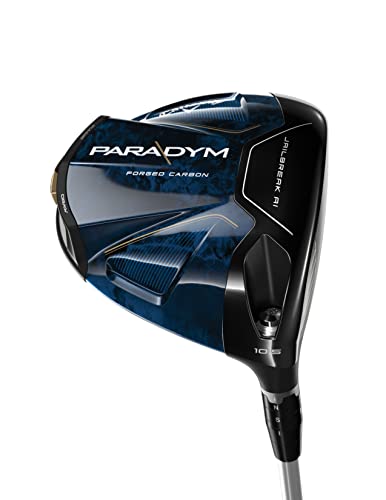
Moment of inertia, or MOI, describes how resistant the head is to twisting on off-center strikes. Higher MOI heads, such as 460cc or 520cc designs with rear or perimeter weighting, keep the ball closer to your intended line even when contact drifts toward the heel or toe. The Callaway Paradym, Callaway Mavrik 22, Cleveland HiBore XL Lite, and Autopilot A14 each describe specific weighting strategies in their supplied evidence, including perimeter weighting, corner weighting, and draw-biased weighting. Comparing those notes side by side is a useful way to decide which forgiveness profile matches the misses you actually hit on the course.
Face Technology and Ball Speed
Ball speed on a driver is driven by how thin and flexible the face is at impact, and how the head redistributes that energy across off-center hits. Premium designs in this guide, including the TaylorMade SIM 2 MAX with its Speed Injected Twist Face and Thru-Slot Speed Pocket, and the Callaway Paradym and Mavrik families with their respective face and crown technologies, document multiple layers of face engineering. When comparing these designs, focus on whether the manufacturer documents face flex, a corrective curvature pattern, or an aerodynamically shaped head, since each affects speed and launch differently.
Head Construction and Materials
Titanium and beta-titanium faces appear in premium and recreational distance drivers, while 6061 aluminum alloy appears in many oversized recreational heads. The TaylorMade SIM 2 MAX documents a layered build of aluminum, carbon sole, carbon crown, and milled back cup face, while the Cobra 2024 Fly-XL driver documents a titanium head with heel-biased weighting. Choose construction based on whether you prioritize maximum face speed, maximum head size, or a particular material profile.
Shaft Weight, Flex, and Swing Profile
Shaft weight and flex together determine launch and feel. Senior flex and ladies flex shafts are typically lighter still and launch higher, which is why those builds are paired with 10.5° to 12.5° lofts in this guide. When in doubt, match a lighter shaft with a higher loft and a heavier shaft with a lower loft.
Adjustability and Fitting Range
Several drivers in this guide document adjustable features, including the Cleveland HiBore XL Lite with its 1.5° hosel sleeve for loft, face, and lie angle changes, and the Callaway Paradym family with adjustable perimeter weighting. If you plan to use a launch monitor or club fitter, prefer a head with documented adjustability so loft and lie can be tuned after the swing is measured.
Most drivers in this guide are USGA-conforming at 460cc, including the Callaway Paradym, Callaway Mavrik 22, TaylorMade SIM 2 MAX, Cleveland HiBore XL Lite, Cobra 2024 Fly-XL, Powerbilt TPS Blackout Max, and Autopilot A14. If you plan to play in sanctioned events, choose a conforming head; if you only play casual rounds and want maximum forgiveness, a non-conforming head can still be a fun option.
Final Recommendation
TaylorMade SIM 2 MAX Driver (10.5°, Graphite Regular) ranks first overall in this specification-based comparison under the published weighted criteria.
The TaylorMade SIM 2 MAX Driver is the first overall specification-based choice among the best graphite golf club drivers in this guide, combining a documented Speed Injected Twist Face, Thru-Slot Speed Pocket, full carbon sole and crown, and a Split Mass Weighting design into a single head. Buyers focused on top graphite golf club drivers with adjustable features should put the Cleveland HiBore XL Lite and the Callaway Paradym models high on the list, while shoppers who want maximum-size forgiveness should compare the Powerbilt TPS Blackout Max, Autopilot A14, and Juggernaut designs. The Callaway Mavrik 22 stands out for ladies’ flex builds, and the Cobra 2024 Fly-XL is the right pick when a complete-set configuration is preferred over a standalone driver.
Frequently Asked Questions
What is the best graphite golf club driver for moderate swing speeds?
The Callaway Paradym Driver also fits this profile with its high-MOI shape and adjustable perimeter weighting.
Which graphite driver in this guide has the largest head volume?
The Juggernaut is close behind at 515cc, while most other conforming designs sit at 460cc.
Are the best graphite golf club drivers in this guide legal for tournament play?
Most of the best graphite golf club drivers in this guide, including the TaylorMade SIM 2 MAX, Callaway Paradym, Callaway Mavrik 22, Cleveland HiBore XL Lite, Cobra 2024 Fly-XL, Powerbilt TPS Blackout Max, and Autopilot A14, are listed as USGA conforming.
How do I choose between 9°, 10.5°, and 12° lofts?
Lower lofts such as 9° suit faster swingers who already launch the ball high and want to control spin. Mid lofts at 10.5° suit a wide range of average swing speeds, while 12° and higher lofts help moderate swingers, seniors, and many women golfers reach an optimal launch window. Matching the loft to your typical launch is more effective than picking the lowest available loft.
Do any of these graphite drivers offer adjustability?
Yes. The Cleveland HiBore XL Lite documents a 1.5° hosel sleeve for loft, face, and lie angle changes, and the Callaway Paradym family documents adjustable perimeter weighting. Other drivers in this guide do not list specific adjustability features in their supplied evidence, so they are best suited to golfers who have already settled on a preferred loft and lie.