Buying Guide
Stiff-shaft drivers are engineered for players with faster swing tempos who want a stable feel through impact. The best stiff golf club drivers pair that stability with construction choices that match how you launch the ball, where you tend to miss, and how much fitting you want to do over time. This guide walks through the practical categories to weigh before you commit to a model.
Face and Crown Technology
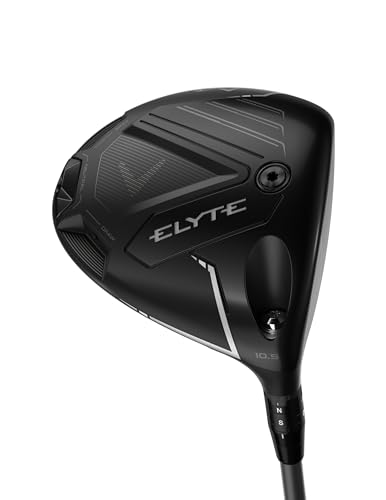
Face technology drives ball speed, while crown construction sets the stage for center of gravity placement. Look for evidence of multi-material crowns, such as the aerospace-grade Thermoforged Carbon on the Callaway Elyte, or the Infinity Carbon Crown used on the TaylorMade Qi35. Faces built with carbon or variable-thickness titanium tend to flex more efficiently across the hitting area, which can keep ball speed up on off-center strikes. Comparing how each manufacturer documents face and crown engineering is a fast way to filter the list.
Forgiveness and MOI
Moment of inertia (MOI) measures resistance to twisting on off-center hits, and a higher MOI generally means straighter results on mishits. Larger heads with weight pulled low and deep, like the 460cc Cleveland HiBore XL and Cleveland Launcher XL 2, post strong forgiveness numbers. When two drivers seem similar on ball speed, MOI is often the deciding factor for players who occasionally catch the ball out of the toe or heel.
Launch and Spin Engineering
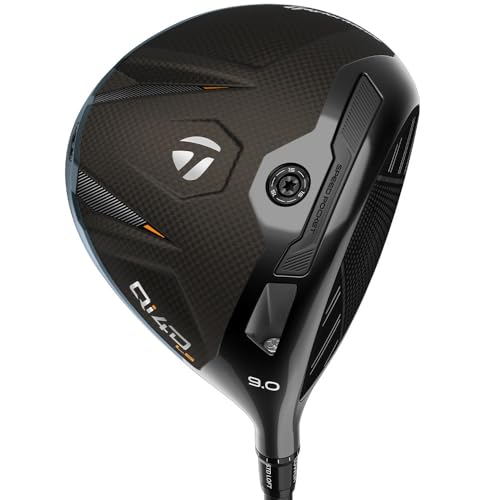
Low spin paired with adequate launch is the usual target for faster swingers. Designs such as the TaylorMade Qi4D LS Driver document a focus on being the lowest-spin option in their family, while the TaylorMade Qi4D and Callaway Elyte describe CG placements aimed at efficient launch and spin over a larger face area. Choosing between these depends on whether your miss tends to be too much spin or too little launch.
Adjustability and Shot Shaping
Most modern drivers include a hosel that adjusts loft, lie, and face angle, but weighting systems vary widely. The Callaway Elyte uses a single 13g moveable weight, the TaylorMade Qi35 pairs 13g and 3g weights, and the TaylorMade Qi4D LS uses 15g and 4g weights for stronger bias correction. More weights give finer tuning but also more fitting decisions to manage.
Shaft Engineering and Fit
Shaft flex is only one part of fit. Weight, profile, and tip stiffness change how a stiff shaft actually plays. The TaylorMade Qi4D platform documents Reax shafts matched to rotation rates, while the Callaway Elyte Driver and Callaway Paradym Ai Smoke Max pair stiff graphite builds with their heads. Confirm that the shaft weight listed matches your tempo; a 50g stiff profile feels very different from a 60g or 65g one.
Aerodynamics and Head Shape
A head that moves through the air efficiently supports higher clubhead speed without extra effort. Re-engineered head profiles on the TaylorMade Qi4D family, the ACTIVWING airfoil on the Cleveland HiBore XL, and the SIM Inertia Generator on the TaylorMade SIM 2 MAX are all documented ways manufacturers reduce drag. Head shape also affects confidence at address, so weigh technical specs alongside the silhouette that feels right behind the ball.
Final recommendation
TaylorMade Qi4D Driver (9°, Stiff, High Rotation Reax Red) ranks first overall in this specification-based comparison under the published weighted criteria.
The final choice among the best stiff golf club drivers depends on the documented features that match your intended use.
If you want a single specification-led choice that balances modern face tech, carbon construction, and a meaningful weighting system, start with the Callaway Elyte Driver (10.5°, Stiff). It documents the new Ai10x Face, a Thermoforged Carbon crown positioned for low spin and high launch, and a 13g moveable weight for shot shaping. From there, players who want a lower-spin, more aggressive head can step to the TaylorMade Qi4D LS, while those who want maximum MOI should look at the Cleveland HiBore XL. Together, these models represent the top stiff golf club drivers available for the 2026 season, and they span the meaningful trade-offs in the rest of the field.
Frequently Asked Questions
What makes a stiff shaft the right choice in the best stiff golf club drivers?
A stiff shaft resists excessive loading during the downswing, which suits players with faster tempos who want a stable feel and a more repeatable face position at impact. Slower-tempo players often struggle to load a stiff shaft, which can produce a weak, low-launching flight.
How does head size affect the best stiff golf club drivers?
Larger heads, like the 460cc Cleveland HiBore XL and Cleveland Launcher XL 2, typically deliver higher MOI and more forgiveness on off-center strikes. Smaller or more compact heads can offer slightly lower spin and a preferred look at address, but they tend to demand more centered contact.
Are adjustable hosels and weights worth the extra complexity?
Yes, if you plan to refine your setup over time. Drivers such as the Callaway Elyte, TaylorMade Qi35, and TaylorMade Qi4D use moveable weights and a 4° loft sleeve to dial in shot shape and launch. Players who only set a club once and rarely revisit fitting may find the simpler hosel-only designs easier to manage.
Carbon crowns save weight that engineers can redistribute lower and deeper in the head. The Callaway Elyte documents an aerospace-grade Thermoforged Carbon crown specifically for optimal CG placement, and the TaylorMade Qi35 lists an Infinity Carbon Crown as part of its high-MOI construction. Both describe effects on launch and forgiveness, not just weight savings.
Should I choose a dedicated low-spin head if my swing is fast?
Often, yes. Fast swingers tend to add spin, and heads engineered as low-spin options, such as the TaylorMade Qi4D LS Driver, use stronger weighting and a stiffer shaft profile to keep spin in check. The trade-off is usually a touch less forgiveness on extreme mishits, which is why MOI numbers matter when comparing low-spin heads.
How do I compare the top stiff golf club drivers without testing them?
Focus on documented construction, weighting, and shaft specs across the same category. Use face and crown tech, forgiveness and MOI, launch and spin engineering, adjustability, shaft engineering, and aerodynamics as the comparison framework, and weigh how each driver matches your swing tempo and typical miss pattern.