Buying Guide
The best graphite golf fairway woods share a few engineering pillars: a graphite shaft matched to swing speed, face technology that protects ball speed on off-center hits, and a sole design that holds up through real turf. When you evaluate options side by side, focusing on construction, launch profile, and adjustability helps you avoid over- or under-buying. The ten fairway woods in this guide cover a wide range of design philosophies, so it helps to anchor your shortlist in a clear set of priorities before reading the spec sheet.
Construction and Materials
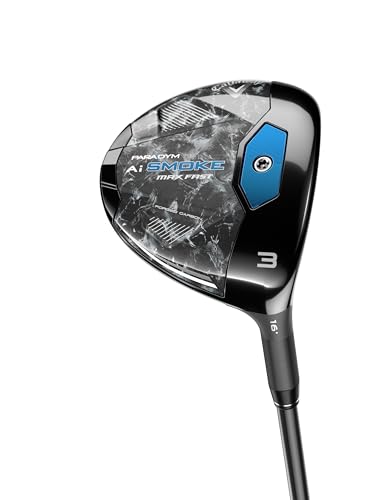
Construction sets the tone for everything else. Carbon crowns, maraging faces, and tungsten cartridges each serve a different weight-distribution goal. The Callaway Paradym Ai Smoke Max Fairway Wood pairs a carbon chassis with a Tungsten Speed Cartridge to push CG low while keeping total mass manageable. The Mizuno JPX One Fairway Wood uses a MAS1C maraging face wrapped by a CORTECH Chamber that combines a stainless steel weight with elastomeric TPU to give the face an extra energy source at impact.
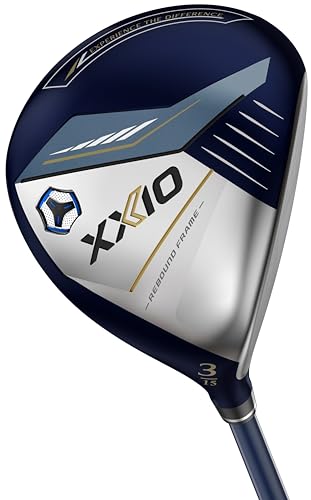
More traditional builds still have merit. The Cleveland Golf Halo XL Lite Fairway Wood relies on a lightweight clubhead with modified weighting instead of a heavy carbon crown, and the TaylorMade SIM 2 Max Fairway Wood uses multi-material construction including a C300 steel face. The XXIO 13 Fairway Wood emphasizes a graphite shaft rather than exotic face materials.
Face Technology and CG Strategy
Face design controls ball speed on off-center hits. Callaway’s Ai Smart Face on the Callaway Paradym Ai Smoke Max Fairway Wood, Callaway Paradym AI Smoke Max 5 Wood, and Callaway Paradym Ai Smoke Max Fast Fairway Wood uses Ai mapping to dial in launch and speed across the face. The TaylorMade SIM 2 Max Fairway Wood pairs C300 Steel Twist Face with a Thru-Slot Speed Pocket to preserve ball speed on low-face strikes.
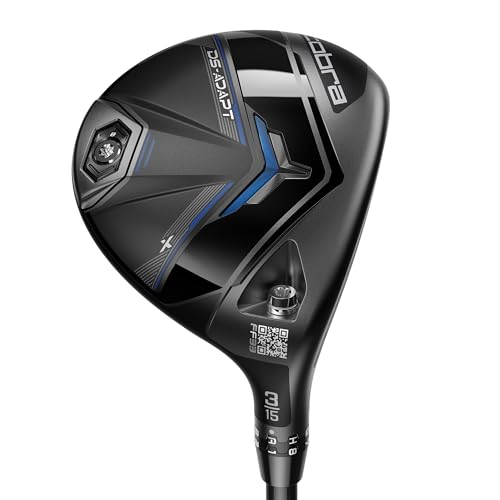
The Cleveland Golf Halo XL Lite Fairway Wood uses a variable-thickness pattern to maximize flex at impact, while the Cobra OPTM X Fairway Wood is engineered around Products of Inertia rather than face flex alone, focusing on symmetrical mass placement for tight dispersion. The Mizuno JPX One Fairway Wood pairs a MAS1C maraging face designed for greater energy transfer and faster ball speeds across the entire face.
Launch Profile and Turf Interaction
If you struggle to get the ball airborne, launch profile matters as much as distance. The Cleveland Golf Halo XL Lite Fairway Wood adds 1.5° of loft and uses GlideRail sole geometry to keep the face moving straight through impact. The Callaway Elyte X Fairway Wood is shaped to deliver a slight draw with a higher launch window, while the Callaway Paradym Ai Smoke Max Fast Fairway Wood uses a lighter graphite build for easy launch with draw bias.
Sole design plays a quiet but important role. The TaylorMade SIM 2 Max Fairway Wood’s updated V Steel redistributes weight while improving turf interaction. The Mizuno JPX One Fairway Wood introduces a Speed Bevel sole with a blunted leading edge for cleaner glide through turf. The Cobra OPTM X Fairway Wood documents descending sole weight positioning to shape launch and spin through impact.
Adjustability and Versatility
Adjustability turns a fairway wood into a long-term fit. The Cobra OPTM X Fairway Wood leads the field with the FutureFit33 hosel, offering 33 unique loft and lie settings plus 11g and 3g adjustable sole weights to shape launch and spin. The Mizuno JPX One Fairway Wood adds a Quick Switch Adaptor with 4° of loft adjustability for trajectory and look.
Callaway’s Ai Smoke Max family documents adjustable features that broaden shot shaping, including the Callaway Paradym Ai Smoke Max Fairway Wood, Callaway Paradym AI Smoke Max 5 Wood, and Callaway Paradym Ai Smoke Max Fast Fairway Wood. By contrast, models like the XXIO 13 Fairway Wood and Cleveland Golf Halo XL Lite Fairway Wood focus on simplified, easy-fit setups, which can be ideal for golfers who do not want to tinker with hosel settings.
Shaft and Weight Configuration
Graphite shaft choice ties the head to your swing. The Callaway Paradym Ai Smoke Max Fairway Wood pairs with a Tensei 65G graphite shaft in a 3-wood, while the Cleveland Golf Halo XL Lite Fairway Wood uses a lightweight graphite shaft to keep total swing weight low. The XXIO 13 Fairway Wood uses a graphite MP-1300 regular shaft to target moderate tempos directly, and the TaylorMade SIM 2 Max Fairway Wood uses a graphite regular flex in a 3-wood.
If you already generate high clubhead speed, a stiffer profile like the stiff graphite shaft on the Callaway Elyte X Fairway Wood or Callaway Rogue ST Max Fairway Wood helps keep the head stable through impact. Slower tempos may prefer lighter shafts such as the graphite senior option in the Cleveland Golf Halo XL Lite Fairway Wood.
Head Size and Forgiveness
Larger heads with low-and-deep weighting tend to launch higher and forgive more. The Cleveland Golf Halo XL Lite Fairway Wood features an XL Head Design with deep weighting for forgiving launch. The TaylorMade SIM 2 Max Fairway Wood’s 190cc head combines strategic CG placement with precision weighting for forgiveness across the face.
The Cobra OPTM X Fairway Wood focuses less on raw size and more on inertia across three axes, using symmetrical mass placement to reduce twisting. The Mizuno JPX One Fairway Wood uses a wrap-around carbon crown to free weight for forgiveness without a footprint as large as XL-style designs.
Final Recommendation
Callaway Paradym Ai Smoke Max Fairway Wood ranks first overall in this specification-based comparison under the published weighted criteria.
The final choice among the best graphite golf fairway woods depends on the documented features that match your intended use.
The Callaway Paradym Ai Smoke Max Fairway Wood stands out as the first overall specification-based choice thanks to its Ai Smart Face, tungsten weighting, carbon chassis, and progressive shaping in a graphite Tensei 65G package. It combines strong face technology with documented adjustability, making it suitable for a wide range of golfers evaluating top graphite golf fairway woods.
If you want maximum adjustability, the Cobra OPTM X Fairway Wood with FutureFit33 and adjustable sole weights is the most flexible platform. For moderate tempos seeking easier launch, the Cleveland Golf Halo XL Lite Fairway Wood delivers lightweight construction, added loft, and GlideRail turf interaction. Players wanting a more recent draw-biased shape should look at the Callaway Elyte X Fairway Wood, while the Mizuno JPX One Fairway Wood offers a unique CORTECH Chamber energy system and maraging face. The top graphite golf fairway woods in this list give you a balanced starting point across modern and proven designs.
Frequently Asked Questions
What loft should I look for when comparing the best graphite golf fairway woods?
Match loft to the gap you are trying to fill. A 3-wood in the 15° range covers long tee shots and fairway carries, while a 5-wood near 18° to 20° bridges into the long-iron range. Higher-lofted options like the XXIO 13 Fairway Wood at 20° launch the ball higher and land softer, which helps on longer approach shots into par 5s.
Are graphite shafts in fairway woods better for slower swing speeds?
Graphite shafts reduce overall weight compared with steel, which helps many moderate-swing-speed golfers generate clubhead speed without extra effort. Models like the Cleveland Golf Halo XL Lite Fairway Wood and XXIO 13 Fairway Wood use lightweight graphite shafts to support easier launch. Faster swingers may still prefer graphite in a stiffer flex for stability, as seen in the Callaway Elyte X Fairway Wood and Callaway Rogue ST Max Fairway Wood.
How important is adjustability in a fairway wood?
Adjustability is useful when you want to fine-tune ball flight without changing the club. The Cobra OPTM X Fairway Wood offers the most extensive adjustability with FutureFit33 loft and lie settings plus 11g and 3g weights. The Mizuno JPX One Fairway Wood adds a Quick Switch Adaptor with 4° of loft adjustment. If you rarely change settings, a simpler design like the Cleveland Golf Halo XL Lite Fairway Wood may be easier to live with.
These materials let designers reposition mass. Carbon crowns reduce weight high in the head so engineers can move CG lower and forward, as in the Callaway Paradym Ai Smoke Max Fairway Wood family. Tungsten cartridges concentrate mass low to boost launch and forgiveness. Both strategies aim to give you higher launch and more speed without enlarging the head.
Should I choose a draw-biased fairway wood if I already slice?
A draw-biased head can help counteract a slice if the geometry matches your swing. The Callaway Elyte X Fairway Wood is shaped for a slight draw, while the Callaway Paradym Ai Smoke Max Fast Fairway Wood pairs a draw bias with a lightweight build. If you already hit a straight or fade ball flight, a neutral design such as the Callaway Paradym Ai Smoke Max Fairway Wood or Callaway Paradym AI Smoke Max 5 Wood may fit better.
How does head size affect forgiveness in a graphite fairway wood?
Larger heads with low-and-deep weighting, like the Cleveland Golf Halo XL Lite Fairway Wood, push CG lower and expand the forgiveness window. Smaller-profile designs like the Mizuno JPX One Fairway Wood rely more on face technology and carbon crowns to maintain forgiveness. Either approach can work; your choice depends on whether you prefer a confidence-inspiring look or a more workable shape.
Which of the graphite golf fairway woods is the most versatile across lies?
The Callaway Paradym Ai Smoke Max Fairway Wood family pairs progressive shaping with documented adjustability, making it strong from tee, fairway, and light rough. The TaylorMade SIM 2 Max Fairway Wood adds V Steel sole design for clean turf interaction, and the Cobra OPTM X Fairway Wood uses POI-focused shaping for tight dispersion across a range of impact locations. Each brings a different definition of versatility to the graphite golf fairway woods conversation.