Buying Guide
The best dish racks with handles are easier to compare when you separate portability from capacity. A rack may have a decorative wood grip for moving it across a counter, while a sink model may use silicone-covered handles to hold its position on wet edges. Start by deciding where the rack will live, then compare its drainage path, storage layout, and cleaning requirements.
Choose the placement first
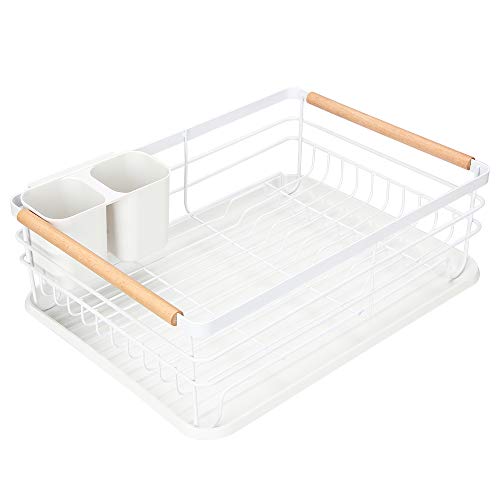
Countertop racks are the most straightforward option when you have a dry area beside the sink. Fvellix, AppleTofu, Attom Tech Home, BRIAN & DANY, jouzevic, Kitchen Details, and Epicano all document countertop use or countertop-oriented dimensions. These designs generally include a tray or drainboard beneath the frame, so measure the available length and depth before ordering. A rack that fits the dishes but overhangs the counter can still create a water-management problem.
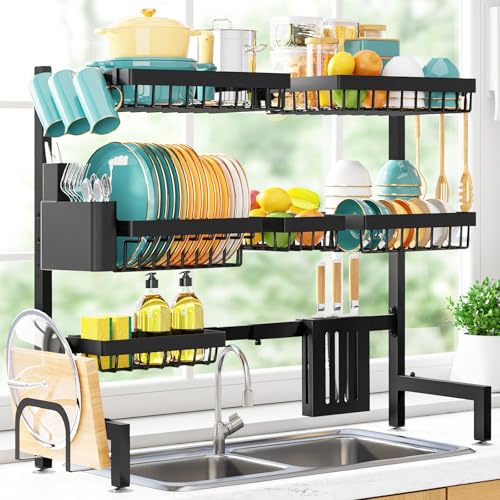
In-sink and over-sink models solve a different problem. Better Houseware is designed to sit inside the basin, allowing water to drain downward. JASIWAY and MAJALiS also use sink placement and adjustable supports, with JASIWAY documenting both in-sink and over-sink use. These formats can preserve counter space, but compatibility depends on basin width, rim shape, and clearance around the rack. Treat the stated fit range as a starting point and measure the sink opening yourself.
Compare handle designs
Handle construction affects how confidently you can reposition a loaded rack. Wood handles appear on Fvellix, Kitchen Details, AppleTofu, Attom Tech Home, BRIAN & DANY, and Epicano. They are useful when the rack needs to be moved away from the sink or lifted for cleaning, but the supplied listings do not establish a maximum carrying load. Avoid treating a handle as proof that a fully loaded rack should be moved frequently.
Sink racks use a different style of grip. Better Houseware lists coated non-slip handles, while JASIWAY lists enlarged silicone sleeves and MAJALiS lists anti-slip handle particles. These details are aimed at contact with wet sink edges. They are more relevant to positioning and stability than to carrying the rack across a kitchen.
Check drainage details
A drainboard is useful when the rack sits on a countertop, but its design matters. Fvellix and jouzevic use removable drainboards, which can make wiping and rinsing more convenient. AppleTofu lists a built-in drain spout, and Epicano specifies a sloped tray with four directional grooves. BRIAN & DANY includes a removable plastic tray, while Attom Tech Home includes a resin tray.
Direct-to-sink drainage is simpler when the rack is compatible with the basin. Better Houseware, JASIWAY, and MAJALiS are open designs intended to let water fall into the sink. This avoids a separate tray, but it also means the rack needs the correct placement and sufficient clearance. If your sink edge is higher than the counter or has an unusual shape, a tray-based countertop model may be easier to use.
Match organization to your dishes
Look for dedicated plate slots if you regularly wash plates, and look for a separated utensil holder if cutlery tends to collect in a wet pile. Kitchen Details states a capacity of up to 12 plates and includes a cutlery basket. Epicano lists a three-slot utensil holder, removable cup holder, and room for several dish types. JASIWAY documents slots and holders for dishes, bowls, cups, and silverware.
Simpler racks can still be useful. jouzevic is a single-layer design for smaller households, while Fvellix includes cup and cutlery holders in a compact format. The best choice depends on whether you want one open drying surface or more compartments. More holders can improve sorting, but they also add pieces that need to be cleaned around.
Review materials and maintenance
The listings describe several material approaches. BRIAN & DANY uses stainless steel and states that its frame is rust free. JASIWAY also lists stainless steel construction, while Better Houseware and jouzevic use coated metal. Epicano lists a black powder coating, and Attom Tech Home lists a powder-coated steel frame. These descriptions support comparing moisture-resistance features, but they do not establish identical long-term durability.
Removable parts can simplify maintenance. Fvellix, jouzevic, and BRIAN & DANY list removable drain components; AppleTofu lists removable rack and cutlery sections; Attom Tech Home lists a removable utensil drainer that is dishwasher safe. Follow the supplied care directions rather than assuming every metal part or tray is dishwasher safe.
Use the listed length, width, and height as a planning guide, especially for racks with handles or elevated holders. Kitchen Details and Epicano are around 17 inches long, while the full-size countertop footprint of the selected models varies considerably. A taller rack may interfere with cabinets, and a deep rack may reduce usable prep space.
For adjustable sink designs, measure both the narrowest and widest positions. JASIWAY’s stated range is 15.5 to 23.2 inches, and MAJALiS is listed for sinks from 13 to 30 inches wide. Those ranges do not replace checking the actual basin and rim geometry.
Final Recommendation
JASIWAY Adjustable In-Sink Dish Rack ranks first overall in this specification-based comparison under the published weighted criteria.
Epicano Large-Capacity Dish Drying Rack is the highest-scoring returned product and the first overall specification-based choice. Its ergonomic wooden handle, sloped four-groove tray, removable cup holder, and divided utensil storage provide a particularly complete countertop setup. The best dish racks with handles still depend on fit, so choose Better Houseware if direct in-sink drainage is more important, JASIWAY if adjustable sink placement is the priority, or Kitchen Details if documented plate capacity matters most. Among the top dish racks with handles, the right model is the one whose footprint and drainage method match your washing area.
Frequently Asked Questions
Among the best dish racks with handles, what should I measure before buying a dish rack with handles?
Measure the available counter length, depth, and overhead clearance. For sink models, measure the basin opening and rim-to-rim width at the points where the rack will rest. Adjustable ranges are helpful, but the listed range may not account for unusual sink shapes, faucets, or raised edges. Also check whether the handle extends beyond the main rack footprint.
Are wooden handles suitable for wet kitchen use?
The selected listings use wooden handles on several countertop racks, including Epicano, Fvellix, AppleTofu, Attom Tech Home, BRIAN & DANY, and Kitchen Details. They provide a stated grip and a decorative finish, but the supplied evidence does not specify identical sealing or care instructions for every wood component. Keep the rack’s care directions in mind and avoid assuming the handles should be submerged.
Is an in-sink rack better than a countertop rack?
Neither placement is universally better. An in-sink rack such as Better Houseware can keep the counter clear and route water directly into the basin. A countertop rack such as Epicano or BRIAN & DANY may offer a more independent drying station with a tray and dedicated storage. Choose based on basin compatibility, available counter space, and whether you want the rack to remain beside the sink between uses.
Which selected rack offers the most organization?
Epicano documents a three-slot utensil holder, removable cup holder, knife slots, and space for plates, bowls, glasses, and silverware. JASIWAY also lists dedicated slots and holders with stated capacity for dishes, bowls, cups, and silverware. These claims come from public listing data and are not hands-on capacity tests.
Do removable trays make a rack easier to clean?
They can make access easier because the tray can be detached from the frame for wiping or rinsing. Fvellix, jouzevic, and BRIAN & DANY document removable drainage parts, while AppleTofu lists removable rack and cutlery sections. Cleaning convenience still depends on the tray material, the frame’s crevices, and the care instructions supplied with the specific product.