Buying Guide
Choosing the best heavy-duty adjustable wrenches starts with the work rather than the brand name. A 24-inch tool can address very large fasteners and provide long reach, while a 10- or 12-inch wrench is easier to store and maneuver. Sets add flexibility when one project may involve several fastener sizes. The listings in this comparison document different strengths, so compare the stated dimensions, jaw design, steel, finish, and handling features against your workspace.
Match wrench length to the job
Length affects access, reach, and the amount of leverage available from the handle. The MAXPOWER and Olympia Tools models are both 24 inches long. That format is aimed at large nuts, bolts, plumbing fittings, vehicle work, and industrial maintenance. It can be useful when a short handle cannot reach or provide enough working room, but the same length can be cumbersome around crowded assemblies.
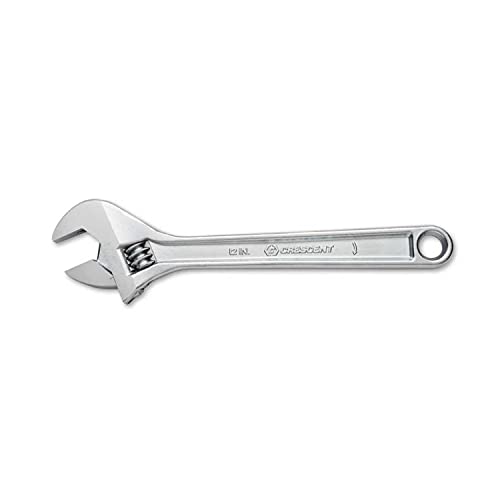
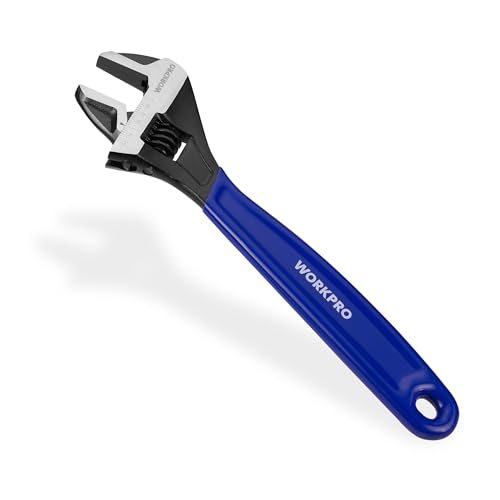
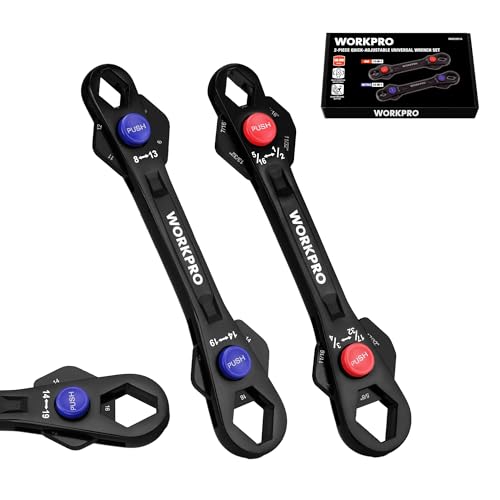
The RIDGID 86922 is 15 inches long, placing it between the extra-large tools and the more portable models. Its listed 1-11/16-inch opening gives it substantial capacity without requiring the full size of a 24-inch wrench. Twelve-inch models such as the Crescent AC212VS and WORKPRO offer a more familiar workshop format. Ten-inch designs, including the Klein Tools 3227 and DURATECH, can be preferable where access is more important than maximum reach.
Compare jaw capacity carefully
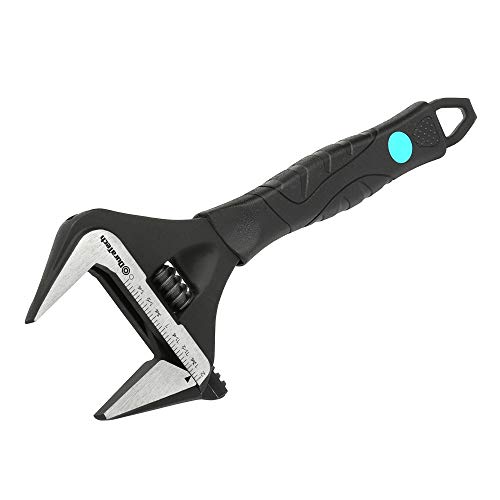
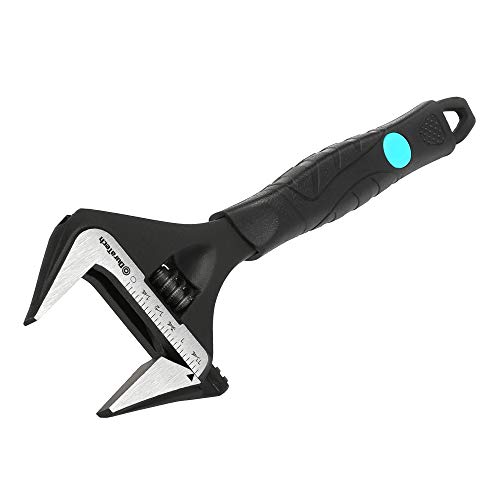
Jaw capacity is one of the most useful specifications for an adjustable wrench. The MAXPOWER lists a 2.4-inch, or 62 mm, opening, while the DURATECH lists up to 2-1/32 inches, or 52 mm. These are unusually wide openings for their listed lengths and suit oversized fasteners or fittings. The Olympia listing describes widespread jaw sizing but does not provide a numeric maximum opening, so its reach and construction are clearer than its exact capacity.
The Klein Tools 3227 opens to 1-7/16 inches and is described as fitting nuts and bolts up to 7/8 inch. Crescent AC212VS and WORKPRO each list a 1-1/2-inch opening, and RIDGID lists 1-11/16 inches, or 40 mm. When a product does not publish a maximum opening, avoid assuming that it matches a competing wide-jaw design. The SEDY and HORUSDY listings provide useful general descriptions but no exact opening measurement.
Look at steel and surface finish
Forged and heat-treated steel appears repeatedly in the supplied evidence because these construction details are relevant to demanding hand-tool use. MAXPOWER lists heat-treated forged Cr-V steel, Olympia describes hardened and tempered drop-forged alloy steel, and RIDGID specifies forged and heat-treated alloy steel. The Klein 3227 and Klein D5074 also identify forged or heat-treated alloy steel.
Several tools list finishes intended to resist corrosion. Chrome plating appears on Olympia, the Klein D5074, and the Crescent AC212VS. Black oxide is specified for MAXPOWER, DURATECH, WORKPRO, and SEDY. A finish can help with maintenance and surface protection, but it does not by itself establish that one wrench will outlast another. Consider the finish alongside the stated steel and the type of environment in which the tool will be stored.
An adjustable wrench is only useful when its jaw can be set accurately and held against the fastener. MAXPOWER lists a non-slip worm gear and precision-machined jaw slot. The Klein products describe smooth-turning knurls, while Crescent lists a larger knurl and hex jaw design. WORKPRO also specifies a flexible knurl and hex jaw design. These features are relevant when you need repeatable adjustment and a close fit.
The DURATECH listing calls out special jaws and a non-slip grip, and the SEDY listing identifies parallel jaws. Those descriptions help distinguish the designs, but they should not be treated as proof of performance beyond the supplied specifications. In general, select the wrench whose documented adjustment details best fit the work, and avoid relying on a broad capacity claim if the jaw shape or access requirements are unclear.
Decide whether a set is worthwhile
A set makes sense when your work includes several fastener sizes or when you want different handle lengths available. The Klein D5074 includes 6-, 8-, 10-, and 12-inch tools, with dipped handles, extra capacity, SAE and metric markings on both sides, and tether holes. The HORUSDY set also covers 6 through 12 inches and lists Cr-V steel, precision jaws, laser-etched scales, and larger knurls. Both sets offer more range than a single wrench.
Sets require more storage, and their listings may not provide the same level of detail for each individual wrench. The single-tool choices are easier to match to a specific opening or length. For a mixed workshop, four sizes can reduce the need to compromise. For a focused repair kit, a single 10-, 12-, 15-, or 24-inch tool may be the more sensible format.
Consider access and handling details
A wide jaw does not automatically mean easy access. The DURATECH lists thin, long jaws for narrow spaces, while the Klein 3227 uses a continuous-taper handle intended for alignment of bolt and rivet holes. Tether holes on the Klein products add a storage or work-at-height detail. Dipped or ergonomic handles appear on several models, including the Klein D5074, WORKPRO, and SEDY.
Large tools may weigh more and need more clearance, although listed weights vary by product and should not be used as a substitute for hands-on balance. If the job involves overhead construction, the tether provision on the Klein tools may be relevant. If the job involves bench or household repairs, a 10- or 12-inch wrench with dual scales and a manageable handle is usually easier to keep ready.
Final Recommendation
MAXPOWER 24-Inch Adjustable Wrench ranks first overall in this specification-based comparison under the published weighted criteria.
MAXPOWER 24-Inch Adjustable Wrench is the highest-scoring returned product and the first overall specification-based choice. Its 2.4-inch jaw, 24-inch reach, heat-treated forged Cr-V steel, dual scales, tapered handle, and precision-machined jaw slot give it the most specification-aligned documented combination for oversized fasteners.
The best heavy-duty adjustable wrenches are not all intended for the same setting. Choose Olympia Tools when long reach and drop-forged construction are priorities, RIDGID when a 15-inch balance and lifetime defect coverage appeal, or Klein Tools 3227 for construction alignment work. For a general workshop, Crescent AC212VS and WORKPRO provide useful 12-inch formats with documented 1-1/2-inch or 40 mm openings and dual scales.
DURATECH is the compact wide-jaw alternative, while the Klein D5074 and HORUSDY sets make more sense when several lengths are needed. SEDY is a reasonable specification-led option for common automotive, plumbing, and household repairs, but its exact jaw capacity is not stated. Among the top heavy-duty adjustable wrenches, the final decision should follow the largest fastener, tightest access point, and storage space you actually have.
Frequently Asked Questions
What should I look for in the best heavy-duty adjustable wrenches?
Prioritize the stated steel construction, finish, maximum jaw opening, adjustment mechanism, jaw design, and handle length. A precise opening measurement is especially useful when the wrench must fit oversized nuts or fittings. Dual SAE and metric scales can also simplify mixed fastener work. If the listing does not provide a measurement, do not assume the tool has the same capacity as a wide-jaw competitor.
Is a 24-inch adjustable wrench better than a 12-inch model?
Not automatically. A 24-inch wrench such as the MAXPOWER or Olympia Tools model provides long reach and is aimed at larger work, but it may be awkward in confined spaces. A 12-inch wrench such as the Crescent AC212VS or WORKPRO is easier to store and maneuver while still offering a documented 1-1/2-inch or 40 mm opening. Match length to the fastener and available clearance.
Are adjustable wrench sets useful for a home workshop?
They can be useful when projects involve different fastener sizes and access conditions. The Klein D5074 and HORUSDY sets both include 6-, 8-, 10-, and 12-inch sizes. A set takes more storage space than one wrench, and the supplied listings do not give every individual jaw opening. Choose a set for range, or select one single wrench when your applications are narrowly defined.
Which selected wrench is intended for construction alignment?
The Klein Tools 3227 is the clearest specialized choice because its listing describes a continuous-taper handle for aligning bolt and rivet holes. It also has an extra-wide 1-7/16-inch opening, forged alloy steel, precision-machined jaws, and a tether hole. That design utility is different from a conventional workshop wrench, so it is best matched to construction tasks where alignment is part of the job.
Do black oxide and chrome finishes mean the same thing?
Both are listed as surface finishes on selected tools, but the supplied evidence does not establish that they perform identically or that one always lasts longer. Chrome plating is specified on models such as Olympia Tools, Klein D5074, and Crescent AC212VS. Black oxide is listed for MAXPOWER, DURATECH, WORKPRO, and SEDY. Treat finish as one specification alongside steel, jaw design, and storage conditions.