Buying Guide
Choosing the best heavy-duty reusable grocery bags starts with the way you shop, not simply the largest stated load figure. A shopper making one large weekly trip may prefer a roomy canvas bag with bottle pockets, while someone making several smaller trips may value rigid totes that remain open and fold flat in a trunk. This is a specification-based comparison using supplied public listing details, not a hands-on test and not a summary of customer opinions.
Match the bag structure to your packing routine
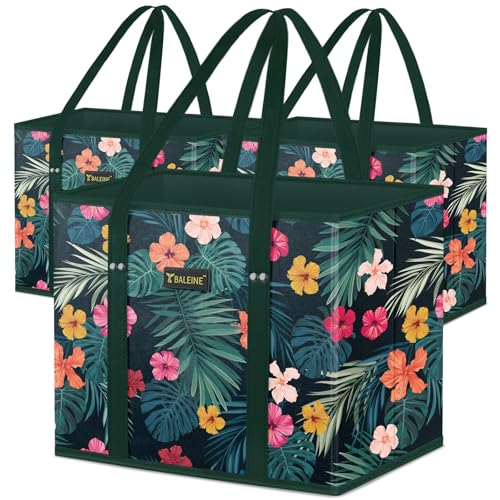
Rigid or box-shaped bags are easiest to load because they stand open without being held. LALABAG, BALEINE, VENO, Green Bulldog, and TidyNestly document upright or stiff-sided designs. That structure can help groceries remain more stable in a vehicle, especially when paired with a hard or reinforced bottom. The trade-off is that a structured tote may occupy more space than a soft bag while open.
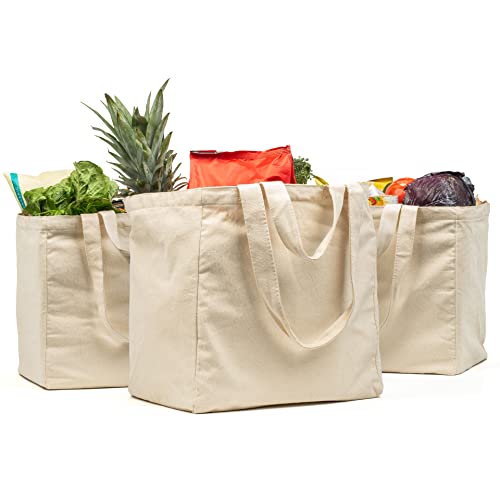
Soft canvas bags offer a different advantage. Nook Theory, VeraMia, and VitaSerena use cotton canvas and document stand-up or flat-bottom features, while their main appeal is organization and flexible carrying. Canvas can suit shoppers who want bottles, jars, and produce separated rather than placed in one open compartment.
Check documented load support carefully
A high load rating is useful only when the bag’s handles and bottom are also designed for loaded carrying. Nook Theory, VeraMia, and VitaSerena document an 80-pound capacity. LALABAG and Green Bulldog document 65-pound capacities, while VENO lists the current price and TidyNestly lists the current price. NERUB documents reinforced construction for heavy items, and DIOMMELL states that each bag can carry the current price or more.
These figures are listing specifications rather than results from independent testing. Heavy contents can also be uncomfortable to carry, even when a bag is described as capable of holding them. For ordinary grocery use, several moderately loaded bags may be easier to handle than one maximally loaded tote.
Decide whether pockets are worth prioritizing
Pockets are useful for bottles, cans, produce, and small items that can shift inside a large tote. Nook Theory documents seven compartments, two side pockets, and a reinforced bottle pocket. VeraMia lists six sewn pockets, including bottle pockets, while VitaSerena lists six interior pockets per bag. These layouts can reduce mixing and help keep tall containers separated.
By contrast, LALABAG, BALEINE, Green Bulldog, TidyNestly, NERUB, and DIOMMELL emphasize open capacity and structural features rather than internal compartments. An open interior is quick to fill with boxes or bulky items and may be simpler to clean, but it provides less separation. VENO is a middle-ground choice because its front pocket adds small-item storage without dividing the main compartment.
Compare handle designs and carrying positions
Long handles are helpful when you want to carry a tote over your shoulder. Green Bulldog, LALABAG, BALEINE, VENO, NERUB, and DIOMMELL document long or shoulder-suitable handles. Canvas organizers add more flexibility: Nook Theory, VeraMia, and VitaSerena document both short handles and longer shoulder straps. VitaSerena also lists a snap button to help keep the outer straps together.
Consider cleaning and storage
Water-resistant or wipe-clean surfaces are practical for wet produce and accidental spills. LALABAG, BALEINE, and VENO document water resistance or wipe-clean care. Green Bulldog also describes water-resistant material and hand-wash care. NERUB documents machine-washable construction with hang-dry guidance, while Nook Theory, VeraMia, and VitaSerena describe washable canvas or cotton. Follow the listed care direction because washing and drying requirements differ by material.
Fold-flat storage matters when bags live in a kitchen drawer or vehicle. LALABAG, BALEINE, VENO, TidyNestly, Nook Theory, VeraMia, VitaSerena, NERUB, and DIOMMELL document folding or compact storage features. Structured bags may fold less like a thin sheet than soft totes, but they can still be practical between uses.
Choose pack quantity based on household use
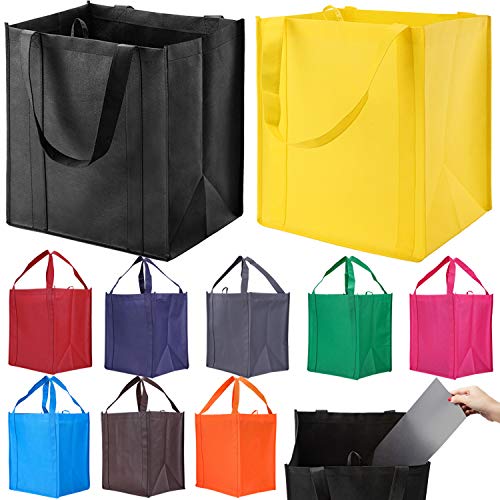
Pack size affects how easily you can divide a large shop. Nook Theory, VeraMia, and VitaSerena are three-piece sets, while VENO and TidyNestly provide four bags. Green Bulldog and BALEINE provide three- and four-piece options, respectively, and NERUB and DIOMMELL offer ten-piece sets.
A smaller set may be easier to store and sufficient for routine shopping. Larger sets make sense when several bags are needed at once, when different household members shop, or when some totes are used for laundry and other errands. Quantity should supplement, not replace, a close look at each bag’s dimensions, handles, and base.
Final recommendation
Nook Theory 3-Pack Cotton Canvas Grocery Bags ranks first overall in this specification-based comparison under the published weighted criteria.
Nook Theory 3-Pack Cotton Canvas Grocery Bags is the first overall specification-based choice among these best heavy-duty reusable grocery bags. Its documented 80-pound capacity, stand-up design, dual handle lengths, seven compartments, side pockets, and reinforced bottle pocket give it a well-supported combination of load support and organization in this comparison.
VeraMia is a close alternative for shoppers who want large cotton canvas bags with six sewn pockets and two carrying options. VitaSerena is useful when interior pockets, a water-resistant bottom, and a snap-secured shoulder strap matter. For structured non-canvas totes, LALABAG offers a strong balance of upright packing, documented load support, flat-fold storage, and wipe-clean care.
Among the top heavy-duty reusable grocery bags, VENO is a practical pick for shoppers who want a front pocket and hard bottom without moving to a large canvas organizer. BALEINE and Green Bulldog suit routine grocery trips, while NERUB, TidyNestly, and DIOMMELL cover different combinations of quantity, reinforcement, and foldability.
Frequently Asked Questions
What should I look for in the best heavy-duty reusable grocery bags?
Look for documented load support, reinforced handles, a stable bottom, useful dimensions, and a care method that fits your routine. Upright construction helps with packing, while pockets help separate bottles and smaller items. Foldability is also important if the bags will remain in a car or drawer.
Are canvas grocery bags better than polypropylene totes?
Neither material is universally better. The canvas options emphasize pockets, dual handles, and washable fabric. Polypropylene and PP-woven options emphasize rigid or reinforced structure, water resistance, wipe-clean care, and fold-flat storage. Choose based on whether organization or quick-care structure matters more to you.
Do hard-bottom grocery bags stay upright?
A hard or reinforced bottom can support an upright shape, but the exact design varies. VENO, LALABAG, BALEINE, and NERUB document hard, thick, or reinforced bottom features. Several products also describe rigid sides or a box shape. These features can make loading easier, but they do not eliminate the need to distribute heavy items sensibly.
Are long handles useful for heavy groceries?
Long handles can allow shoulder carrying and may be useful when walking from the store or carrying several bags. Green Bulldog, LALABAG, BALEINE, VENO, NERUB, and DIOMMELL document long handles, while Nook Theory, VeraMia, and VitaSerena provide both short and longer carrying options. A full bag can still be demanding, so handle length should be matched with a manageable load.
How should reusable grocery bags be stored and cleaned?
Follow the care details supplied for the specific bag. Some selected designs are described as wipe-clean or water-resistant, while others are washable and should be dried according to their instructions. Foldable bags can be kept in a trunk, drawer, closet, or pantry so they are available before the next shopping trip.