Buying Guide
Choosing the best hex boring drill bits starts with the hole rather than the brand name. “Boring” covers several useful designs: augers pull themselves into wood and move chips through flutes; spade bits make broad holes with a paddle; and Forstner bits are intended for controlled flat-bottom or pocket holes. The hex shank is the common connection feature, but the shank size and the bit geometry still determine whether a product suits your drill, driver, material, and access conditions.
Match the bit design to the hole
Auger bits are the most directly suited to deep wood boring in this selection. The Horivo 5/8-inch bit uses three cutters, a self-feeding positioning tip, and wide flutes. The METOTY set adds the same general three-cutter concept across eight diameters, while the WOBLLMX 3/4-inch model documents a tri-flute, solid-center body. These designs are useful when the hole must travel through substantial wood and chip removal matters.
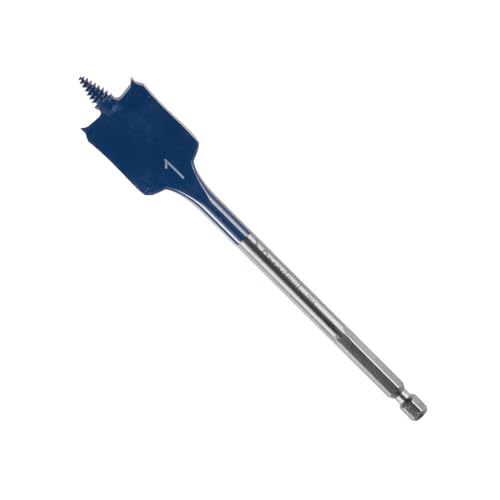
Spade bits are generally more compact and cover larger common diameters efficiently. The Bosch DSB1013 and Milwaukee 1-inch bit are both 6-inch options, while the Bosch DLSB1007 extends to 16 inches. The Bosch DSB5013P set covers 13 sizes, making it easier to switch diameters during a project. Their threaded tips, paddles, and spur features are documented for wood boring, but their format should not be treated as a substitute for every deep-hole auger task.
Forstner bits serve a different purpose. The Cortool set documents flat-bottom and pocket-hole work and spans 1/4 to 2-1/8 inches. Choose this design when the bottom shape or controlled hole edge matters more than rapid deep boring. The supplied evidence identifies use in wood, plastic, plywood, and other wood products, but it does not establish a universal material capability.
Check shank fit before buying
A hex shank can help a bit seat in compatible quick-change chucks and drivers, but not every selected product uses the same size. The Horivo, SOMADA, and WOBLLMX 3/4-inch listings identify 3/8-inch hex shanks. The METOTY set identifies a 1/2-inch quick-change shank in its features, while IRWIN and Milwaukee identify 1/4-inch quick-change shanks. Cortool specifies 3/8-inch hex shanks. Verify the chuck or adapter specification before ordering, especially when moving between an impact driver and a conventional drill.
A power groove or quick-change feature can be useful for reducing slipping or simplifying bit changes, as documented for the Bosch spade products. Compatibility should still be checked rather than assumed from the word “hex” alone. A hex shank describes the connection shape; it does not guarantee that every chuck will accept every shank diameter.
Select reach and diameter deliberately
Reach is one of the clearest differences among these products. The Bosch DLSB1007 offers a documented 16-inch length, while the METOTY and SOMADA options are 12 inches. Horivo and WOBLLMX provide 9-inch auger formats. These longer designs can help with deep or obstructed boring, but they may be less convenient where the drill has limited clearance.
Short bits can be the better choice for shallow work. IRWIN specifically identifies its shorter design for tight spaces and holes up to 2 inches deep. The 6-inch Bosch DSB1013 and Milwaukee bit offer a compact alternative for one-inch holes. Before choosing, identify the required hole diameter, the material thickness, and whether the bit must pass through the full workpiece. A large assortment is useful only if its sizes match the actual project.
Consider chip removal and starting behavior
Chip clearance becomes increasingly important as hole depth increases. Horivo documents wide, deeply contoured flutes; METOTY identifies tri-flute channels and deep polished spirals; SOMADA describes a hollow-center flute; and WOBLLMX describes flute grinding intended to move chips inward and away from the outside diameter. These are specification claims, not independent test results, but they help distinguish the designs on paper.
Starting behavior also varies by design. Screw points and self-feeding tips are documented on Horivo, METOTY, SOMADA, WOBLLMX, IRWIN, and the Bosch spade products. Spur-and-reamer tips appear on the selected Bosch bits, while Cortool emphasizes sharp cutting spurs. These features can inform selection, but users should still follow the drill, driver, and bit maker’s operating guidance.
Match materials to documented applications
Most of the selected products explicitly target softwood and hardwood. Some listings also name MDF, plywood, lumber, landscape timber, PVC, plastic, or drywall. METOTY has the broadest stated application list in this comparison, while SOMADA identifies wood, plastic, and drywall. WOBLLMX names MDF, plywood, lumber, PVC pipes, and tree-stump boring. These statements should be read as the supplied product positioning, not as proof that every material will produce the same result.
The Bosch spade products are presented for wood, and the Cortool set names wood products and plastic. Do not infer metal-drilling capability for a wood-boring bit unless the listing states it. Likewise, the presence of a hex shank does not change the intended cutting material. Use the material and diameter information together when narrowing the list.
Choose a single bit or a set
A single bit is efficient when the project has one known diameter. Horivo, SOMADA, WOBLLMX, Bosch DLSB1007, Bosch DSB1013, and Milwaukee each target a defined size. Sets make more sense for repeated work or installations that require several hole diameters. METOTY covers 1/4 to 7/8 inch in long auger sizes, Bosch DSB5013P covers 1/4 to 1-1/2 inches in spade sizes, IRWIN supplies six compact wood-boring bits, and Cortool extends its Forstner range to 2-1/8 inches.
Storage can also influence the decision. METOTY, SOMADA, and WOBLLMX document reusable PVC storage packaging, while the Cortool listing describes a multi-size set. These details help with organization, but they are secondary to shank compatibility and the required hole geometry.
How this comparison was scored
The editorial scores use only supplied listing features and specifications. Boring geometry receives 25 percent, chip-clearance design 20 percent, hex-shank compatibility 20 percent, reach and size coverage 20 percent, and material/application fit 15 percent. No score uses customer ratings, current listing information, purchase activity, marketplace labels, or hands-on testing. The ranking favors products whose documented design details closely match practical wood-boring needs while preserving variety across auger, spade, and Forstner formats.
Final Recommendation
METOTY 8-Piece 12-Inch 3-Cutter Auger Set ranks first overall in this specification-based comparison under the published weighted criteria.
Horivo 5/8 in. x 9 in. 3-Cutter Auger Bit is the first overall specification-based choice among these best hex boring drill bits because its listing combines three-cutter geometry, a self-feeding 4-hex tip, wide flutes, heat-treated carbon steel, and a 3/8-inch hex shank. It is the most specification-aligned single-bit match for deep softwood and hardwood boring in the supplied pool.
For a long-bit assortment, the METOTY 8-Piece 12-Inch 3-Cutter Auger Set is one of the top hex boring drill bits choices because it covers eight diameters and documents broad material applications. Choose WOBLLMX for a rigid 3/4-inch single auger, SOMADA for a 1/2-inch deep-boring format, or IRWIN when compact access matters.
Spade-bit users should consider Bosch DSB5013P for multiple common sizes, Bosch DLSB1007 for extended 5/8-inch reach, Bosch DSB1013 or Milwaukee for a compact 1-inch hole, and Cortool when flat-bottom or pocket-hole work calls for Forstner geometry. Confirm the shank size, required depth, and material before purchase.
Frequently Asked Questions
What are the best hex boring drill bits for deep holes?
Long augers are the most directly documented choices for deep wood boring. Horivo is 9 inches long, SOMADA and METOTY are 12 inches, and WOBLLMX is 9 inches. Bosch DLSB1007 is a 16-inch spade option. The right choice depends on diameter, shank fit, and whether an auger or spade profile suits the hole.
Are hex boring bits suitable for an impact driver?
Some selected products document quick-change or impact-compatible features. IRWIN and Milwaukee identify 1/4-inch quick-change shanks, and METOTY identifies a quick-change hex shank. Compatibility still depends on the driver’s chuck and the shank diameter, so check both specifications before use.
Which bit type makes a flat-bottom hole?
The Cortool Forstner set is the selected product whose listing specifically documents flat-bottom and pocket-hole capability. Auger and spade products in this comparison are positioned primarily for wood boring and through-hole work, so they should not be assumed to create the same bottom profile.
Should I buy a set or a single bit?
Buy a single bit when the required diameter is known and repeatable. A set is more useful when several diameters are needed. METOTY and Bosch DSB5013P offer broad coverage in long auger and spade formats, while Cortool provides a wide Forstner range. Check whether the included lengths and shank sizes fit your equipment.
The selected auger and spade listings primarily document wood and, for some products, plastic or drywall. The Cortool listing also names wood products and plastic. The supplied evidence does not establish metal capability for these wood-boring selections, so use a bit specifically documented for metal when that material is required.