Buying Guide
Choosing among the best hex masonry drill bit sets starts with matching the shank and tip design to the drill and material. The listings in this comparison include compact five-piece sets, larger assortments with duplicate sizes, and longer six-inch options. Treat the descriptions as specification evidence rather than proof of field performance.
A 1/4-inch hex shank is the recurring format in the supplied listings. It is intended for quick-change chucks and is documented on the Bosch, Milwaukee, Pro Edge Technology, SEDY, TITGGI, WildBossy, DKIBBITH, HPHOPE, and toolant sets. That can be useful when changing diameters frequently or when a drill driver uses a compatible hex chuck.
Not every hex-shank set is described in exactly the same way. Bosch explicitly states compatibility with impact drivers and hammer drill/drivers, while Milwaukee describes its Shockwave set for hammer drills and impact tools. DKIBBITH also identifies both impacts and hammer drills. For other products, the evidence generally says standard drills, cordless drills, electric drills, or bench drills. Check the tool manufacturer’s chuck and operating-mode requirements before buying.
Prioritize carbide construction for masonry
Carbide tips appear throughout the selected group. Bosch specifies an asymmetric diamond-ground carbide tip, Milwaukee lists sharpened and precision-ground carbide edges, and several other sets identify YG6X or YG8X carbide. These details establish that the products are intended as masonry bits rather than ordinary wood or metal twist-bit sets.
A tip description alone does not establish a universal drilling result. Use the listed material guidance as a boundary: concrete, brick, block, cement, ceramic, and tile are commonly named, while some sets additionally list glass, plastic, wood, granite, or light metal. Material-specific instructions matter. The supplied listings for several products recommend low speed or water cooling for glass and tile, and some advise against hammer mode on delicate surfaces.
Compare size coverage, not just piece count
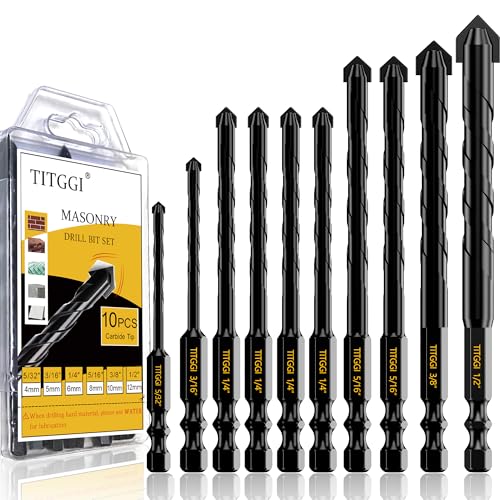
Piece count can be misleading because several sets repeat popular diameters. Pro Edge Technology provides two of each of seven sizes, while TITGGI’s 12-piece cross-tip set and DKIBBITH’s 11-piece kit also include repeated sizes. That design may be useful when a project needs replacements or repeated holes, but it does not necessarily provide more unique hole diameters.
For a broad range of anchors and fixtures, look for a set that explicitly reaches 1/2 inch. WildBossy, HPHOPE, SEDY’s listing range is not stated, and the larger multi-size sets include that upper size. toolant instead stops at 3/8 inch, which may be adequate for smaller wall fasteners but offers less documented diameter coverage. Bosch and Milwaukee do not provide individual sizes in the supplied evidence, so their strengths are more about construction and tool compatibility than assortment transparency.
Examine flute and debris-removal claims
Dust evacuation is a practical specification for masonry drilling. Bosch lists milled U-flutes with a deep-cut spiral, Milwaukee describes a wide flute, and SEDY, TITGGI, DKIBBITH, HPHOPE, and TITGGI’s cross-tip model provide similar wide, U-shaped, or spiral-groove details. These claims describe intended chip or dust movement and heat management; they are not independent test results.
Tip geometry also varies. Bosch uses an asymmetric diamond-ground tip, Milwaukee emphasizes sharpened edges and reduced walking, Pro Edge Technology lists a double-edged tip, and TITGGI’s cross-tip set identifies a cross-shaped tip. Different designs may appeal to users drilling different materials, yet the supplied data does not justify claiming one geometry works best in every situation.
Consider reach and storage
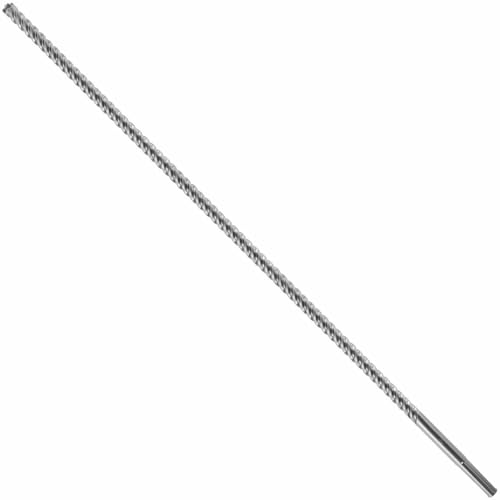
Longer bits can be relevant for deeper holes or access around obstacles. A longer format can also affect handling and storage, so compare the required hole depth with the available working space.
Among selected products, Pro Edge Technology clearly includes a storage box. A case helps organize duplicate sizes, but it does not change the cutting specifications. If portability matters, confirm that the case and bit dimensions suit the toolbox or job-site setup.
Use the assortment for the project
For occasional wall anchors, a ten-piece set spanning 5/32 to 1/2 inch provides more documented size choice than a set with only five pieces or a range ending at 3/8 inch. For repeated installation work, duplicate sizes can be more useful than a wider but single-piece assortment. For impact-tool users, Bosch and Milwaukee have the clearest impact-oriented descriptions.
The top hex masonry drill bit sets are therefore not identical substitutes. Rank the features that matter first: tool interface, masonry tip, desired diameters, drilling length, and the materials named in the listing. Avoid treating broad marketing language as a guarantee, and follow the supplied cooling and speed guidance for tile, glass, and other delicate surfaces.
Final recommendation
Pro Edge Technology 14-Piece Masonry Bit Set ranks first overall in this specification-based comparison under the published weighted criteria.
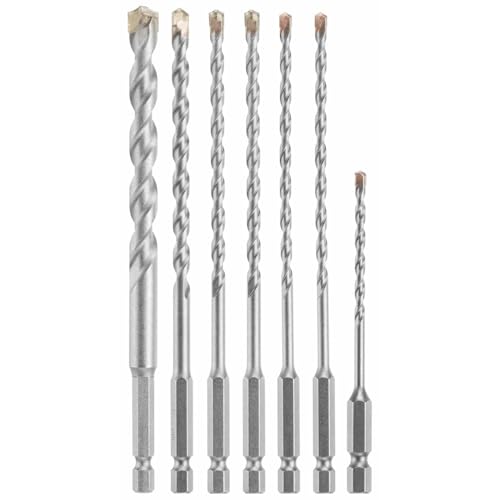
Bosch LBHXS7U 7-Piece Hex Shank Masonry Set is the highest-scoring returned product and the first overall specification-based choice. Its impact-rated construction, upgraded hex shank, asymmetric carbide tip, and deep-cut spiral provide the most specification-aligned documented combination for concrete, block, and masonry users. Milwaukee is a close alternative for a compact impact-oriented kit, while Pro Edge Technology is better suited to buyers who value duplicate sizes and a storage box.
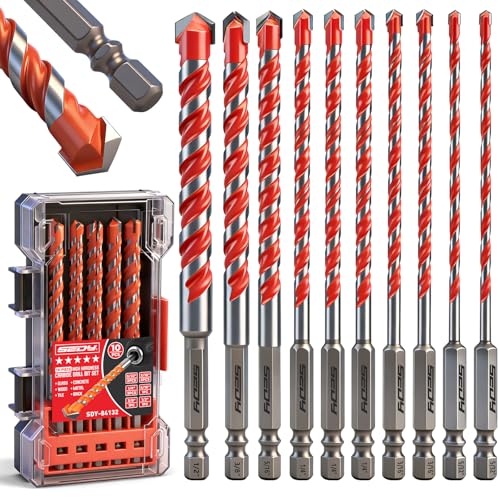
Among the best hex masonry drill bit sets, SEDY stands out for its documented six-inch format, and TITGGI’s wide-tip set offers a clearly listed range through 1/2 inch. WildBossy and HPHOPE provide broad home-improvement coverage, while DKIBBITH emphasizes a larger assortment. toolant is a reasonable fit when five smaller diameters and long bits are enough. Select by the actual holes and drill modes required rather than by piece count alone. These are the top hex masonry drill bit sets in this comparison based on supplied specifications, not hands-on results.
Frequently Asked Questions
Are hex masonry drill bits compatible with impact drivers?
Some are explicitly described that way. Bosch states that its upgraded hex shank works with impact drivers, Milwaukee identifies its Shockwave set for hammer drills and impacts, and DKIBBITH lists compatibility with both. Other products mention standard or cordless drills without expressly documenting impact use. Confirm the chuck and mode requirements for the specific tool.
What sizes should a masonry bit set include?
The selected products commonly cover sizes beginning around 5/32 or 3/16 inch and extending to 3/8 or 1/2 inch. A set reaching 1/2 inch offers more documented choice for larger anchors and fixtures. If your projects use repeated holes, a duplicate-size kit such as Pro Edge Technology may be more practical than a set with ten unique diameters.
Can these bits drill tile or glass?
Several listings name ceramic tile and glass among their applications, including WildBossy, HPHOPE, and TITGGI’s sets. The supplied instructions commonly recommend low speed, steady handling, and water or coolant. One listing specifically says not to use hammer mode on glass or tile. Follow the product instructions and match the bit to the surface.
Are six-inch masonry bits better for every project?
No universal conclusion is supported by the listings. SEDY and toolant document six-inch bits, which may suit deeper holes or access needs. Shorter bits can be easier to handle in confined spaces, but the supplied evidence does not provide comparative measurements or test results. Choose length based on the required reach and available clearance.
What makes the best hex masonry drill bit sets different from ordinary bits?
The selected sets pair masonry-oriented carbide tips with hex shanks. Several also document U-shaped or spiral flutes for dust removal, while Bosch and Milwaukee provide explicit impact-use details. The right choice still depends on the material, hole diameter, drill mode, and cooling guidance for the project.