Buying Guide
Choosing among the best hot tub test kits comes down to matching a testing format, a parameter set, and a strip or reagent supply to the way you actually care for your spa. The options in this line-up split into two clear formats: liquid reagent kits with a comparator and dip-and-read test strips. Liquid reagent kits rely on drop-counted reactions and a comparator block for color matching, while strips use paper pads that change color when dipped. Each format favors a different kind of routine.
Liquid Kits vs Test Strips
Liquid reagent kits such as Taylor K-1004 and Poolmaster 22260 deliver readings through counting drops of reagent into a water sample and comparing the resulting color against a built-in chart or comparator. They tend to provide finer step resolution on parameters like chlorine and acid demand. Strips trade some of that resolution for a much faster workflow: dip the strip, hold it horizontally for a short window, and read the pads against the on-bottle chart. For many spa owners, strips are the most practical way to keep weekly testing on schedule.
Parameter Coverage That Matches Your Spa
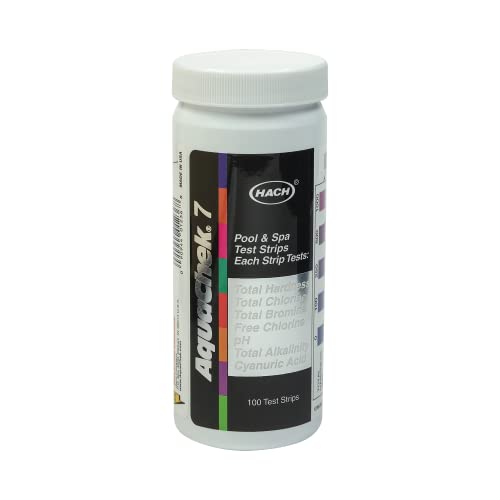
Spa water has its own priorities compared with pool water. Core readings for hot tubs typically include pH, total alkalinity, and sanitizer level (chlorine or bromine). Total hardness matters because hot water accelerates scale buildup, and cyanuric acid matters more for outdoor chlorinated pools than for indoor spas. If you run a bromine spa, the AquaChek Red 4-Way focuses specifically on bromine alongside pH, alkalinity, and hardness, while six-in-one options like JNW Direct and Bliss Spa cover the broader routine.
Workflow Speed and Reading Clarity
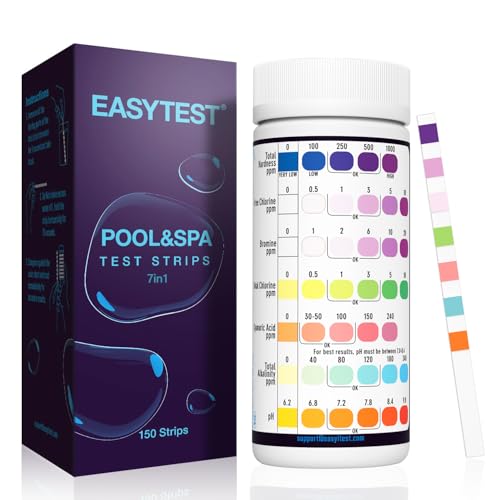
Most strips in this list settle on a 15-second to 30-second reading window after a brief dip, with horizontal holding specified for color development. Several brands highlight no-bleeding pads (EASYTEST, LIME POOL, AquaChek Silver) to limit color migration between pads, which is a meaningful clarity gain. The Bliss Spa strip goes further with extra length and larger pads paired with a companion app for dose suggestions, while the AquaDoc 7-in-1 doubles as a refill for the Eagle Ray Digital Water Testing Kit if you want a numeric read instead of a color match.
Strip Quantity and Packaging
Larger strip counts lower the per-test refill frequency and reduce the chance of running out mid-season. Most strips in this line-up follow the same open-bottle, 90-day window after first use.
Test strips in this category are broadly compatible with inground pools, above-ground pools, hot tubs, swim spas, and jetted spas, but a few details matter. Liquid kits such as Taylor K-1004 and Poolmaster 22260 cover both chlorine and bromine systems through separate readings and offer broader compatibility for owners who switch sanitizer types.
Build Quality and Storage
Bottles in this category typically use flip-top caps and a desiccant packet to control moisture. Liquid reagent kits add a hard case to hold glass or plastic comparator vials and labeled reagent bottles, which raises day-to-day durability. For spas stored outdoors or in humid environments, packaging that resists moisture between tests is a practical advantage, especially with smaller-count bottles.
Final recommendation
Varify 7 in 1 Pool Test Strips (150 Strips) ranks first overall in this specification-based comparison under the published weighted criteria.
Among the best hot tub test kits in this comparison, the Taylor K-1004 stands out as the first overall specification-based choice thanks to its comparator-based reading method and six-parameter liquid coverage. For owners who prefer a faster strip workflow, the AquaChek Silver, Varify, and EASYTEST strips deliver the broadest routine parameter sets, and the top hot tub test kits on the strip side of this line-up all combine seven-in-one coverage with structured reading protocols. Match the format to your weekly routine and confirm parameter coverage fits your sanitizer system before settling on a kit.
Frequently Asked Questions
How often should I test hot tub water with a strip kit?
Most brands in this list recommend testing at least two to three times per week, with some suggesting more frequent testing during heavy use or after refills. The exact cadence depends on bather load and sanitizer type.
Are the best hot tub test kits accurate enough to replace professional lab testing?
Multi-parameter test strips and drop kits are designed for routine monitoring, not laboratory verification. A brand like LIME POOL explicitly notes that strip readings are best compared with a certified lab test if precision is critical. For everyday water balancing, the best hot tub test kits provide consistent direction, but owners needing certified accuracy should validate with an external method.
What is the difference between Free Chlorine and Total Chlorine strips?
Free Chlorine measures the active sanitizer available in the water, while Total Chlorine includes both active and combined (used) chlorine. Six-in-one options like JNW Direct and Bliss Spa measure Free Chlorine only.
Can I use pool test strips in a hot tub?
Most pool test strips in this category are labeled for both pool and spa use, including hot tubs and swim spas. Strips that call out spa use in their copy, such as AquaChek Red 4-Way, AquaDoc 7-in-1, JNW Direct, Bliss Spa, and LIME POOL, are explicitly designed for the warmer water temperatures and smaller volumes typical of a spa.
Do bromine spas need a different strip than chlorine spas?
Bromine-specific strips like AquaChek Red read Total Bromine alongside pH, alkalinity, and hardness, which suits bromine-sanitized spas.