Buying Guide
Choosing among the best iphone 11 screen protectors is mainly a matter of matching the protector’s documented design to how you use the phone. The iPhone 11 has a 6.1-inch display, and many of the listed products also fit the iPhone XR. That shared compatibility does not mean every model is interchangeable with an iPhone 11 Pro or iPhone 11 Pro Max. Check the phone model before applying any protector.
Confirm the device size
Most selected products identify the iPhone 11/XR 6.1-inch display directly. Spigen GlasTR EZ FIT, Power Theory, Defenslim, ImpactStrong, NEW’C, JETech, Trianium, Mothca, and SIERDE all document iPhone 11 compatibility in their listings. The JETech privacy product in the candidate pool is specifically marked for iPhone 11 and not iPhone XR, so model-specific wording matters when comparing options.
A protector designed for the 6.1-inch iPhone 11 should not be treated as a fit for the smaller iPhone 11 Pro or larger iPhone 11 Pro Max. Several listings explicitly warn against those models. This is a basic but important distinction because screen shape and dimensions affect alignment, camera openings, and case clearance.
Choose clear or matte glass
Clear tempered glass is the most common design in this comparison. It is documented by products such as Power Theory, JETech One Touch, ImpactStrong, NEW’C, and Trianium. These products emphasize HD or high-transparency viewing, while coatings are described as helping reduce fingerprints, oil, sweat, or liquid residue.
Matte glass takes a different approach. Mothca documents an anti-glare finish and a smooth-touch surface, while SIERDE combines matte treatment with full-coverage positioning and a built-in speaker shield. A matte surface may be useful in bright surroundings or for people who prefer reduced reflections. However, the finish can produce a different visual texture from standard clear glass, so clarity and glare reduction should be considered together.
Compare hardness and coverage language
Many of the selected products state 9H hardness. This includes Spigen, Power Theory, Defenslim, JETech, ImpactStrong, NEW’C, Trianium, Mothca, and SIERDE. In the supplied evidence, that designation is presented as resistance to scratches or everyday abrasions. It should be read as a specification claim, not as a guarantee against every type of damage.
Coverage varies more than the hardness wording. JETech’s full-coverage model claims edge-to-edge coverage and specifies a speaker cutout. SIERDE describes full coverage with a built-in speaker shield. Spigen also identifies a case-friendly design, although its listing does not describe the exact coverage boundary.
Match the protector to your case
Case clearance is especially relevant for protectors that extend toward the display edges. Power Theory describes a flat design that leaves curved edges free. Defenslim says it covers the flat screen area and is compatible with most cases.
A fuller design may cover more of the visible display, but the available evidence does not establish that one coverage style is universally better. The practical choice depends on whether your case wraps tightly around the screen. If the case has a raised or narrow lip, a case-friendly protector with deliberate edge spacing may be the more suitable pairing.
Consider installation support
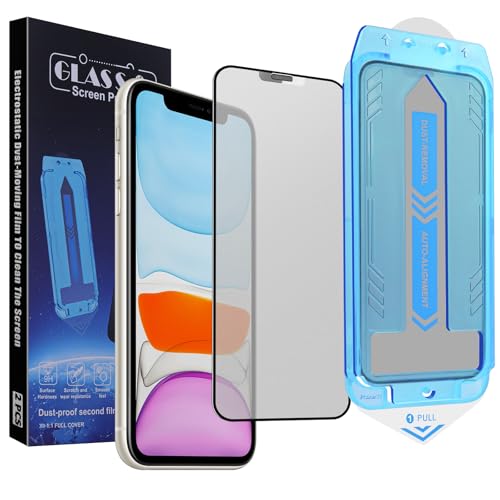
Installation tools are a major point of differentiation. Spigen uses an auto-alignment installation kit. Power Theory, Defenslim, and JETech describe trays or pre-installed glass systems. ImpactStrong, NEW’C, and Trianium include installation guidance or alignment tools. SIERDE adds auto dust removal and self-aligning technology to its matte design.
The listing evidence supports these as installation features, but it does not establish that every application will be bubble-free in practice. Preparation still matters: clean the display, remove visible dust, follow the supplied alignment directions, and check the phone model before positioning the glass.
Look at stated thickness when it matters
Only some listings provide a thickness measurement. NEW’C states 0.33 mm, while Trianium states 0.25 mm. Those details can help shoppers who prefer a thinner documented profile. The other selected products may also be slim, but no unsupported thickness should be inferred from their listings.
Thickness is only one factor. A protector also needs appropriate coverage, adhesive placement, case clearance, and a surface treatment that suits your use. The supplied evidence supports comparing these features, but not predicting a specific feel or result beyond the stated specifications.
Identify specialist features
Some products add a targeted feature. Mothca and SIERDE offer matte finishes for glare and fingerprint management. SIERDE also documents a speaker shield. Power Theory specifically mentions maintaining access to the front camera, ambient light sensor, and proximity sensors. JETech One Touch documents front camera and sensor coverage, while its full-coverage model specifies a speaker cutout.
Because privacy treatment changes how the screen is viewed from side angles, it is best considered a separate use case rather than assumed to be equivalent to standard clear glass. The selected products above focus on clear and matte options for wider comparison coverage.
Final recommendation
Power Theory Tempered Glass for iPhone 11/XR, 2 Pack ranks first overall in this specification-based comparison under the published weighted criteria.
The final choice among the best iphone 11 screen protectors depends on the documented features that match your intended use.
Spigen GlasTR EZ FIT is the highest-scoring returned product and the first overall specification-based choice. Its documented combination of 9H tempered glass, oleophobic coating, case compatibility, two protectors, and auto-alignment installation gives it the most specification-aligned balance in this comparison.
The top iphone 11 screen protectors are not identical, however. Choose Power Theory or JETech One Touch if a guided tray and case-friendly design are priorities. JETech Full-Coverage is the more direct match for shoppers seeking a stated edge-to-edge design. Defenslim and ImpactStrong provide additional clear-glass alternatives with installation support, while NEW’C and Trianium are the clearest choices when a stated thickness matters.
For glare reduction, compare Mothca and SIERDE. Mothca emphasizes its matte anti-glare and smooth-touch surface; SIERDE adds a self-aligning installation system and built-in speaker shield. In every case, verify the device model and compare the protector’s edge design with your phone case before applying it.
Frequently Asked Questions
What should I check before choosing the best iphone 11 screen protectors?
Verify that the listing identifies the iPhone 11 6.1-inch display. Also check whether it is shared with iPhone XR, whether the design leaves rounded edges open, and whether the listed coverage suits your case. Do not substitute an iPhone 11 Pro or Pro Max protector, since those models have different display dimensions.
Is 9H hardness enough to compare these products?
It is a useful documented specification because many selected products state 9H tempered glass. It indicates the listing’s claimed scratch-resistance level, but it does not provide a complete prediction of performance in every impact or drop. Compare 9H wording alongside coverage, coatings, installation support, and case fit rather than using it alone.
Should I choose clear or matte glass for an iPhone 11?
Choose clear glass when preserving the listed HD or high-transparency design is the main goal. Choose matte glass when anti-glare and reduced fingerprint visibility are more important. Mothca and SIERDE document matte features, while Power Theory, JETech, NEW’C, and Trianium document clear viewing features.
Which selected protector has the most installation support?
Spigen GlasTR EZ FIT documents an auto-alignment kit, while Power Theory, Defenslim, and JETech One Touch describe tray-based installation. SIERDE also documents auto dust removal and self-aligning technology. These are listing-supported features; careful screen preparation remains necessary for application.
Do full-coverage protectors work with cases?
They can, but the specific border design matters. JETech Full-Coverage states that it leaves enough edge space for most cases, and SIERDE describes full coverage with case friendliness. Other models deliberately leave curved edges free. Compare the protector’s stated perimeter with the lip of your case before selecting a fuller design.