Buying Guide
The best iphone se screen protectors in this comparison are designed around the 4.7-inch display shared by the iPhone SE 2nd generation and iPhone SE 3rd generation. That compatibility also overlaps with the iPhone 8 and iPhone 7 on several listings. Even when a protector names all of those phones, check the exact model wording before applying it. The iPhone SE product family in this guide is the 2020 and 2022 generation, not a different display size.
This guide uses public product titles, feature statements, and specification fields. It is not a hands-on test, and the ranking does not summarize customer opinions. Editorial scores reflect documented fit, material, viewing design, installation features, and surface treatment.
Start with compatibility and coverage
Compatibility is the first filter because a protector can be made for a 4.7-inch phone yet still use a different coverage strategy. JETech’s clear model states that it covers the flat area and does not extend across the iPhone’s rounded screen edges. In contrast, TECHO documents curved, edge-to-edge full coverage.
A flat-area protector may leave a visible border but can provide clearance around a case. A full-coverage design may appear more complete, but the listing’s case guidance should be checked carefully. Spigen states compatibility with every Spigen iPhone SE, iPhone 8, and iPhone 7 case, while other products use broader case-friendly wording. The useful comparison point is the specific coverage and case information supplied for the model.
Choose glass or film
Most selected products use tempered glass. Spigen, NEW’C, JETech, UNBREAKcable, and TOCOL all document hard glass construction, while ZAGG specifies aluminosilicate glass with ion exchange technology. These products are appropriate for shoppers prioritizing a rigid protective layer and a glass-like surface.
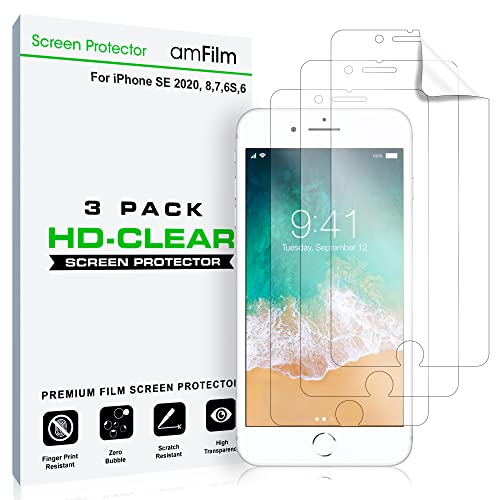
amFilm is the selected exception. Its three-layer film is explicitly not glass and is described for daily scratches, dust, scrapes, and ordinary wear. Film can make sense when a flexible layer and residue-free removal matter more than the harder construction listed by the glass alternatives. Its evidence does not support treating it as equivalent to a 9H tempered-glass product for impact protection.
Consider viewing conditions
Clear glass is the default for preserving the phone’s ordinary display presentation. JETech’s clear protector lists high transparency, NEW’C lists high visibility, and TOCOL specifies optical-grade high-transparency material with a 99.99% light-transmittance claim. These statements describe the intended viewing design, not an independent measurement in this comparison.
Mothca takes a different approach with a matte finish intended to reduce glare in bright sunlight. Its listing also describes a smooth, silk-like surface. The trade-off is that matte glass offers a different visual texture from glossy clear glass, so it is best considered when reflections are a recurring concern.
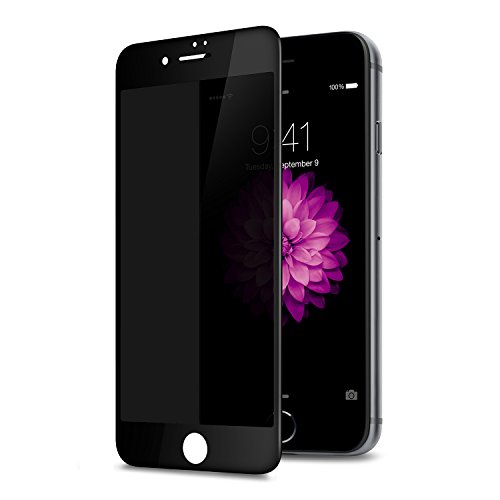
Privacy glass serves a separate purpose. JETech’s privacy model is designed for portrait viewing and limits visibility to people directly in front of the phone. TECHO makes a similar privacy claim while adding its stated full-coverage curved design. Privacy filtering is useful in shared spaces, but it deliberately narrows off-angle viewing. It should not be treated as a clarity upgrade over clear glass.
Look for installation support
Installation features vary substantially. Spigen includes an auto-alignment kit, UNBREAKcable lists an installation frame and auto-adsorption, and TOCOL describes auto-align positioning with dust removal and instant adhesion. These are the most detailed guided-installation systems among the selected products.
NEW’C describes a one-push bubble-free adhesive process. ZAGG uses an EZ Apply process, while JETech’s clear and privacy products list one-push or easy installation with cleaning and alignment accessories. amFilm takes a more conventional film approach and includes dust-removal stickers, a microfiber cloth, a squeegee card, and an installation guide.
An installation frame can help position the protector consistently, but no product should be described as bubble-free based only on a listing. Dust removal, screen cleaning, careful alignment, and following the supplied instructions still matter. For a first application, prioritize a documented frame, alignment tray, or guided positioning system.
Compare surface treatments and edges
Oleophobic or hydrophobic coatings appear across many selected products. Spigen, NEW’C, Mothca, JETech Privacy, and TECHO describe resistance to fingerprints, sweat, dirt, or oil. These treatments are intended to make the surface easier to keep clean, but the supplied evidence does not establish how long any coating lasts.
Rounded edges also affect handling. A rounded edge can make the transition feel less abrupt, but it does not by itself indicate full edge coverage. Always separate edge comfort from the actual coverage design.
Pack size is a practical specification, not a performance score. Spigen, NEW’C, JETech, UNBREAKcable, and amFilm offer multiple protectors, which can be useful when an application needs to be repeated or a protector eventually needs replacement. ZAGG and Mothca list one protector. Privacy choices in this selection range from one TECHO protector to two-piece and other multi-piece formats.
The final choice should follow the intended use: clear glass for general viewing, matte glass for glare control, privacy glass for side-view restriction, and film for a non-glass layer. Within each group, use compatibility and coverage as the deciding checks before considering installation or surface preferences.
Final Recommendation
TOCOL Auto-Installation Glass for iPhone SE ranks first overall in this specification-based comparison under the published weighted criteria.
TOCOL Auto-Installation Glass for iPhone SE is the first overall specification-based choice in this comparison.
The final choice among the best iphone se screen protectors depends on the documented features that match your intended use.
TOCOL’s iPhone SE 2 and 3 compatibility, 9H+ glass, auto-alignment positioning, dust removal, 0.33mm construction, and listed nano-coating create the most complete documented profile in this comparison.
The top iphone se screen protectors are not interchangeable in purpose. Choose ZAGG Glass Elite if aluminosilicate glass and reinforced edges are the priority. Choose Mothca for a matte anti-glare surface, or select JETech Privacy or TECHO when restricting side views matters. Spigen and UNBREAKcable are well documented for guided installation, while amFilm is the clearest choice for a non-glass film layer.
Before applying any option, confirm that the phone is an iPhone SE 2nd or 3rd generation and decide whether flat-area case-friendly coverage or TECHO’s documented edge-to-edge approach better suits the case. Then select the surface and viewing design that matches the way the phone is used.
Frequently Asked Questions
Are the best iphone se screen protectors compatible with both SE 2 and SE 3?
The selected Spigen, ZAGG, Mothca, JETech, NEW’C, UNBREAKcable, TOCOL, and privacy models explicitly identify the iPhone SE 2020 and 2022 versions or the 2nd and 3rd generations. amFilm also lists both generations. Confirm the product’s exact compatibility statement before installation, especially if the listing also names older iPhone models.
Is tempered glass better than film for an iPhone SE?
The answer depends on the protection type you want. Tempered-glass products in this comparison document 9H or similar hard-glass construction, while amFilm explicitly uses three-layer film and focuses on daily scratches, dust, and scrapes. Film is the non-glass option; it should not be presented as equivalent to the hard-glass impact claims listed by other products.
What is the difference between clear, matte, and privacy glass?
Clear protectors such as Spigen and JETech are designed to preserve open viewing and screen brightness. Mothca’s matte finish is intended to reduce glare and fingerprints. JETech Privacy and TECHO restrict visibility from off-center positions. Privacy and matte treatments change the viewing experience, so select them for those specific needs rather than assuming they provide the same presentation as clear glass.
Does a case-friendly protector cover the entire iPhone SE screen?
Not necessarily. JETech clearly states that its selected clear model covers the flat area and does not cover the rounded screen edges. TECHO’s selected privacy model makes the opposite full-coverage claim. Coverage therefore depends on the design, and a case-friendly protector may intentionally leave a perimeter around the curved edges.
Which installation features should I prioritize?
Look for documented alignment support if consistent placement is important. Spigen lists an auto-alignment kit, UNBREAKcable lists an installation frame, TOCOL lists auto-align positioning and dust removal, and ZAGG lists an EZ Apply process. These are listing features, not results from a hands-on test, so careful cleaning and dust removal remain part of the application process.