Buying Guide
Choosing among the best kids’ golf putters starts with fit rather than appearance. A putter that is too long can be awkward for a small child, while a club that is too short may not suit an older junior. The supplied listings fall into two broad groups: fixed-length junior putters with stated age or height guidance, and adjustable or two-way sets intended for shared practice.
Match length to the child
The clearest sizing information comes from the fixed junior models. The Orlimar ATS Junior Putter Age 3-5 is 23.5 inches and is listed for children 36-44 inches tall. The Acstar Two-Way Junior Putter 25-inch is also identified for ages 3-5, although it does not provide a height range. For an older child, the Orlimar ATS Junior Putter Ages 9-12 measures 30.5 inches and is listed for heights of 52-60 inches. The ENJOYCOOL Junior Golf Putter offers 25-, 27-, and 29-inch choices tied to age and height bands; the selected 29-inch configuration is for ages 9-12.
The PGM Kids Junior Putter measures 27 inches and is specifically described for children from 4 feet to 4 feet 5 inches tall. That kind of height range is more useful than an age label alone because children of the same age can differ considerably in stature. Measure the child’s height and compare it with the listing before choosing a fixed club.
Decide whether adjustability matters
An adjustable shaft can make sense when a child is growing or when several family members will share a club. The Go For It Golf Adjustable Kids Putter adjusts from 17 to 35 inches. The Asyxstar Two-Way Adjustable Kids Putter Set uses the same stated range, while the Lievermo 2-Pack reaches 17-35 inches and THE GOLFER STORE Adjustable Mini Golf Set reaches 16-36 inches. These ranges cover very small and much taller users on paper, but the listings do not provide a precise fit chart for every height. Treat the adjustment range as a flexibility feature, not as proof that one setting will be ideal for every child.
Adjustability also introduces a mechanism that must be set correctly before practice. A fixed junior shaft is simpler to evaluate and has more direct age or height guidance. An adjustable model is more adaptable, especially for siblings, but the buyer should confirm that the available settings suit the intended user.
Choose one-way or two-way usability
Handedness is an important dividing line. The Orlimar and PGM fixed junior models selected here are right-handed. The ENJOYCOOL 29-inch configuration is also right-handed. These clubs can be appropriate when the child’s playing hand is known and the fit is otherwise suitable.
Two-way designs are more flexible for households with left- and right-handed players. Acstar, Asyxstar, Wassteel, Lievermo, and THE GOLFER STORE document two-way or double-sided heads. A two-way putter can also be useful in a family activity where several children take turns. The trade-off is that these products are often described for broad age groups rather than a narrow junior height range, so length selection deserves extra attention.
Look for alignment aids and control features
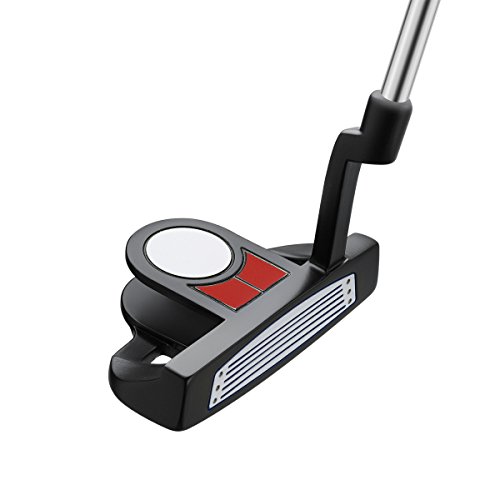
Alignment details vary substantially. The Orlimar Age 3-5 model lists a visible alignment feature and a soft face insert. The PGM model lists three alignment lines, a grooved face, and a plumber-neck offset. The ENJOYCOOL and Acstar models list parallel alignment lines. These are documented design features that may help a parent choose a club with more visible aiming guidance; they are not evidence of a measured improvement in accuracy.
Some products instead emphasize head shape. The Orlimar Ages 9-12 model uses a mallet-style head, while PGM describes a mallet-blade head. Other selected products use two-way heads, including the adjustable sets. A buyer comparing designs should focus on what the child can see and handle comfortably rather than assuming that one head style is universally better.
Consider materials and grip details
The selected listings document several shaft materials. The Orlimar Age 3-5 model uses graphite, as does Acstar. The PGM and ENJOYCOOL listings specify stainless steel shafts. Wassteel uses 6063 aluminum alloy, while the adjustable sets generally describe aluminum alloy shafts. These material descriptions help explain the products’ construction, but the supplied evidence does not establish comparative durability or on-course performance.
Grip information is more consistent. Orlimar describes a soft undersized rubber grip; PGM lists a soft rubber grip; ENJOYCOOL, Acstar, Asyxstar, Wassteel, Lievermo, and THE GOLFER STORE describe rubber or anti-slip grip designs. A smaller, softer grip may be easier for a young golfer to hold, while a textured grip can be useful when the child is practicing indoors or outdoors. These are design considerations, not hands-on findings.
Check the practice setting and included equipment
For a single child using a home putting mat, a club-only product may be all that is needed. The fixed Orlimar, PGM, ENJOYCOOL, and Acstar options concentrate the purchase on the putter itself. That can simplify storage and keep the comparison focused on shaft length, head, alignment, and grip.
Sets can be more convenient for family practice. The Go For It Golf model includes three balls, a cup, and a flag. Wassteel includes five plastic balls. Asyxstar includes five practice balls and a cap. Lievermo includes two balls and two flag cups, while THE GOLFER STORE includes two putters, four practice balls, two soft balls, and two flag cups. These inclusions are useful when a buyer wants a ready-made activity, but they also mean the purchase includes more than the club.
Portability is another documented distinction. Wassteel describes a three-part putter, and the Lievermo listing describes its adjustable putters as portable. Several adjustable designs are positioned for indoor and outdoor use, including home, backyard, garage, balcony, or office practice. Use those location claims as intended-use guidance only; the supplied evidence does not provide independent testing of any surface or setting.
A practical selection checklist
First, identify the child’s height and playing hand. Next, decide whether a fixed length is preferable to a growing design. Then look for the specific features that matter most: alignment lines, an insert, a mallet head, a two-way head, a rubber grip, or included targets. Finally, check whether one putter or a multi-piece set better suits the household. This process narrows the best kids’ golf putters without relying on volatile marketplace information or unverified performance claims.
Final Recommendation
Acstar Two-Way Junior Putter 25-inch ranks first overall in this specification-based comparison under the published weighted criteria.
The final choice among the best kids’ golf putters depends on the documented features that match your intended use.
Orlimar ATS Junior Putter Age 3-5 is the highest-scoring returned product and the first overall specification-based choice for a small right-handed child. Its 23.5-inch length, 36-44-inch height guidance, graphite shaft, soft face insert, visible alignment feature, and undersized rubber grip form the most focused fit profile in this comparison.
For an older right-handed junior, the Orlimar ATS Junior Putter Ages 9-12 and ENJOYCOOL Junior Golf Putter 29-inch provide clear size direction. PGM Kids Junior Putter is the stronger choice when alignment lines and a detailed shaft and grip specification matter. Families that need flexibility should consider Asyxstar, Lievermo, or THE GOLFER STORE because their two-way designs and adjustable ranges accommodate more than one hand or height. Go For It Golf is a useful single-club growth option, while Wassteel and Acstar offer compact two-way alternatives.
The top kids’ golf putters therefore divide into clear use cases rather than one universal winner. Fixed junior models are easier to match when the child’s height is known. Adjustable sets are more practical for shared practice, and included balls or flag cups can make them convenient for indoor or backyard activities. Recheck the listed dimensions and handedness before ordering, because this comparison uses public listing specifications rather than hands-on testing.
Frequently Asked Questions
How long should a kids’ golf putter be?
There is no single length for every child. The supplied examples range from 23.5 inches for the Orlimar Age 3-5 model to 30.5 inches for the Orlimar Ages 9-12 model. PGM lists a 27-inch shaft for children 4 feet to 4 feet 5 inches tall. Measure the child and use the product’s stated age or height guidance where available.
Are two-way putters useful for children?
They can be useful when the playing hand is not yet settled or when right- and left-handed family members share equipment. Acstar, Asyxstar, Wassteel, Lievermo, and THE GOLFER STORE document two-way designs. A two-way head does not remove the need to choose an appropriate length.
Is an adjustable putter better for a growing child?
An adjustable model may offer more flexibility because the shaft can be changed as the user or setting changes. Go For It Golf and Asyxstar list 17-35-inch adjustment, while THE GOLFER STORE lists 16-36 inches. The listings do not provide a complete fit chart for every child, so compare the available range with the child’s height.
Which selected putters include practice equipment?
Go For It Golf includes three balls, a cup, and a flag. Wassteel includes five plastic balls, and Asyxstar includes five practice balls. Lievermo includes two balls and two flag cups. THE GOLFER STORE includes two putters, balls, and two flag cups. The included equipment can be useful for starting indoor or backyard practice immediately.
What should I check before buying one of the best kids’ golf putters?
Confirm the child’s height, playing hand, intended practice location, and whether a fixed or adjustable shaft is preferred. Then verify the documented length, grip, head design, alignment features, included equipment, and any stated warranty. Those checks provide a more reliable basis for choosing among the listed products than a generic age label alone.