Buying Guide
Choosing among the best left-handed golf putters starts with confirming that the club is genuinely configured for a left-handed stroke. A product that merely says it is ambidextrous or two-way can be useful for shared practice, but it does not always provide the same fitting information as a dedicated left-hand model. Check the listed hand, length, head shape, hosel, grip, and any available loft or lie details before comparing features.
Match the head shape to your setup preferences
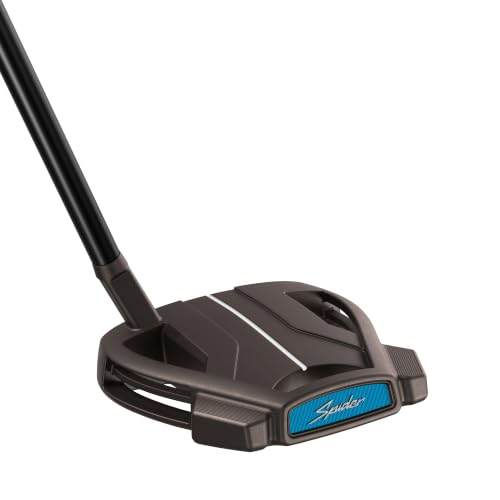
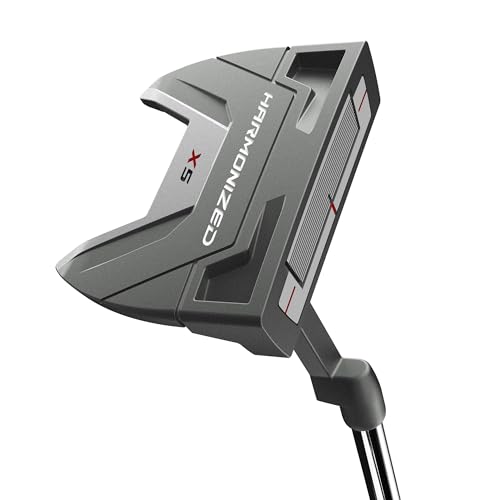
Mallet heads are represented by the TaylorMade Spider Tour X, Cleveland HB Soft 2 Retreve, COOLO Low Torque, Orlimar Tangent T1, Wuday, and Wilson Harmonized X5. Their larger profiles are paired with alignment systems or stability-focused descriptions. That makes a mallet worth considering if you like seeing more structure behind the face at address or want a design that emphasizes resistance to twisting in the listing.
The TaylorMade Spider Tour X has the most comprehensive documented package, including thin-wall undercut construction, high-MOI language, True Path alignment, TSS weighting, and CG progression. The Wuday also explicitly lists a high-MOI head and low center of gravity. These are specification descriptions, not guarantees of performance, but they provide a clearer basis for comparing stability-oriented designs.
Blades offer a different visual and setup profile. The Wilson Infinite Bucktown, PGM Notched Groove Blade, and Mile High Life Left-handed Blade are the dedicated blade choices in this selection. The PGM model supplies the most detailed weight information, while the Mile High Life model lists loft, lie, grip, finish, and head-weight range. The Wilson Bucktown focuses on a double-milled face, parallel lines, and an anti-glare finish.
Prioritize alignment features you can use
Alignment aids should be judged by what you can consistently see and repeat. The TaylorMade True Path system is a broader visual structure, while the Wilson Infinite Bucktown uses a thick center line with thinner support lines. The Orlimar Tangent T1 offers a contrasting bi-color sightline, and the Wuday and PGM models use simpler single-line or integrated-line approaches.
A multi-line system is not automatically better. Some golfers prefer one uncomplicated reference, while others like a longer visual channel that relates the face to the target line. If glare distracts you, the Wilson Bucktown’s anti-glare finish and the Mile High Life’s matte finish are relevant documented details. Treat finish claims as address-visibility considerations rather than proof of improved putting.
Compare face construction carefully
Face technology varies considerably. TaylorMade lists a white TPU Pure Roll insert with 45-degree grooves and a HYBRAR ECHO DAMPENER. Cleveland uses dynamic groove milling through Speed Optimized Face Technology. Wilson’s Bucktown uses a double-milled face, while COOLO and Wuday list CNC-machined or CNC-milled grooved faces. The PGM blade combines a notched strike surface with a milled face, and the Orlimar uses a simulated face insert.
These descriptions can help you identify the type of contact and feel a product is designed to provide, but public listing data cannot establish how any face will feel to you. When comparing the best left-handed golf putters, use the face description alongside head shape, length, and alignment rather than treating one insert or groove pattern as universally superior.
The selected putters range mainly from 34 to 35 inches. The Cleveland Retreve is listed at 34 inches with a single bend, the Orlimar is 35 inches with a plumber’s-neck offset hosel, and the COOLO is 34 inches with a center shaft. Those distinctions matter because they change the visual setup and may suit different preferences. The Cleveland listing specifically organizes models around straight or slight-arc stroke types, while the Orlimar’s heel-shafted offset arrangement gives more setup information than a generic mallet description.
The PGM Notched Groove Blade lists a straight tapered shaft, 34-inch length, and specific shaft and head weights. The Mile High Life model lists a 35-inch length, 3-degree loft, and 72-degree lie. Such details are useful starting points, but they do not replace a professional fitting. If your posture or arm position calls for a different length, do not assume that a standard 34- or 35-inch option will be ideal.
Decide whether convenience features matter
The Cleveland Retreve can pick a ball out of the hole or another surface, which may be useful for golfers who value convenience. The TaylorMade includes a two-year warranty in the supplied specifications, while several other selections list one-year coverage. Wuday lists no warranty. Warranty terms are not performance features, but they can affect ownership considerations.
Also separate a full golf putter from a practice product. This guide therefore emphasizes the ten models with the clearest combination of left-hand suitability and golf-putter specifications.
Use budget wording carefully
A lower-cost putter can be a sensible way to establish whether a particular length, blade, or mallet profile suits you. The Mile High Life, PGM, Wilson Harmonized X5, and PGM low-center-of-gravity models provide relatively simple configurations, while TaylorMade and Cleveland offer more elaborate documented feature packages. Price alone is not used in the editorial scoring, and the listing data does not establish which model will produce better results for an individual golfer.
Final Recommendation
TaylorMade Spider Tour X Sightline Left-handed ranks first overall in this specification-based comparison under the published weighted criteria.
TaylorMade Spider Tour X Sightline Left-handed is the highest-scoring returned product and the first overall specification-based choice.
The final choice among the best left-handed golf putters depends on the documented features that match your intended use. TaylorMade’s documented combination of True Path alignment, TPU Pure Roll insert, thin-wall undercut construction, TSS weighting, CG progression, and vibration dampening gives it the broadest feature coverage in this comparison.
The Cleveland HB Soft 2 Retreve is the practical alternative for golfers who want a single-bend, 34-inch configuration plus ball retrieval. Choose Wilson Infinite Bucktown for a cleaner visual setup with parallel lines and an anti-glare finish. Golfers seeking a blade can compare the detailed weights of the PGM Notched Groove Blade with the loft and lie information of the Mile High Life model. For mallet stability, Wuday is a simpler alternative to the TaylorMade.
These are the top left-handed golf putters by the supplied specifications, not hands-on test winners. Confirm length, hosel style, grip preference, and return or warranty terms before buying, particularly when the listing omits fitting details.
Frequently Asked Questions
What should I check first when buying the best left-handed golf putters?
Confirm the hand configuration and length first, then review head shape, hosel, alignment aid, face construction, and grip. Dedicated left-hand models such as the TaylorMade Spider Tour X, Cleveland Retreve, and Wilson Infinite Bucktown provide clearer configuration details than general two-way practice putters. If a listing does not state the hosel or toe-hang arrangement, treat that as missing information rather than assuming compatibility with your stroke.
Are mallet putters more forgiving than blades?
The supplied listings describe mallets such as the TaylorMade Spider Tour X and Wuday as having high-MOI or stability-focused construction, while blades such as the Wilson Infinite Bucktown and PGM Notched Groove Blade emphasize face and alignment details. That supports a design comparison, but it does not prove that every mallet will be more forgiving for every golfer. Choose the head shape whose alignment picture and setup you can repeat comfortably.
Is a 34-inch or 35-inch putter better for a left-handed golfer?
Neither length is universally better. The selected models include both sizes, and the appropriate choice depends on posture, arm position, and address preference. The Cleveland, Wilson Bucktown, COOLO, PGM blade, and PGM low-center-of-gravity models are listed at 34 inches, while TaylorMade, Orlimar, Wuday, and Mile High Life are listed at 35 inches. A fitting or careful setup check is preferable to choosing solely by the number.
What is the benefit of an alignment line?
An alignment line provides a visual reference for aiming the face and starting the setup. The Wuday and PGM low-center-of-gravity models use a single or integrated line, the Wilson Bucktown uses parallel lines, and the TaylorMade Spider Tour X uses the broader True Path system. The most useful style is the one that remains clear when you address the ball; more lines are not automatically more effective.
Can a two-way putter replace a dedicated left-handed putter?
A two-way putter can be useful for indoor practice, shared use, children, or casual play. However, dedicated models usually provide more specific information about left-hand configuration, length, head shape, hosel, and face design. For regular course use, compare those details rather than assuming that an ambidextrous design offers the same setup as a dedicated left-handed golf putter.