Buying Guide
The best steel golf putters are not interchangeable simply because they share a shaft or metal construction. The listings in this comparison span blade and mallet heads, several hosel styles, different lengths, and grip designs. Start by deciding how much head stability and setup guidance you want, then compare face technology and the material evidence supplied for each model.
Blade or mallet head
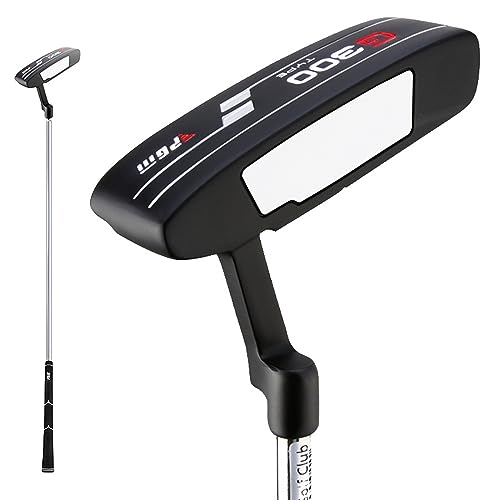
A blade is the more traditional shape in this group. The PGM TUG025-1, GoSports GS1, GoSports Classic, and Wilson Augusta all document blade-style construction. Blades can appeal to golfers who prefer a compact, conventional appearance and direct control at address. The trade-off is that the supplied listings generally provide less stability information than the mallet listings.
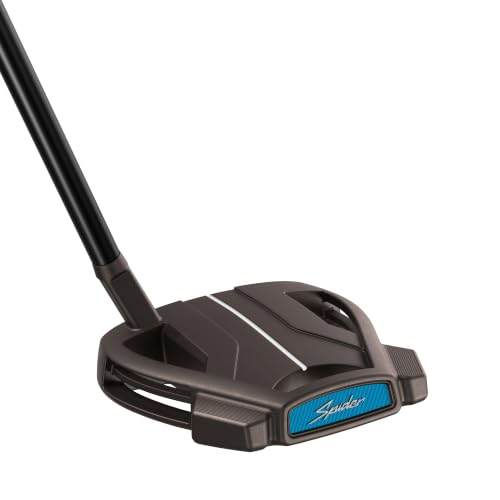
Mallets occupy the other side of the comparison. The PGM Anti-Twist Mallet documents a high-MOI head and low center of gravity, while the GoSports GS2 identifies a stainless steel head and oversized grip. The Cleveland HB Soft 2 Model 11 is another mallet choice with an enlarged striking area and stroke-specific design. These descriptions make mallets the better-documented option for shoppers who place stability and forgiveness near the top of their checklist. They do not, however, replace a personal fitting or on-course test.
Match the face description to your priorities
Face construction is one of the most specification-aligned specification differences. The PGM TUG025-1 lists a milled face with precision grooves and a notched strike surface. The GoSports GS1 and GS2 both identify milled faces, while the GoSports Classic lists a milled alloy face. Cleveland’s HB Soft 2 models use dynamic groove milling that the listings describe as normalizing ball speed across an enlarged striking area. The Cleveland HB Soft Milled adds a cast-then-CNC-milled head description.
These are product claims from public listings, not independent measurements. Treat them as comparison points: a milled or grooved face is documented evidence of a design approach, not a guarantee of a particular roll, sound, or distance result. The Odyssey AI-Dual Seven has limited supplied feature information, so shoppers should verify additional face and material details before purchase.
Consider hosel and stroke fit
Hosel style changes how a putter is presented and can be relevant to a golfer’s preferred stroke. The Cleveland Model 11 uses a slant neck, the Cleveland Model 10.5 uses a plumber’s neck, and the Cleveland HB Soft Milled is center shafted.
The Cleveland listings specifically connect head shape, hosel style, toe hang, alignment system, and grip to stroke-specific designs. That is useful documentation, but the supplied data does not tell us which model fits an individual golfer. If you already know whether you prefer a slant neck, plumber’s neck, or center shaft, use that preference to narrow the list before considering cosmetic details.
Check length and hand orientation
Length is one of the easiest specifications to verify. Several selected models are 35 inches, including the PGM TUG025-1, PGM Anti-Twist Mallet, GoSports Classic, Odyssey AI-Dual Seven, Cleveland Model 11, Cleveland HB Soft Milled, and Wilson Augusta. The GoSports GS1 and GS2 are 34 inches, as is the Cleveland Model 10.5. The title and specifications identify most selected configurations as right handed.
Do not assume that a familiar length is automatically correct. Compare the listed length with your posture, setup, and current putter. Also confirm hand orientation before ordering. The Wilson listing says the design works for both right- and left-handed golfers, but the supplied product configuration is titled right handed. That distinction matters when comparing listings.
Evaluate grip and alignment aids
Grip design can be a meaningful specification difference. The GoSports GS2 has a 1.3-inch textured fat grip, and its listing associates the design with minimizing hand rotation. The GoSports GS1 lists a traditional textured grip and also describes an oversized alternative. The PGM Anti-Twist Mallet uses a textured, weather-resistant grip, while the Wilson Augusta lists an all-weather grip. The PGM TUG025-1 has less grip detail in the supplied evidence, so it should be judged more on its head, face, and weight information.
Alignment information is also uneven across the group. The PGM Anti-Twist Mallet includes a bold single-line guide. The Cleveland models use stroke-fit alignment systems, although the supplied records do not specify every visual pattern. Alignment aids can help create a repeatable address routine, but the listing evidence does not establish how easy any particular line is for every golfer to use.
Use material claims carefully
The most specification-aligned direct steel evidence appears in the PGM TUG025-1’s steel size specification, the PGM Anti-Twist Mallet’s stepped steel shaft, and the Wilson Augusta’s steel shaft. The GoSports GS1 and GS2 explicitly identify stainless steel heads. Other selected products are clearly putters but have more limited material descriptions in the supplied records. This is why the scoring criterion measures construction evidence rather than assuming that every unspecified component has the same material.
If steel construction is your deciding factor, read the exact configuration details and confirm the shaft and head materials with the seller. Avoid treating a brand name, finish, or general golf-club category as proof of a particular alloy.
Final recommendation
PGM Anti-Twist Mallet Putter ranks first overall in this specification-based comparison under the published weighted criteria.
The final choice among the best steel golf putters depends on the documented features that match your intended use.
Cleveland HB Soft 2 Model 11 is the highest-scoring returned product and the first overall specification-based choice. Its enlarged striking area, dynamic groove milling, slant neck, 35-inch length, and stroke-specific design give it the most complete documented package in this comparison. For shoppers comparing the top steel golf putters, the PGM Anti-Twist Mallet is the most specification-aligned alternative when explicit steel-shaft evidence, high-MOI construction, and a single alignment line matter most.
Choose the PGM TUG025-1 if you want a steel-shaft blade with listed head and shaft weights. Choose the Cleveland HB Soft Milled Model 10.5 if center-shafted or plumber’s-neck comparisons are central to your decision. The GoSports GS1 and GS2 are useful for shoppers focused on stainless steel heads and grip choice, while the Wilson Augusta is the simplest conventional steel-shaft blade option. These recommendations are based on listing specifications only, not hands-on testing.
Frequently Asked Questions
What should I compare first in the best steel golf putters?
Start with head type, length, hand orientation, hosel style, and the exact material evidence. Then compare face milling, alignment aids, stability claims, and grip design. Those details are more useful than relying on a broad product label alone.
Are mallet putters more forgiving than blades?
The selected mallet listings provide more explicit stability-related features, including high-MOI construction, low center of gravity, or an enlarged striking area. The blade listings emphasize traditional shapes and milled faces. That documentation supports comparing mallets for stated stability features, but it does not prove a universal performance result for every golfer.
Which best steel golf putters have a 34-inch length?
The selected 34-inch options are the GoSports GS1 Tour Blade, GoSports GS2 Tour Mallet, and Cleveland HB Soft 2 Model 10.5. Their head shapes and hosel configurations differ, so length should be evaluated alongside the intended setup rather than by itself.
What is the difference between a plumber’s neck and a slant neck?
They are different hosel configurations documented in this comparison. Cleveland’s Model 10.5 uses a plumber’s neck, while the Model 11 uses a slant neck. The supplied records associate these models with stroke-specific design families, but they do not establish which hosel is best for an individual stroke.
Should I choose a fat grip or traditional grip?
The GoSports GS2 documents a 1.3-inch oversized fat grip, while the GoSports GS1 lists a traditional grip and an oversized alternative. A fat grip may appeal to golfers who want to limit hand movement, whereas a traditional grip may provide a more familiar profile. The right choice depends on your preferred setup and feel.