Buying Guide
The best knife letter openers are easier to compare when you separate the tool’s entry design from its broader appearance. A letter opener may look like a miniature sword, a paper knife, a compact concealed-blade tool, or a utility-style stick. These formats can all serve mail opening, but they differ in handling, storage, and the materials their listings say they can address.
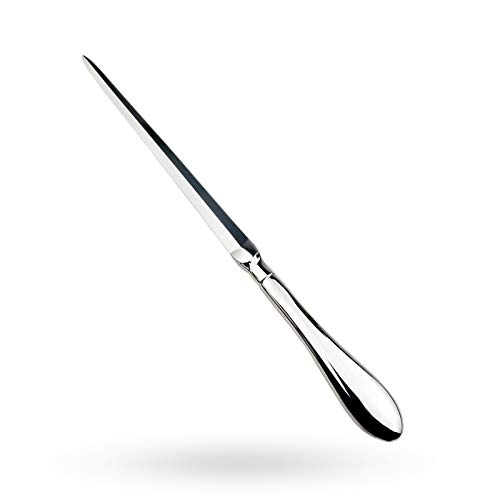
Traditional exposed designs use a pointed tip or narrow edge that slides into an envelope seam. MUSROD, CaLeQi, Thorness, and Westcott follow this general pattern, with the supplied listings emphasizing pointed tips, paper opening, or light-duty cutting. These are appropriate when the opener will remain on a desk and visual style matters. Longer profiles can provide more reach across a wide envelope, but length alone does not establish better performance.
A concealed-blade design places the cutting element inside a body. Muclip and ZONICE both document enclosed blades, while Muclip uses impact-resistant ABS plastic and ZONICE uses lightweight plastic bodies. This format is worth considering for shared desks, travel kits, or households where reducing direct blade exposure is important. The trade-off is that these tools generally feel less like traditional paper knives and may be less decorative.
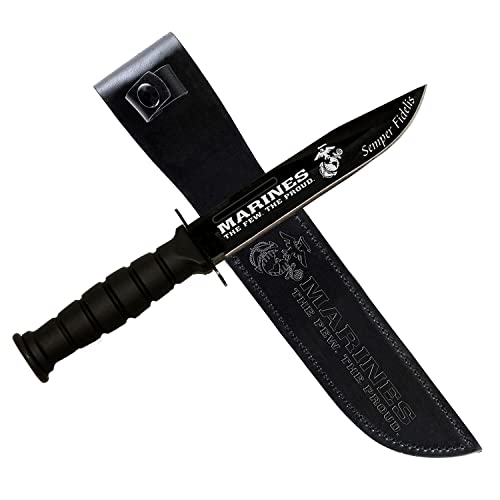
A sheathed design offers another compromise. The Roczipeng stick opener has a stainless steel sheath that rotates to cover the blade, and the miniature USMC model includes a black leather sheath. These options provide a defined storage feature while retaining a knife-like appearance. Check where the sheath will be kept; a cover is useful only when it is used consistently.
Match construction to desk use
Stainless steel appears across several selected products, including ALLEX, Westcott, CaLeQi, Roczipeng, and Muclip’s concealed blade. Stainless steel identifies the blade construction, but it does not by itself establish a particular cutting result or lifespan. ALLEX adds a non-stick fluorine coating, while the Roczipeng listing specifies an all-steel body and sheath.
Decorative materials change the desk experience. Thorness uses one-piece brass molding with an embossed floral pattern, Westcott uses a rosewood handle, and CaLeQi presents a mahogany-colored handle area. These are sensible choices when the opener is also part of the desk setting or intended as a gift. Decorative construction may come with more weight or less convenient portability, so consider whether the tool will remain in one place.
Look for grip details
Grip evidence is more useful than appearance alone. ALLEX documents curved ergonomics and non-slip elastomer resin rings. Muclip lists an anti-slip ABS handle, and the selected multipiece metal sets describe plastic handles intended to improve friction or hand comfort. These details indicate how each product is intended to be held, but they do not replace an in-person fit check.
Longer openers can be comfortable for a single pass across an envelope, while compact tools are easier to put in a drawer, bag, or pencil case. ALLEX measures 6.7 inches overall, CaLeQi is listed at 6.3 inches, and MUSROD and Westcott are about 9 inches. If you regularly open a stack of mail, prioritize a grip description and a shape that gives you control rather than choosing by length alone.
Consider safety and storage
The clearest safety-related distinction in this group is whether the blade is enclosed or covered. Muclip and ZONICE conceal the blade inside plastic bodies. Roczipeng uses a rotating sheath, and the USMC model includes leather storage. By contrast, exposed designs such as Thorness, Westcott, and Chuangdi require a suitable drawer, holder, or desk location.
A pointed tip is functional because it can enter an envelope edge, but it also means the opener should be stored deliberately. The Thorness listing says the product is not a toy and is unsuitable for children. Chuangdi also advises keeping its openers away from small children. Those cautions are consistent with the physical format described in the listings.
Decide whether multipacks help
Multipacks make sense when several desks need an opener or when you want one in different rooms. ZONICE supplies six concealed-blade units, Muclip supplies four compact units, and Chuangdi supplies four decorative stainless steel pieces. Multipacks can support a home office, classroom, or mailroom layout. For one personal desk, a single better-specified tool may be more practical than storing several spares.
Review the stated task range
Most products here are primarily envelope openers. Some listings also mention paper, ribbon, photographs, boxes, cartons, tape, cardboard, plastic bags, or packages. Roczipeng and Muclip have particularly broad stated applications, while Westcott is explicitly positioned for light-duty paper, ribbon, and photos. Treat these descriptions as documented intended uses, not as proof of performance on every material.
For routine correspondence, prioritize entry design, grip, and storage. For occasional package or soft-material opening, a model with a broader stated task range may be more suitable. Avoid choosing a sharper-looking design solely because it resembles a pocketknife; the relevant evidence is the product’s listed construction, cover, handle, and intended use.
Final Recommendation
ALLEX Letter Opener Black 6.7-inch ranks first overall in this specification-based comparison under the published weighted criteria.
The final choice among the best knife letter openers depends on the documented features that match your intended use.
ALLEX Letter Opener Black 6.7-inch is the first overall specification-based choice. Its Japanese stainless steel blade, curved profile, non-stick fluorine coating, and elastomer grip rings provide detailed evidence for controlled desk use. Choose Roczipeng if a rotating sheath and broader material range matter more, or Muclip if a compact concealed-blade four-pack better fits your workspace.
Among the top knife letter openers, the best format depends on storage and presentation. ZONICE is a practical multi-location choice, the USMC model is distinctive for gifting and display, and MUSROD offers a classic long metal profile. Thorness, CaLeQi, Westcott, and Chuangdi suit buyers who want traditional or decorative desk accessories and are comfortable storing exposed designs carefully.
Frequently Asked Questions
What should I look for in the best knife letter openers?
Start with a pointed or guided envelope-entry design, then check the grip material, blade construction, and whether the blade is covered. ALLEX documents all of those categories in more detail than the other selected products. If several people will use the tool, a concealed-blade or sheathed model may be easier to store responsibly.
Are concealed-blade letter openers safer to store?
They reduce direct exposure to the cutting element because the blade is enclosed in the body. Muclip and ZONICE document concealed blades, while Roczipeng and the USMC model document separate sheath solutions. That does not eliminate the need for careful handling, and users should follow the product’s stated cautions.
Is a longer letter opener better?
Not necessarily. Longer models such as MUSROD and Westcott provide a traditional shape and more reach, while ALLEX and CaLeQi offer shorter formats. The right length depends on whether you prefer a substantial desk accessory or a compact tool. Grip design and storage can matter more than overall length.
Can these letter openers cut packages?
Some listings explicitly include packages, boxes, cartons, cardboard, tape, or plastic bags among the intended uses. Roczipeng has one of the broadest stated ranges, and Muclip also lists several light materials. Westcott is described more narrowly for light-duty paper, ribbon, and photos, so read the task description rather than assuming every model is interchangeable.
Thorness, CaLeQi, Westcott, and MUSROD offer traditional or decorative styling through brass, wood, polished metal, or shaped handles. The ALLEX is more restrained and technical. For a formal desk, consider both appearance and where an exposed pointed tool will be stored when it is not in use.