Buying Guide
Choosing best blade letter openers starts with the way you open mail, not with appearance alone. The supplied products fall into two broad formats: traditional handled blades and compact concealed slitters. Traditional models such as the ALLEX, Westcott, Roczipeng, TKYZMS, and Zonon use longer profiles that resemble small paper knives. Compact options such as the Auto CLO-500, Holyenten, ZONICE, Muclip, and STAPLES place the cutting edge inside or behind a small body.
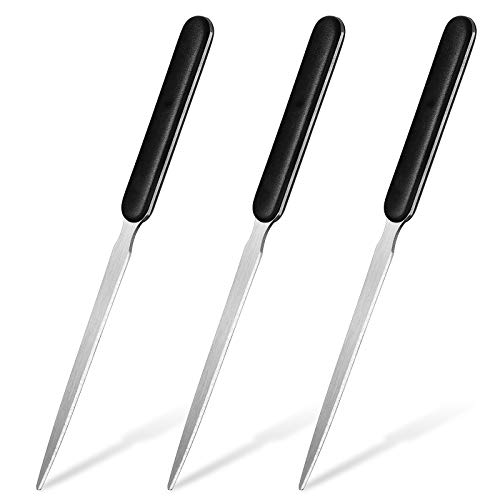
A traditional opener can be easier to orient because the handle and blade follow a familiar line. The ALLEX documents a curved blade, soft elastomer rings, and a 6.7-inch overall length. Westcott lists an 8-inch stainless steel serrated blade with a plastic handle. Roczipeng adds a sheath to its 7.08-inch metal design, while TKYZMS and Zonon document 7.48-inch stainless steel openers.
These longer designs may suit a dedicated desk drawer or mail-sorting station. They also take up more room than flat or compact products. The longer blade does not automatically establish better performance, so compare the documented construction and grip rather than assuming size alone is an advantage.
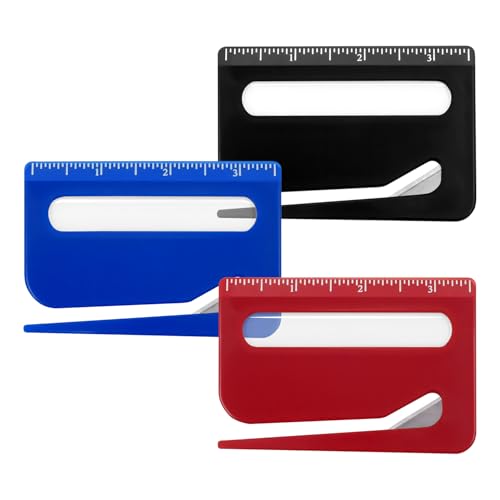
Concealed slitters are generally more storage-friendly in the supplied range. The Auto CLO-500 uses a ceramic blade with an ABS resin cover. Holyenten describes a hidden blade inside a slim card-size ABS body. ZONICE, Muclip, and STAPLES also document concealed or enclosed blades. This format may be preferable when an opener will be kept in a shared drawer, pencil case, car, or travel bag.
Check blade material and edge details
Material information varies considerably. The ALLEX identifies Japanese stainless steel and a non-stick fluorine coating. Roczipeng specifies 50Cr15MoV high-carbon stainless steel and describes a laser-etched edge pattern. Westcott, TKYZMS, and Zonon identify stainless steel, while Muclip identifies an enclosed stainless steel blade. Auto identifies ceramic. Several compact listings describe a sharp or razor blade without naming the metal or ceramic composition.
A named material gives you more specification context, but it should not be treated as proof of long-term edge life or cutting performance. Coatings can also matter for the intended task: ALLEX specifically documents a non-stick finish for adhesive and tape. If your routine is mostly folded letters, a simple envelope-focused design may be sufficient. If you also handle tape or light packaging, choose only a product whose listing documents that use.
Consider safety and storage
The main safety distinction in this category is whether the cutting edge is exposed, covered, or concealed. Holyenten, ZONICE, Muclip, and STAPLES explicitly describe hidden or enclosed blades. Auto pairs a ceramic blade with an ABS cover. Roczipeng includes a sheath, which provides a separate storage layer for its metal opener.
A concealed blade does not mean the tool should be handled carelessly. For the selected products, follow the supplied safety direction and keep any cutter away from children when appropriate. Traditional openers without documented covers or sheaths deserve a dedicated storage location.
Match the grip to your routine
Grip details are especially important if you open a large volume of mail. ALLEX documents soft elastomer resin rings and an ergonomically curved blade. ZONICE describes an ergonomic plastic grip, while Muclip documents an anti-slip ABS handle. Roczipeng describes an ergonomic ABS handle, and Zonon describes a humanized ergonomic handle.
Compact card-style tools trade handle length for portability. Holyenten describes a smooth, non-slip plastic surface, but its flat body is not the same as a conventional handle. Auto has very small listed dimensions and a low main-unit weight, which may suit brief tasks but gives less documented hand-contact detail. For repeated opening, prioritize the products with explicit grip information and a shape you can store securely.
Decide whether a multipack helps
Multipacks make sense when several people need an opener or when you want one at home, work, and in a bag. STAPLES, ZONICE, Muclip, and Holyenten provide six, six, six, and three pieces respectively. TKYZMS offers four, while Zonon offers three. These sets can also reduce the need to move one tool between locations.
A single specialty opener may be better when you want a particular blade material, coating, or sheath. ALLEX and Auto are more focused single-tool choices, while Roczipeng supplies two sheathed openers. Pack size should therefore follow placement needs, not serve as a substitute for checking construction.
Some products add functions that may be helpful in a home office. Holyenten documents a printed ruler and a small enlarging lens. Muclip documents a built-in hole for attaching or hanging. Roczipeng also includes a lanyard hole. These features are relevant when storage or quick reference matters, but they do not replace blade and safety specifications.
The most useful best blade letter openers are the ones whose documented design fits your actual mail routine. For a dedicated desk, compare blade material and grip. For shared workspaces, compare concealed construction and quantity. For travel, compare thickness, weight, and storage features.
Final Recommendation
Roczipeng Fancy Letter Opener with Sheath ranks first overall in this specification-based comparison under the published weighted criteria.
ALLEX is the first overall specification-based choice among these best blade letter openers because it provides the clearest combination of Japanese stainless steel, non-stick coating, curved geometry, grip rings, and compact weight. It is followed by Roczipeng for its high-carbon steel blade and sheath, then Westcott for a conventional serrated stainless steel design.
For a covered safety format, Muclip and ZONICE offer enclosed blades with ergonomic or anti-slip grip details and six-piece quantities. The Auto CLO-500 is the most compact ceramic option in the selection. Holyenten stands out for card-size storage plus a ruler and magnifier. STAPLES is a straightforward concealed-blade office set, while TKYZMS and Zonon suit buyers who prefer several traditional stainless steel openers.
These top blade letter openers are not interchangeable in format. Review the blade coverage, handle style, dimensions, and quantity before choosing. The most specification-aligned match is the one that fits your storage method and opening volume while staying within the uses documented for that product.
Frequently Asked Questions
What should I look for in the best blade letter openers?
Start with blade coverage, material, grip, dimensions, and intended uses. A concealed blade can suit shared storage, while a traditional handled model may offer a more familiar grip. Named materials such as stainless steel or ceramic provide clearer specification evidence than a listing that only calls the edge sharp.
Are concealed-blade letter openers better for offices?
They may be more convenient for shared drawers because the cutting edge is enclosed. STAPLES, ZONICE, Muclip, Holyenten, and Auto document covered or concealed designs. Still, the tool should be used only as directed and stored responsibly. Concealment is a design feature, not a guarantee of risk-free handling.
Which selected opener is easiest to carry?
The Holyenten set is the most explicitly travel-oriented because its openers are described as card-size and only 0.12 inches thick. Auto is also very compact and lightweight. Muclip and ZONICE document compact, lightweight bodies. Compare the listed dimensions with your wallet, pencil case, or bag before buying.
A sheath can make storage more controlled, especially for a longer exposed-blade design. Roczipeng includes an ABS plastic sheath. The ALLEX and Westcott listings do not document a sheath, so they should be stored in a suitable drawer or holder. A sheath does not change the need for careful handling.
Is a multipack useful for mail-heavy households?
It can be useful when multiple people or locations need a tool. The selected STAPLES, ZONICE, and Muclip products provide six pieces, while Holyenten and Zonon provide three. If only one person opens occasional mail, a single specialty opener may avoid storing unused extras.