Buying Guide
This guide compares the best laser photo quality paper using documented laser printer compatibility and feeding, surface coating and photo finish quality, weight, rigidity, and stiffness, brightness and color reproduction, archival safety and longevity, size and format availability, and design versatility and use-case fit.
What Makes Laser Photo Quality Paper Different
Photo printing on a laser engine depends on more than a glossy surface. The toner in a color laser printer is fused to the sheet with heat and pressure, so the paper must have a coating engineered to bond with toner rather than absorb liquid ink. That is why inkjet photo paper often smears or smudges when run through a laser printer, and why the best laser photo quality paper is built around heat resistance, controlled caliper, and a coating tuned for toner adhesion. When comparing options, look for sheets that explicitly state laser compatibility, document their weight in both gsm and lb, and list brightness and opacity for the coated side. A short list of these fundamentals clarifies how the rest of the buying guide fits together.
Match the Coating to Your Photo Output
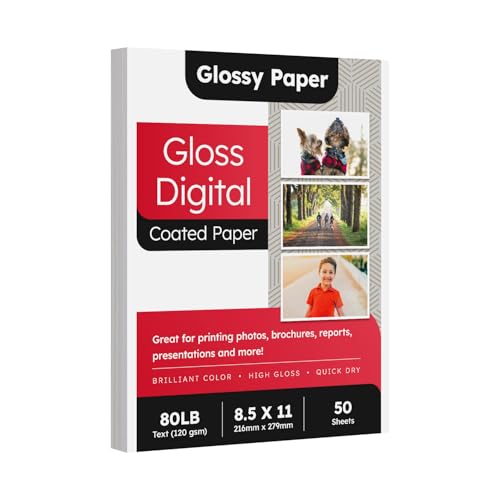
Coating choice shapes the final look more than raw weight. A full gloss C2S (coated two sides) sheet produces punchy color and reflective highlights that suit commercial photo prints, marketing brochures, and high-contrast portraits. A semi-gloss or satin surface keeps color depth while reducing glare, which is useful for portrait walls, framed prints, and displays under overhead lighting. A dull or low-gloss coating offers the cleanest readability for photo-heavy documents with text, such as catalogs, spec sheets, or menus. Several sheets in the comparison lean toward full gloss, including the FoldCard 80lb Text C2S, the Quality Outpost 100lb Text C2S ream, and the S Superfine Printing double-sided gloss ledger paper, while the S Superfine Printing Dull 100lb Text is the clearest low-glare option.
Pick the Right Weight and Rigidity for the Job
Weight matters because a laser printer’s paper path must grip the sheet, bend it around rollers, and deliver it to the fuser without skew. Lightweight text-weight sheets around 80lb (120gsm) feed easily and fold cleanly for tri-fold brochures and booklets, but they may feel thin for card applications. Heavier cover stocks around 80lb cover (216gsm) and up deliver the stiffness needed for invitations, covers, postcards, and stand-up displays. Two products in the lineup illustrate the contrast well: the S Superfine Printing 80lb Cover Double-Sided Gloss C2S Cardstock is built for rigid photo cards, while the FoldCard 80lb Text Double-Sided Gloss Laser Paper suits everyday flyers. Always check the printer manual before loading thick cover stocks, since some desktop lasers set a lower media ceiling.
Brightness, Opacity, and Color Reproduction
Brightness is measured on a scale typically from 92 to 100, with higher numbers producing cleaner whites and more vivid coated tones. Opacity, reported as a percentage, controls how much show-through appears on double-sided prints. For photo-rich brochures and portfolios, aim for 94 brightness or higher, since every point gained tends to lift perceived color saturation. The Quality Outpost 100lb Text C2S lists 94 brightness with 96 opacity, and the S Superfine Printing 100lb Text Double-Sided Gloss C2S reaches 96 brightness, both of which support photo-heavy layouts. Keep in mind that gloss and brightness interact: a high-brightness sheet under a gloss coating can appear slightly cooler, while the same sheet under a dull coating reads warmer and more controlled.
Sheet format shapes workflow. Letter (8.5 x 11) is the standard for general color laser output, ledger (11 x 17) supports tabloid posters and book spreads, half-letter (8.5 x 5.5) suits folded brochures and pocket cards, and small formats like 5 x 7 or 4 x 6 are ideal for invitations and photo prints. Sheet count per pack determines how often you reload, with reams of 400 sheets cutting downtime on long marketing runs. If storage space is tight, smaller packs of 50 to 100 sheets are easier to keep flat and dry. Among the top laser photo quality paper options, the Quality Outpost 100lb Text ream offers the largest count, while the LIWUTE 4x6 and the Desktop Publishing Supplies 5x7 supply card-specific formats.
Archival Safety and Long-Term Photo Quality
If your photo prints need to last, the paper chemistry matters. Acid-free and lignin-free construction prevents yellowing and embrittlement, and most laser photo papers in this category advertise archival specifications. S Superfine Printing products uniformly document acid-free and lignin-free construction, which makes them dependable for photo albums and portfolios. The same applies to the Hamilco 80lb Cover White Glossy Cardstock, which is acid-free for invitation keepsakes, and the Desktop Publishing Supplies gloss cardstocks. Long-term photo display also benefits from storing prints away from direct sunlight and high humidity.
Specialty Options and Edge Cases
A few entries fill specific niches. The LIWUTE 4x6 Glossy Laser Photo Paper is the clear pick for small-format photo prints and gift tags on a laser printer. The Hamilco 80lb Cover White Glossy Cardstock targets invitation makers who want a rigid, double-sided gloss sheet. The S Superfine Printing Dull 100lb Text suits galleries and design offices that need glare-controlled photo output. Each of these specialty picks keeps the laser-compatibility foundation while extending into a defined use case.
Final Recommendation
S Superfine Printing 80lb Cover Double-Sided Gloss C2S Cardstock ranks first overall in this specification-based comparison under the published weighted criteria.
The final choice among the best laser photo quality paper depends on the documented features that match your intended use.
The S Superfine Printing 80lb Cover Double-Sided Gloss C2S Cardstock is the highest-scoring overall specification-based choice, combining heavy 216gsm stock with double-sided gloss coating, acid-free chemistry, and proven laser-printer compatibility. For everyday photo and brochure output, the FoldCard 80lb Text Double-Sided Gloss Laser Paper and the S Superfine Printing Double-Sided Gloss C2S 100lb Text Paper balance gloss finish, high brightness, and dependable feeding. For tabloid layouts, the S Superfine Printing 100lb Text Gloss Digital Ledger Paper, and for large marketing runs, the Quality Outstop 100lb Text C2S Glossy Business Paper Ream stand out as our top laser photo quality paper options in their respective formats.
Frequently Asked Questions
What weight of paper gives the best laser photo quality paper results?
For typical photo and brochure output, 80lb text (around 120gsm) offers smooth feeding and vibrant coating, while 100lb text (around 150gsm) adds opacity for double-sided photo spreads. For card and cover work, the best laser photo quality paper is often an 80lb cover (216gsm) stock, such as the S Superfine Printing 80lb Cover Double-Sided Gloss C2S Cardstock, provided the printer manual confirms support for that thickness.
Can any glossy photo paper be used in a laser printer?
No. Papers labeled for inkjet only use coatings that absorb liquid ink and may smear, bubble, or release fumes inside a laser fuser. The best laser photo quality paper always lists laser or digital press compatibility explicitly, with a coating engineered for toner adhesion rather than ink absorption.
Is matte or gloss better for laser photo printing?
Gloss produces the most reflective highlights and punchy color, which suits portraits, marketing collateral, and vibrant photo prints. Matte or low-gloss coatings reduce glare and feel more like fine-art paper, which is helpful for framed prints and photo-heavy documents with text. The choice depends on the display setting: the S Superfine Printing Dull 100lb Text Double-Sided C2S favors glare-controlled layouts, while the FoldCard 80lb Text Double-Sided Gloss Laser Paper favors high-impact color.
Confirm the sheet dimensions match your printer’s supported sizes, since many desktop lasers accept letter and ledger but may not feed small formats like 4 x 6 or 5 x 7 without manual trays. The Desktop Publishing Supplies 5x7 Glossy Laser Cardstock and the LIWUTE 4x6 Glossy Laser Photo Paper both require that the printer can physically handle their smaller formats.
How can I extend the life of laser-printed photos?
Choose acid-free and lignin-free paper, store prints in sleeves or albums away from direct sunlight, and keep humidity moderate. Papers such as the Hamilco 80lb Cover White Glossy Cardstock and the Quality Outpost 100lb Text C2S Glossy Business Paper Ream document archival construction that helps prevent yellowing over time, supporting long-lasting photo and brochure keepsakes.