Buying Guide
Choosing the best left-hand-throw baseball infielder’s mitts starts with translating the throwing description correctly. A left-hand-throw glove is worn on the right hand so the player throws with the left. Every selected listing identifies that orientation directly or clearly labels the product for left-hand throwers. Still, check the product variant before ordering because glove listings commonly place right-hand-throw and left-hand-throw options close together.
Match the glove to the player’s age and hand size
Size is the first practical filter. The selected products range from 10.5 inches to 12.5 inches. Easton Moxie, Rawlings Remix, and Easton Havoc are aimed at younger players, with listed age guidance from 3-9 or 6-9. Mizuno’s Prospect Series is listed for ages 7-8 at 11 inches, while Rawlings Select Pro Lite gives a broader 6-12 age range at 11.5 inches. These details are more useful than choosing by age alone because hand size, strength, and playing experience can vary within the same age group.
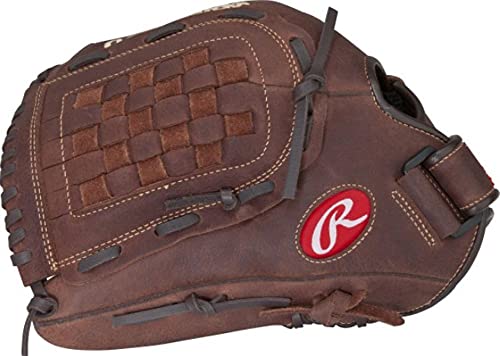
Larger gloves can provide more receiving surface, but they may also feel less compact during quick infield exchanges. The Rawlings Player Preferred at 12.5 inches and the Franklin Field Master at 12 inches are utility-oriented choices with broader coverage. The Wilson A700 is also 12 inches, but its listing specifically identifies it as an infield model. For a young player, the smaller 10.5- to 11-inch choices may be easier to close and control. For an older recreational player, the larger utility options may be more comfortable if the hand can operate the pocket effectively.
Choose a web and pattern for the intended role
A web pattern affects the glove’s structure, visibility, and how the pocket is presented, but the supplied listings do not provide hands-on evidence about transfer speed or game performance. Pro H webs appear on the Wilson A700 and Easton Havoc. Basket webs appear on Rawlings Player Preferred, Easton Moxie, Rawlings Remix, and Urby. Mizuno uses a Brown Tartan Flex web, while Rawlings Sandlot uses a modified Trap-Eze web.
For a clearly documented position fit, Wilson A700 is the most specification-aligned match because it is labeled as a 12-inch infield glove. Rawlings Sandlot is described as an 11.75-inch utility model for multiple fielding positions, and the Player Preferred is also listed as a utility glove. The youth models are generally described as all-position or utility gloves rather than specialized middle-infield patterns. That makes them suitable for learning defensive fundamentals, but buyers should not assume that a general utility glove has the same pattern as a dedicated shortstop or second-base model.
Compare shell materials and construction
The listings show a meaningful spread of materials. Wilson A700 uses full-grain A700 leather, Rawlings Sandlot and Player Preferred use full-grain oiled leather, and Mizuno Prospect uses full-grain pigskin leather. These descriptions document the shell material, but they do not establish a tested durability ranking. Easton Moxie has an all-leather shell, while Rawlings Select Pro Lite combines an all-leather shell and palm lining with lightweight textured vinyl.
Franklin Field Master uses soft synthetic leather, Rawlings Remix lists a soft shell without a more specific material description, and Urby uses PU leather. Synthetic and PU options may be attractive for beginners who want a lighter or easier-to-handle glove, while leather-focused models may appeal to players who prioritize traditional construction. The right choice depends on the player’s ability to close the glove, expected use, and preference for a softer starting feel.
Consider break-in and closure details
Break-in language is especially important for young players. Rawlings Select Pro Lite is listed as 90-percent factory and 10-percent player break-in. Rawlings Sandlot and Player Preferred are both listed at 80-percent factory break-in. Franklin Field Master is described as easy and quick to break in, while Easton Moxie is described as soft and easy to squeeze with little break-in required.
The Franklin glove adds thumb-adjustment technology and a contoured wrist area. Easton Havoc uses an adjustable Velcro wrist closure, and Rawlings Player Preferred has an adjustable wrist strap. Wilson A700 uses a drawstring closure, and the listing says its rawhide laces extend from the wrist closure for adjustments. These closure systems can help accommodate different hand shapes, but the supplied evidence does not show how each glove feels on a particular player.
Look for documented comfort and protection features
Palm and finger protection can matter when a developing player is learning to catch firmly. Rawlings Sandlot lists zero-shock palm pads and padded finger-back linings. Rawlings Player Preferred lists zero-shock palm padding, while Easton Moxie lists Zero Shock sting-reduction technology and padded finger linings. Rawlings Select Pro Lite describes its all-leather shell and palm lining as supporting comfort and shock reduction.
Mizuno lists a butter-soft PU palm liner and Mzo lining that disperses perspiration away from the skin. Easton Havoc lists a super-soft glove lining. These are documented design features, not guarantees of comfort for every player. A glove can have useful padding and still feel too large, too stiff, or poorly shaped for a particular hand, so fit remains more important than any single comfort claim.
How this comparison was scored
This is a specification-based comparison using public listing data, not a hands-on test and not a summary of customer opinions. Products were scored on left-hand-throw clarity, infield or utility suitability, size and player-fit guidance, construction, break-in and control support, and protection or comfort features. The weighted editorial score does not use ratings, current listing information, purchase activity, marketplace labels, or popularity signals. Because the evidence varies by listing, a high score means the supplied specifications support the criterion; it does not claim a tested performance result.
Final Recommendation
Rawlings Select Pro Lite Youth 11.5-inch Glove ranks first overall in this specification-based comparison under the published weighted criteria.
The final choice among the best left-hand-throw baseball infielder’s mitts depends on the documented features that match your intended use.
Wilson A700 12-inch Infield Fastpitch Glove is the highest-scoring returned product and the first overall specification-based choice. Its explicit infield label, full-grain leather, adjustable drawstring closure, and rolled dual welting give it the clearest positional and construction profile in this comparison. Buyers should still confirm that its fastpitch pattern suits their baseball use.
For a larger utility glove, Rawlings Sandlot offers an 11.75-inch pattern, full-grain oiled leather, a modified Trap-Eze web, factory break-in, and listed palm and finger padding. Franklin Field Master is a practical synthetic option with a hand-formed pocket and adjustable fit. For younger players, Rawlings Select Pro Lite, Mizuno Prospect, Easton Moxie, Easton Havoc, and Rawlings Remix provide clearer age or beginner guidance at smaller sizes.
The top left-hand-throw baseball infielder’s mitts are not interchangeable across every player. Confirm the right-hand-worn orientation, compare the listed dimensions with the player’s hand and age, and decide whether a dedicated infield model or a broader utility glove better fits the intended use. Rawlings Player Preferred suits buyers seeking a larger comfort-focused utility design, while Urby is a straightforward beginner option with a Basket web and PU leather construction.
Frequently Asked Questions
Among the best left-hand-throw baseball infielder’s mitts, what does left-hand throw mean on a baseball glove?
It means the glove is worn on the player’s right hand, leaving the left hand free to throw. The selected listings use phrases such as left-hand throw, left-handed design, or an explanation that the glove goes on the right hand. Always verify the orientation on the specific product variant before buying.
What size should a youth infielder choose?
The supplied products show youth sizes from 10.5 to 11.5 inches, with age guidance including 3-9, 6-9, 6-12, 7-8, and 7-11. Those ranges are useful starting points, not universal rules. A glove should be easy for the player to close and control. If the glove is too large to operate comfortably, its extra coverage may not be helpful during practice.
Is a utility glove suitable for infield practice?
A utility glove can be suitable for general infield practice when its size and fit work for the player. Rawlings Sandlot is listed as an 11.75-inch utility model for multiple fielding positions, and Rawlings Player Preferred is listed as a utility glove. However, the Wilson A700 is the only selected product explicitly labeled as an infield model, so buyers seeking a specialized positional pattern should prioritize that type of specification.
Do factory break-in claims mean the glove needs no use before playing?
Not necessarily. A factory break-in percentage describes how much preparation the listing says occurs before shipment, but it does not establish how the glove will feel for a particular player. Rawlings Sandlot and Player Preferred list 80-percent factory break-in, while Select Pro Lite lists 90-percent factory and 10-percent player break-in. Franklin Field Master and Easton Moxie are described as easier to handle, but the supplied data does not guarantee a specific feel.
Which construction is better: leather, synthetic leather, or PU leather?
The listings document different trade-offs without proving that one material is best for every player. Full-grain and all-leather examples include Wilson A700, Rawlings Sandlot, Rawlings Player Preferred, Mizuno Prospect, and Easton Moxie. Franklin Field Master uses synthetic leather, while Urby uses PU leather. Beginners may prefer a softer or easier-to-close option, while other players may prefer the documented construction of a leather shell. Fit, size, and closure control should guide the final choice.