Buying Guide
Choosing among the best lighted alarm clocks starts with deciding what “lighted” means for your bedroom. Some models illuminate an analog dial, some use a bright LED time display, and others add a night light, sunrise panel, or ceiling projection. The right design depends on whether you need occasional time checks, a gentle wake-up routine, or a visible display from across the room.
Choose the lighting style first
A lighted analog dial is the simplest approach. The FAMICOZY uses a light sensor for automatic backlighting and also provides a manual five-second light. The Equity 33100 offers an adjustable lighted dial, while the Tinload uses a top button to illuminate its large face. These designs are useful when you want a traditional clock and only occasional nighttime illumination.
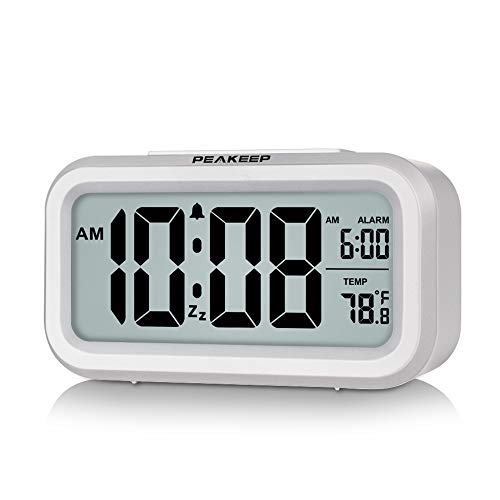
Digital displays are easier to read at a glance, especially when the numbers are large. The Peakeep night-light model uses an LCD with three light settings. The other digital choices include adjustable LED brightness, with some allowing a full range from dark to fully lit. Before choosing a bright display, confirm that it can be dimmed enough for your sleeping space. A display that is easy to read during the day may be intrusive at night if it has limited adjustment.
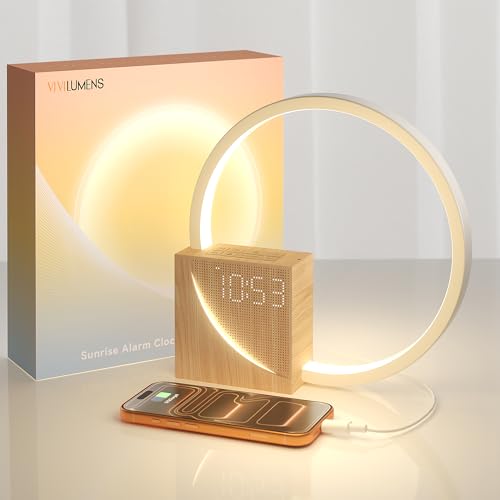
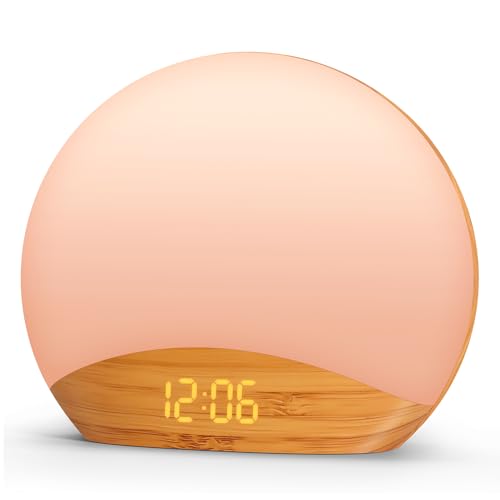
Sunrise clocks use light as part of the alarm itself. Vivilumens gradually brightens before the alarm, while REACHER documents a broader 1%-to-100% sunrise range. JALL uses a full-screen panel and lets you select a longer sunrise period. These models are more suitable when the transition from darkness to wake-up is as important as seeing the time.
Match alarm controls to your routine
Dual alarms are useful for couples, changing schedules, or a primary alarm and backup alarm. Vivilumens, JALL, AFEXOA, and Mesqool all document dual-alarm functionality. Several models also specify daily, weekday, or weekend modes. If you only need one wake-up time, a simpler analog or single-alarm digital model may be easier to set.
Sound choice varies significantly. Vivilumens lists 10 soothing sounds, JALL lists 25 natural sounds, REACHER lists 26 sleep sounds, and BUFFBEE lists 18 calming sounds. AFEXOA provides seven wake-up sounds and eight soothing sounds. These options can help distinguish bedtime audio from the morning alarm, but the supplied listings do not establish how any sound performs in a particular room.
Volume adjustment matters if more than one person shares the room or if you are a heavy sleeper. AFEXOA lists 16 volume levels, Mesqool lists five, and several digital clocks provide multiple volume settings. Analog models take a simpler approach: Equity specifies a loud alarm, while FAMICOZY and Tinload use crescendo alarms that begin quietly and get louder.
Check dimming and sleep features
The best lighted alarm clocks should offer enough visibility without forcing you to sleep beside an overly bright panel. Full-range display adjustment is documented for REACHER, BUFFBEE, and several digital clocks. JALL adds an L0 blackout mode. The digital models with multiple brightness steps offer a middle ground when complete blackout is unnecessary.
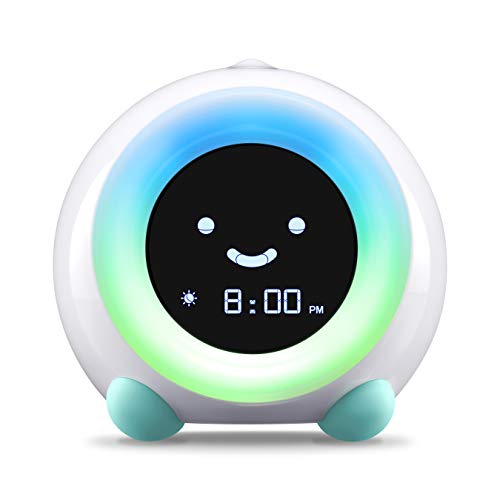
Consider whether you want a separate night light. AFEXOA offers eight lighting modes, REACHER documents eight night-light colors with adjustable brightness, and BUFFBEE offers a seven-color ambient light. The Peakeep model keeps the idea simpler with three settings and an ambient light sensor. A color-changing light can be useful for room ambiance, but it is not the same feature as a gradual sunrise simulation.
Sound timers are another practical distinction. Vivilumens lists 30-, 60-, and 90-minute timers; REACHER lists 5-to-180-minute timers; and JALL lists a 10-to-480-minute sleep timer. If you plan to use sound only while falling asleep, a timer can prevent continuous playback through the night.
Decide how much backup power you need
Cordless models such as FAMICOZY, Tinload, and the Peakeep night-light clock can be placed where an outlet is unavailable, but their batteries require periodic replacement. Plug-in clocks generally provide a continuously lit display and may offer memory or alarm backup. Mesqool uses AAA batteries for memory backup, while several digital models document battery support for retaining settings or continuing the alarm during an outage.
Read the power description carefully. The Mesqool listing says AC power is required for all functions. A battery backup may preserve settings without powering the display, light, or every alarm function. If waking during a power outage is essential, verify which functions remain active rather than assuming that “backup” means full operation.
Prioritize readable controls
Large numbers help users who read the clock from across the room or without glasses. Tinload provides a large analog face, while the digital models from JALL, Mesqool, and others emphasize large or full-screen displays. Front-facing controls can also matter when you need to change an alarm while half-awake. AFEXOA and several digital clocks document accessible snooze buttons, while FAMICOZY and Tinload use simple top controls.
A more feature-rich clock can require more setup. Sunrise schedules, dual alarms, sound timers, radio, Bluetooth, and color modes add flexibility but also add decisions. For a straightforward bedside display, the Equity, FAMICOZY, or Tinload designs may be easier to understand. For a customized sleep routine, JALL, Vivilumens, or REACHER offer more documented controls.
Final recommendation
JALL K8 Full-Screen Wake-Up Light ranks first overall in this specification-based comparison under the published weighted criteria.
The final choice among the best lighted alarm clocks depends on the documented features that match your intended use.
Vivilumens AJ300 Sunrise Alarm Clock is the highest-scoring returned product and the first overall specification-based choice. It combines gradual wake-up lighting, dual alarms, display adjustment, sound timers, multiple soothing sounds, snooze, and USB charging in one documented package. Among the top lighted alarm clocks, JALL K8 is the stronger pick for full-screen illumination and extensive sound and lighting options, while REACHER R7W offers a balanced sunrise, night-light, and sound setup.
Choose FAMICOZY, Equity, or Tinload when simple analog operation matters more than digital scheduling. Choose Mesqool if ceiling projection is the deciding feature. AFEXOA and BUFFBEE suit users who want colorful ambient lighting or calming sound, while the Peakeep MH-9060 adds cordless placement and indoor temperature monitoring. These conclusions are based on listed specifications and features, not hands-on testing or customer sentiment.
Frequently Asked Questions
What should I look for in the best lighted alarm clocks?
Start with the lighting type: analog backlight, digital display, night light, sunrise panel, or projection. Then check dimming range, alarm scheduling, snooze behavior, sound controls, and power backup. A clock with excellent visibility but no useful dimming may not suit a dark bedroom.
Are sunrise alarm clocks the same as lighted alarm clocks?
They are a related category, but not identical. A sunrise clock such as Vivilumens, JALL, or REACHER gradually increases light before the alarm. A standard lighted clock may simply illuminate a dial or display so the time can be read at night. Some models, including REACHER, combine both functions.
Which selected clock is best for a large room?
Mesqool is the clearest choice when you want the time projected onto a wall or ceiling. Tinload provides a large analog face, while JALL uses a full-screen light panel. Actual visibility depends on placement, room lighting, and viewing distance, which the supplied listing data does not fully establish.
Do lighted alarm clocks work during a power outage?
It depends on the model and the backup design. Mesqool documents AAA battery memory backup but requires AC power for all functions. FAMICOZY, Tinload, and the Peakeep night-light clock are battery operated. Other digital models preserve settings or alarms with backup batteries, but the display may not remain lit on battery power alone.
Is a night light better than a sunrise simulation?
Neither is universally better. A night light helps with visibility or ambiance before sleep, while a sunrise simulation is designed to brighten before waking. REACHER and JALL document both wake-up lighting and additional lighting features; AFEXOA and BUFFBEE focus more on ambient light than gradual sunrise.