Buying Guide
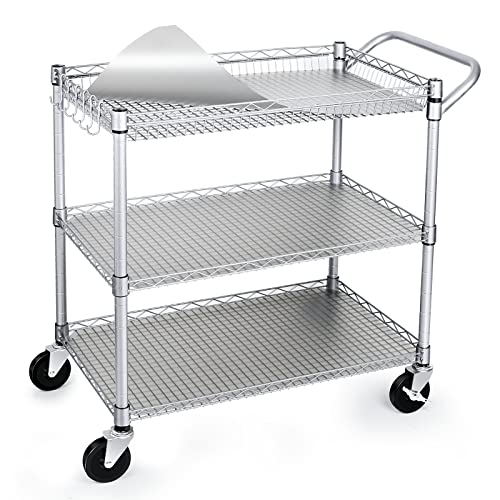
The best lightweight utility carts are easier to choose when you separate room organization from load hauling. A three-tier organizer is usually more useful for supplies that need to remain visible and separated. A folding wagon is better for bulky items, outdoor gear, groceries, or loads that do not fit neatly on shelves. A compact folding shopping cart occupies a middle ground: it can carry a meaningful load while remaining easier to store than a rigid cart.
This comparison uses public listing information only. It does not represent hands-on testing, and the scores do not include customer ratings, current listing information, purchase activity, or marketplace labels. Where a listing omits a load rating or product weight, that uncertainty is reflected in the scoring rather than filled with an assumption.
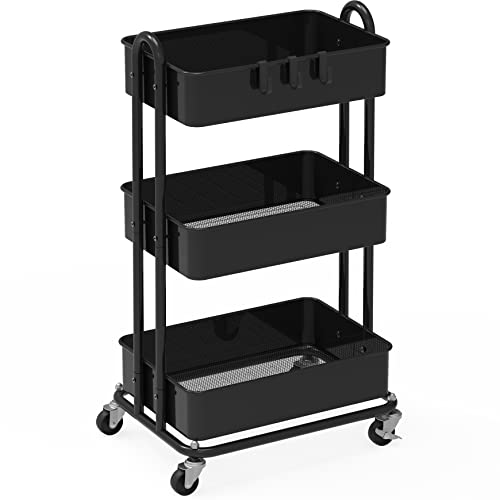
Three-tier carts such as the YASONIC, Pipishell, Simple Houseware, NEWBULIG, SUNALLY, LLMRR, and TOOLF models are designed for vertical organization. Their baskets can separate cleaning supplies, craft materials, toiletries, books, or kitchen items. Open mesh or hollowed-out shelves can also improve visibility and airflow. These carts are most useful when the destination is a kitchen, bathroom, office, nursery, laundry area, or craft room.
The DMI and Inspired Living models are better for buyers who need a cart that can be folded away. DMI lists a carrying case and a folding design, while Inspired Living lists a three-inch folded height and a telescopic handle. Those details matter when the cart must fit in a vehicle, closet, or public-transit space.
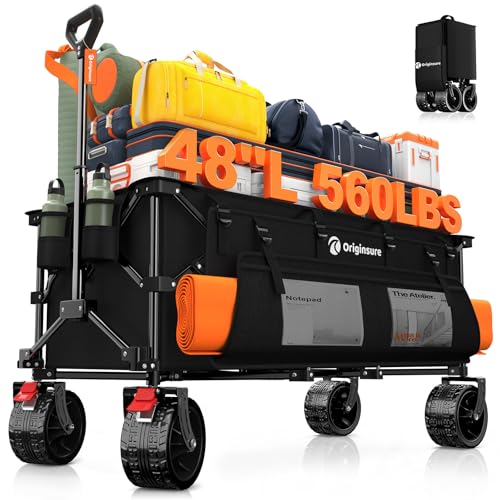
The Sekey wagon is the most suitable selected design for bulky outdoor loads. Its open body, folding frame, adjustable handle, and stated 220-pound capacity make it different from a narrow shelf organizer. However, a wagon does not provide the same item separation, and its larger footprint may be inconvenient in tight indoor spaces.
Check weight, capacity, and load shape
A low cart weight improves portability, but it does not automatically make a cart appropriate for every load. DMI lists a 7.5-pound cart with a 90-pound capacity, while YASONIC lists the current price and up to the current price per shelf. NEWBULIG lists the current price but does not provide a numeric load limit. SUNALLY and LLMRR list weights below six pounds, yet neither supplies a maximum capacity. Those models should be treated as lightweight organizers for ordinary household supplies rather than heavy-load equipment.
Capacity also needs to be read alongside the shape of the load. Deep baskets can help contain smaller items, as described for Pipishell, while a wagon body accommodates larger objects such as camping or gardening equipment. TOOLF gives each tier a stated 33-pound capacity and adds pegboards, boxes, and hooks, which may make better use of vertical space for smaller items. Inspired Living lists an 80-pound capacity but does not provide a product weight, so its slim storage advantage should be weighed against that missing detail.
Match the wheels to the floor and route
Wheel design affects how easily a cart can turn, stop, and cross thresholds. Several selected organizers use four wheels with two locking brakes, including Pipishell, Simple Houseware, TOOLF, SUNALLY, and LLMRR. Locking wheels are useful when a cart needs to remain beside a counter, desk, or workstation. They do not necessarily indicate that a cart is intended for rough outdoor surfaces.
DMI documents different front and rear wheel sizes and a grip designed for curbs and steps, giving it a more specialized route profile. Sekey lists 360-degree front-wheel rotation and positions its wagon for grass, sand, gravel, and pavement. Those claims come from the product listings, not independent testing, so surface suitability should still be considered carefully.
Consider organization and included accessories
A plain basket cart is often easier to understand and maintain, while accessories can improve access to small items. YASONIC includes three hanging cups and four hooks. TOOLF adds two pegboards, two hanging boxes, and four hooks. SUNALLY and LLMRR include drawers along with cups and hooks. These features can help separate tools, craft materials, toiletries, or office supplies, but they also make the cart more specialized than a simple open-shelf design.
Mesh designs from Simple Houseware and NEWBULIG emphasize visibility and airflow. DMI instead uses a defined storage basket with a carrying case. The right layout depends on whether you want quick visual access, concealed small-item storage, or a single open compartment for larger objects.
Review assembly and storage requirements
Assembly varies across this group. TOOLF states that no tools are needed, while SUNALLY and LLMRR describe tool-free assembly. Pipishell, YASONIC, and NEWBULIG provide instructions and require setup. DMI is described as easy to assemble and folds flat; Inspired Living is described as requiring little to no assembly. A folding cart may be preferable when the cart is only used occasionally, while a fixed three-tier organizer may be better for a permanent workstation.
Also check the supplied dimensions before choosing a location. Slim designs can fit beside appliances or furniture, but a taller cart may be difficult to place under a counter. A wagon needs clearance for its broader body and handle movement. For any model, compare the listed dimensions with doorways, storage gaps, vehicle space, and the route where the cart will be pushed.
Final recommendation
DMI Folding Utility Cart ranks first overall in this specification-based comparison under the published weighted criteria.
DMI Folding Utility Cart is the first overall specification-based choice among these best lightweight utility carts because it combines a 7.5-pound listed weight, a 90-pound stated capacity, folding storage, a carrying case, and wheel details aimed at curbs and steps. For an ultra-slim folded profile, Inspired Living is the stronger alternative. For room organization, YASONIC offers a well-documented steel and accessory combination, while SUNALLY and LLMRR are especially portable drawer organizers. Sekey is the better fit when the job involves bulky outdoor gear rather than tiered indoor storage. These top lightweight utility carts cover different use cases, so the best match should be based on load shape, route, storage space, and the level of organization required.
Frequently Asked Questions
What are the best lightweight utility carts for stairs?
DMI is the clearest option in this selection for routes involving stairs or curbs because its listing describes a textured grip and different front and rear wheel sizes, along with a design intended to be carried up steps. It also lists a 7.5-pound weight and includes a carrying case. The listing does not establish performance on every stair type, so treat those features as design evidence rather than a guarantee of ease.
Which selected cart folds most compactly?
Inspired Living lists a three-inch folded height, making it the most explicitly compact folded option here. DMI also folds flat and includes a carrying case. Sekey folds for car-trunk or garage storage, but its wagon format is intended for larger outdoor loads and does not offer the same slim profile claim.
Which lightweight cart is best for crafts and small supplies?
TOOLF is the most accessory-focused choice, with three baskets, two pegboards, two hanging boxes, and four hooks. YASONIC also includes hanging cups and hooks. SUNALLY and LLMRR add drawers, which may be useful for smaller items that you prefer to keep separated from open shelves.
Are three-tier carts better than folding wagons?
Neither design is universally better. Three-tier carts are more organized and generally fit indoor rooms such as offices, kitchens, bathrooms, and craft spaces. Folding wagons offer a larger open compartment for groceries, camping equipment, or garden supplies. Choose the tiered format for separated everyday storage and the wagon format for bulky loads and outdoor transport.
What should I verify before ordering a lightweight utility cart?
Confirm the assembled dimensions, folded dimensions if applicable, listed product weight, load rating, wheel and brake configuration, and assembly requirements. Pay special attention to missing capacity information: several lightweight organizers in this comparison do not provide a numeric maximum. Also check whether the cart’s basket, drawer, or wagon body matches the size and shape of the items you plan to move.