Buying Guide
The best locking gate latches are not interchangeable. A latch that suits a backyard picket gate may be a poor fit for a round-tube livestock gate, while a keyed mechanism may be unnecessary where a padlock is already part of the security plan. Start with the gate construction, then verify the opening direction, gap, thickness, and desired access method.
Choose the locking method first
Keyed latches provide built-in controlled entry. The National Hardware LokkLatch Keyed Gate Latch, SANKINS Key Lockable Double-Sided Gate Latch, and HILLMASTER Key Lockable 2-Sided Gate Latch all document keyed access, making them suitable when outside entry should not depend on carrying a separate padlock. Keyed hardware also requires attention to how the interior and exterior sides operate.
A keyless approach is different. The Yardlock Keyless Fence Lock and Latch uses a personal code and does not require keys, batteries, or electronics. Its documented fit is for wood or vinyl gates, so it should not be treated as a universal metal-gate solution.
Padlock-ready latches leave the lock choice to you. The KINJOUZ 9-Inch Flip Gate Latch Lock documents four padlock holes, while the SANKINS 2-Way Heavy-Duty Lockable Gate Latch and several gravity or post-mount designs specify padlock holes or padlock use. Remember that the padlock itself is not included where the listing says so.
Match the latch to gate material and shape
For standard residential fences, look for evidence covering wood, vinyl, and metal. Several keyed models in this comparison document all three materials. The D&D Technologies LL3ABL LokkLatch is described for square-frame posts and wood, metal, and vinyl fence gates, with a stated post-depth and gap range. That makes its measurements especially important before ordering.
Round-tube farm gates need a different check. The SANKINS 2-Way Heavy-Duty Lockable Gate Latch specifies 1-5/8- to 2-inch round tube gates and approximately 3 to 4 inches of clearance between post and gate. This is more useful than a vague universal-fit claim because it gives you dimensions to compare directly with the gate.
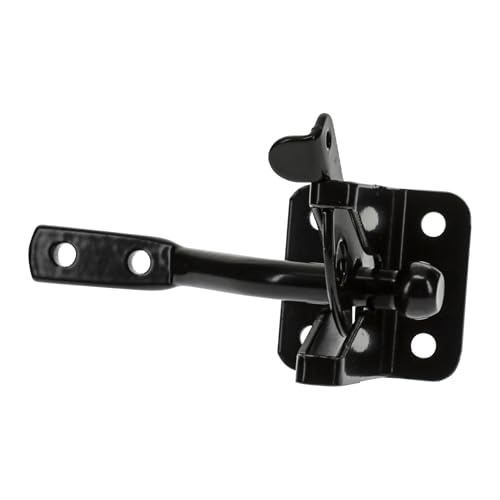
The National Hardware Automatic Gate Latch is aimed at outswing gates, doors, and animal pens and uses a four-inch strike. The KINJOUZ flip latch is broader in its documented applications, including wood, vinyl, metal, barn doors, chicken coops, and livestock gates. Its stated gap range is useful for uneven or changing installations, but the mounting area still needs to be measured.
Consider how the gate should close
Automatic or gravity latches engage when the gate closes. The National Hardware Automatic Gate Latch describes self-latching operation, and the HILLMASTER Self-Locking Gravity Gate Latch describes a gravity lever that latches automatically on release. These designs can be convenient for frequently used yard, garden, pool, or farm gates, but the gate must align properly with the catch.
A manual flip latch can be preferable when you want visible, deliberate engagement. The KINJOUZ model offers a four-position arm and padlock holes. It may suit a gate with a variable gap, but it does not provide the automatic closure described by the gravity and spring-latch products.
Inspect adjustment and installation details
Measure the gate thickness, post depth, and gap at several points. Gates can sag or move seasonally, so an adjustable design may offer more installation tolerance. The National Hardware LokkLatch Keyed Gate Latch documents horizontal and vertical adjustment and accommodates thicknesses up to 4-9/16 inches. The keyed SANKINS and HILLMASTER models also describe horizontal and vertical adjustment.
Included hardware can reduce the number of extra parts, but it does not eliminate measuring. The Yardlock includes required hardware and installation guidance, while the D&D Technologies LL3ABL is described as a complete kit with an external access push-button kit. The JIAHOO Post Mount Self-Locking Gate Latch includes mounting screws and instructions, but the supplied evidence does not state a gate-gap range, so confirm the physical layout independently.
Compare materials and outdoor protection
Outdoor gates expose hardware to moisture, dirt, temperature changes, and repeated movement. Look for specific material or finish information rather than assuming that a black finish alone indicates weather resistance. Stainless steel components, galvanized steel, zinc plating, powder coating, and corrosion-resistant coatings are each documented in selected products.
The KINJOUZ latch specifies carbon steel and an anti-corrosion coating. The National Hardware keyed model identifies a polymer body and stainless steel components and describes resistance to rust, corrosion, UV damage, and binding. Farm-oriented SANKINS hardware specifies galvanized steel. These statements describe construction and listed protection; they are not a substitute for checking installation instructions or maintaining alignment.
Final recommendation
National Hardware LokkLatch Keyed Gate Latch ranks first overall in this specification-based comparison under the published weighted criteria.
The National Hardware LokkLatch Keyed Gate Latch is the first overall specification-based choice among these best locking gate latches because it combines keyed security, adjustment, two common access modes, and broad material compatibility. The D&D Technologies LL3ABL LokkLatch is a close alternative when separate two-sided access functions and square-post fit are priorities.
For keyless entry, choose the Yardlock only when the gate is wood or vinyl and its coded access suits the household. The SANKINS and HILLMASTER keyed models offer similar residential flexibility, while KINJOUZ is the more logical choice for a padlock-based setup with multiple adjustment positions. Farm owners should compare the round-tube specification of the SANKINS 2-Way Heavy-Duty Lockable Gate Latch with the automatic strike design of the National Hardware Automatic Gate Latch.
Among the top locking gate latches, the gravity and post-mount options are best considered for automatic residential closure rather than built-in keyed security. Confirm the gate swing, gap, and material before selecting any model, and remember that a separate padlock is required where the listing does not include one.
Frequently Asked Questions
What should I measure before buying one of the best locking gate latches?
Measure gate thickness, post depth, the gap between the gate and post, and the direction of swing. Also identify whether the gate is square-post, round-tube, wood, vinyl, or metal. Compare those measurements with the product-specific limits. For example, the National Hardware keyed latch documents thickness up to 4-9/16 inches, while the SANKINS farm latch specifies round tubing from 1-5/8 to 2 inches.
Is a keyed latch better than a padlockable latch?
Neither is universally better. A keyed latch integrates the locking mechanism and can provide keyed exterior entry, as documented by the National Hardware, SANKINS, and HILLMASTER keyed products. A padlockable latch lets you choose the lock and may fit an existing security routine. The KINJOUZ latch documents four padlock holes, but the padlock must be supplied separately.
Which selected latch works without keys?
The Yardlock Keyless Fence Lock and Latch uses a personal code and states that it needs no keys, batteries, or electronics. It is documented for wood and vinyl gates. The other selected products either use keys, provide padlock holes, or describe self-latching hardware without documenting a keyless coded mechanism.
Do automatic gate latches lock securely when the gate closes?
The selected automatic and gravity products state that their mechanisms engage when the gate closes or is released. The National Hardware Automatic Gate Latch uses a self-latching mechanism, while the HILLMASTER Self-Locking Gravity Gate Latch uses a gravity lever. Correct alignment remains essential, and the supplied evidence does not establish performance under every gate condition.
Are these latches suitable for pool or pet gates?
Several listings mention pool, yard, garden, pet, or child-containment applications, including the National Hardware keyed latch, HILLMASTER keyed latch, and JIAHOO post-mount latch. Treat those application descriptions as compatibility guidance, not as proof of compliance with local pool-fence codes. Check applicable US requirements and the complete installation instructions before relying on any latch for a regulated barrier.