Buying Guide
The best low-voltage landscape spotlights are chosen by matching the fixture’s documented light output, beam shape, movement, and wiring format to the outdoor feature being lit. Listing data can show useful specifications, but it cannot replace checking your actual cable run, transformer capacity, mounting surface, or preferred nighttime appearance.
Match brightness to the subject
Lumens provide a useful starting point, although they do not describe beam concentration or the final effect in a particular yard. The LAVAED and ZUCKEO 10W models list 1000 lumens per fixture, making them candidates for prominent trees, fences, walls, or other subjects that need a more assertive beam. The WILAWELS 6W set lists 700 lumens per light, a middle-ground figure for general garden and patio accents. REEGOLD also lists 700 lumens per fixture.
Lower-output fixtures can be preferable when the goal is subtle detail. SUNVIE’s compact 3W lights list 300 lumens each, while EDISHINE lists 240 lumens per 3.2W light. Those figures may suit narrow planting beds, paths, fountains, or small decorative subjects.
Choose the beam angle and aiming range
Beam angle affects how concentrated the light appears. LEONLITE lists a 45-degree narrow beam, and EDISHINE lists 35 degrees. These specifications are useful for targeted lighting on a trunk, column, statue, or architectural feature. LAVAED lists a 30-degree lens angle, giving it the most concentrated stated lens design among the selected products.
A wider beam can cover more of a garden bed or wall, but the supplied listings do not provide enough information to predict the exact illuminated area. WILAWELS lists a 120-degree beam angle, while SUNVIE and ZUCKEO list 90 degrees. Consider both the beam and the distance from the subject before installing stakes.
Head adjustment is equally important. SUNVIE, WILAWELS, ZUCKEO, and REEGOLD-related designs list 270-degree adjustment, while the Gardencoin brass model documents 360-degree horizontal and 180-degree vertical movement. LUTEC lists 180 degrees, and EDISHINE lists 135 degrees. More movement can help when one stake must serve changing seasonal displays, but it does not eliminate the need for good placement.
Inspect construction and weather ratings
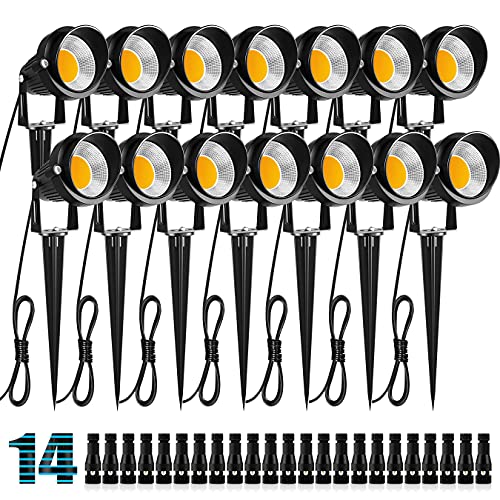
Outdoor spotlights should have construction details suited to wet locations. Selected products commonly document aluminum housings, glass lenses, and IP65 ratings. IP65 indicates protection against dust and low-pressure water jets; it is a technical ingress rating, not a promise that every installation condition is identical. ZUCKEO’s 14-pack lists IP66, which provides a higher water-protection specification than IP65 in the supplied data.
The Gardencoin brass fixtures stand apart from the aluminum options. The single Gardencoin brass spotlight uses a die-cast brass housing, while the six-pack Gardencoin model uses die-cast aluminum. Brass may appeal to buyers seeking a traditional bronze appearance and a material specifically described as corrosion- and moisture-resistant. Aluminum can offer a lighter fixture format and is repeatedly described in these listings as supporting heat dissipation.
Look for additional outdoor details such as tempered glass, weather sealing, and stated temperature ranges. WILAWELS lists operation from -4°F to 130°F, EDISHINE lists -40°F to 140°F, and ZUCKEO’s selected 14-pack lists -4°F to 130°F. These are manufacturer-provided specifications rather than independent environmental test results.
Confirm voltage and included wiring
Most selected products are designed for 12V systems, with several supporting 12-24V AC/DC. Confirm that the spotlight’s voltage range matches your transformer before ordering. SUNVIE, Gardencoin, WILAWELS, ZUCKEO, LAVAED, and EDISHINE all document compatibility or operation details, but the specific transformer requirements can differ by installation.
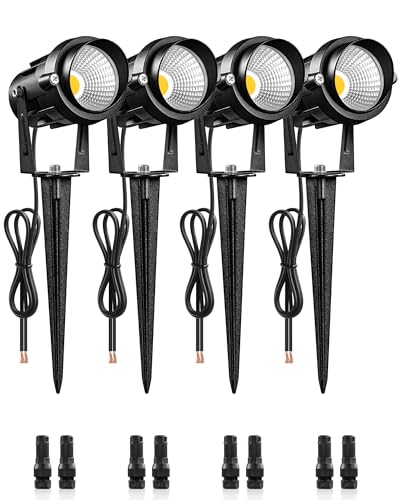
Connectors do not necessarily mean a complete lighting system is included. REEGOLD, WILAWELS, ZUCKEO, and LAVAED list supplied connectors, while their descriptions state that transformer and low-voltage wire are not included. SUNVIE lists a 16-inch light wire and fast-lock connectors. The WILAWELS four-pack lists eight connectors for four lights, and REEGOLD lists two connectors per light.
Before laying cable, add the wattage of every fixture and compare the total with the transformer’s capacity. The large ZUCKEO 14-pack lists 14 10W lights, so its installation needs more capacity planning than a four-pack of 3.2W or 3W fixtures. Cable length, connector placement, and voltage drop also deserve attention, but the supplied listings do not provide enough system-specific information to calculate those factors here.
Decide between integrated and replaceable bulbs
Integrated LED fixtures are convenient because the LED module is built into the light. The selected REEGOLD, WILAWELS, LUTEC, SUNVIE, LAVAED, LEONLITE, and EDISHINE listings describe integrated LED formats or LED chips. This can simplify initial setup, but a failed integrated module may mean replacing the fixture.
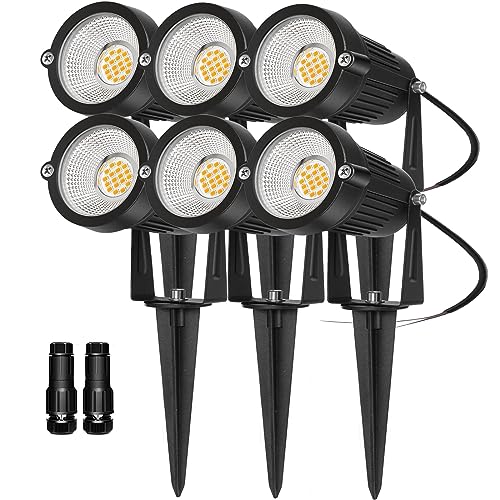
Replaceable-bulb fixtures offer a different maintenance path. Gardencoin’s six-pack uses a separate G4 bulb and fixture, and its brass spotlight uses a replaceable MR16 bulb with a listed maximum fixture power of 50 watts. The bulb style, base, wattage limit, and desired color temperature should be checked before buying replacements. A replaceable bulb also gives more future flexibility, but it adds a component to select and maintain.
Consider pack size and layout
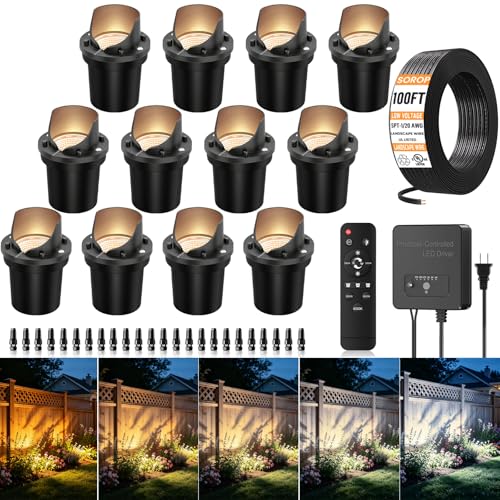
Pack size should follow the number of subjects, not simply the largest count. A two-pack such as LAVAED can work for a pair of trees or a small facade. Four-packs from SUNVIE, WILAWELS, LEONLITE, LUTEC, and EDISHINE can support a more balanced front-yard or garden layout. The ZUCKEO 14-pack is aimed at broad coverage, but a larger set requires more cable planning, connection points, and transformer capacity.
Final Recommendation
Gardencoin Solid Brass MR16 Landscape Spotlight ranks first overall in this specification-based comparison under the published weighted criteria.
Gardencoin 6-Pack G4 Low Voltage Spotlights is the first overall specification-based choice among these best low-voltage landscape spotlights. Its combination of 480 lumens per fixture, CRI 90+, IP65 aluminum construction, adjustable heads, and replaceable G4 bulbs makes it versatile for buyers who want both accent capability and a serviceable design.
Choose the Gardencoin solid-brass spotlight when material, traditional appearance, and extensive aiming movement are priorities. For compact accents, SUNVIE’s 3W four-pack is easier to position and lists CRI 90+. WILAWELS is the more balanced four-pack for general use, while ZUCKEO’s 14-pack is better suited to a larger planned layout. LAVAED and LEONLITE favor concentrated beams; LUTEC favors softened garden accents; EDISHINE favors precise, lower-power lighting. Together, these are practical options among the top low-voltage landscape spotlights, provided the voltage, transformer, cable, and connector requirements fit your installation.
Frequently Asked Questions
Among the best low-voltage landscape spotlights, what voltage do these low-voltage landscape spotlights use?
The selected products primarily use 12V power. SUNVIE, Gardencoin, WILAWELS, ZUCKEO, LAVAED, and several others document 12V or 12-24V AC/DC operation. Always match the fixture to the transformer and wiring system rather than assuming every low-voltage product is interchangeable.
Not usually. Several selected listings explicitly state that the transformer and low-voltage wire are not included, even when connectors or short fixture leads are supplied. Check the package contents and plan the transformer capacity from the combined wattage of the lights you intend to install.
Are replaceable bulbs better than integrated LEDs?
Neither format is universally better. Gardencoin’s G4 and MR16 fixtures document replaceable bulbs, which can simplify maintenance and allow bulb selection within the fixture limits. Integrated LED products such as WILAWELS, LUTEC, and SUNVIE avoid a separate bulb-selection step, but the complete fixture may be the replacement unit if the LED module fails.
What IP rating should outdoor spotlights have?
IP65 is common among the selected products and indicates protection from dust and low-pressure water jets. The ZUCKEO 14-pack lists IP66. These ratings are useful specifications, but placement, connectors, cable burial, and installation quality still matter in a real outdoor setup.
Which beam angle works for a tree or wall?
A narrow beam such as the 30-degree LAVAED lens or 35-degree EDISHINE beam is suited to focused accents. LEONLITE lists 45 degrees for targeted features. Wider designs may spread light across larger areas, but the best choice depends on the distance, subject width, and desired visual effect.