Buying Guide
Selecting the best gallon transmission fluids for routine service or repair requires careful attention to specification, base stock, and additive design. The ten gallons compared below represent the most common chemistry families: full-synthetic multi-vehicle ATFs, Dexron VI and Mercon LV products, universal ATF/CVT blends, high-mileage formulas, and ultra-low-viscosity fluids for the newest 8-, 9-, and 10-speed transmissions.
Match the Specification First
The single most important decision when choosing among the best gallon transmission fluids is matching the fluid specification listed in the owner’s manual. Dexron VI, Mercon LV, ATF+4, and the newer Dexron ULV and Mercon ULV specifications are not interchangeable in modern transmissions. Selecting a gallon that does not meet the documented specification can lead to harsh shifts, torque-converter shudder, and accelerated wear.
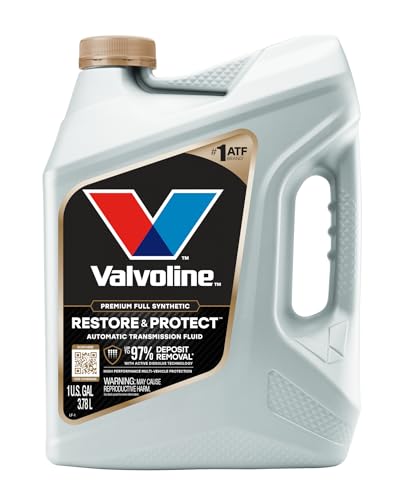
Full-synthetic gallons like the Valvoline MaxLife Multi-Vehicle ATF and Valvoline Restore & Protect ATF explicitly list multiple specifications, which simplifies inventory. ACDelco GM Original Equipment Dexron VI gallons, on the other hand, are tailored to GM applications and are ideal when the manual specifies Dexron VI.
Consider Base Stock and Additive Design
Full-synthetic base stocks offer stronger oxidation resistance and a wider usable temperature range than conventional mineral oils. Among the best gallon transmission fluids listed here, the Valvoline MaxLife, Valvoline DEXRON VI/MERCON LV, Valvoline Restore & Protect, ACDelco GM Dexron VI gallons, and the TRIAX ULV ATF are all built on full-synthetic bases.
Additive design is equally important. Anti-wear chemistry, friction modifiers, seal conditioners, and anti-foam agents all serve different roles. The Valvoline MaxLife and Castrol Transmax High Mileage gallons emphasize seal conditioners aimed at preventing or reducing minor leaks. The Valvoline Restore & Protect ATF adds a deposit-cleaning technology aimed at removing existing varnish.
Evaluate Application Coverage
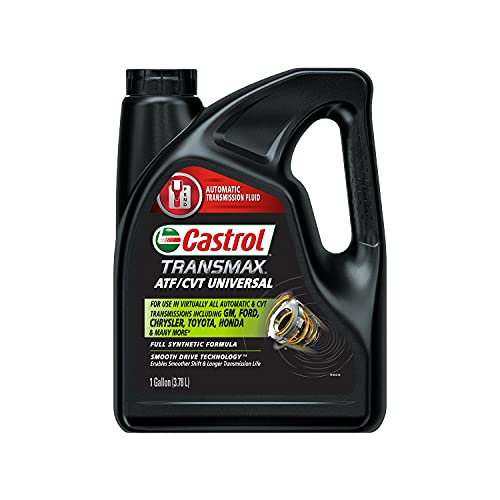
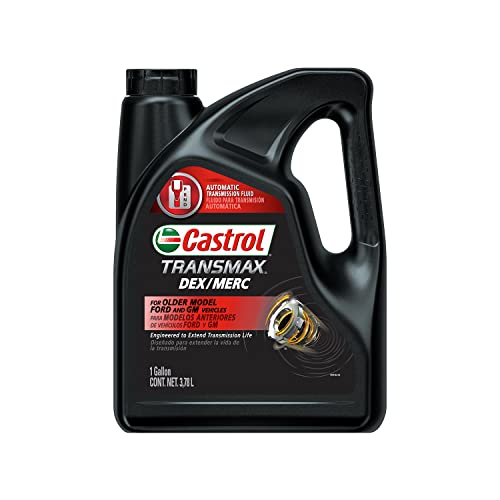
Multi-vehicle gallons such as Valvoline MaxLife, Castrol Transmax ATF/CVT, and Castrol Transmax DEX/MERC are designed for broad application scope, making them attractive for shops and households that service more than one vehicle. However, broad coverage can come with trade-offs in performance on specific transmissions that demand a dedicated fluid.
For modern low-viscosity applications, the TRIAX ULV Full Synthetic ATF is engineered specifically for Dexron ULV, Mercon ULV, Nissan Matic P, and several 10-speed units. For CVT applications, the Lucas Oil Synthetic CVT Transmission Fluid provides a dedicated chemistry that resists shear thinning better than typical CVT fluids.
Transmissions generate significant heat, and fluids must remain stable across both cold starts and sustained high-load operation. Several of the best gallon transmission fluids document a wide operating window. The Valvoline MaxLife and Valvoline DEXRON VI/MERCON LV gallons claim enhanced high and low temperature performance. The TRIAX ULV ATF lists a pour point down to -50°F, supporting cold-weather operation in northern climates.
Conventional gallons such as Castrol Transmax DEX/MERC provide adequate thermal stability for older vehicles, while modern full-synthetics are usually the better choice when the manual permits either chemistry.
Wear, Friction, and Durability
Friction durability, anti-wear additives, and oxidation resistance collectively determine how long a fluid will protect the transmission between service intervals. The ACDelco GM Original Equipment Dexron VI gallons document improvements in friction durability, viscosity stability, aeration, and foam control over earlier Dexron fluids. The Valvoline Restore & Protect ATF adds deposit-removal chemistry aimed at refreshing higher-mileage units.
Transmissions above 75,000 miles often benefit from a fluid that conditions seals and reduces varnish buildup. The Castrol Transmax High Mileage ATF and Valvoline Restore & Protect ATF both address these issues, with seal conditioners and additional cleaning agents. These products are most appropriate where the manual permits and where mild symptoms of seal hardening or shift quality issues are already present.
For CVT applications, the Lucas Oil Synthetic CVT Transmission Fluid remains a specialty choice because belt and chain CVTs rely on consistent friction characteristics that traditional ATFs cannot supply.
Choosing Between ATF+4 and Dexron VI Gallons
Domestic trucks and SUVs from Stellantis often require ATF+4, while most GM vehicles specify Dexron VI. Matching the correct family is essential: ATF+4 is not a substitute for Dexron VI, and vice versa.
Final Recommendation
Valvoline MaxLife Multi-Vehicle Full Synthetic ATF ranks first overall in this specification-based comparison under the published weighted criteria.
After comparing fluid type, application coverage, temperature performance, wear protection, and durability, the Valvoline MaxLife Multi-Vehicle Full Synthetic ATF stands out as the first overall specification-based choice. Its full-synthetic base, broad US light-duty coverage, seal-conditioning agents, and anti-wear chemistry make it the most versatile gallon among the best gallon transmission fluids reviewed. For owners who service Dexron VI GM vehicles specifically, the ACDelco GM Original Equipment Dexron VI ATF is a close companion. For modern low-viscosity transmissions, the TRIAX ULV Full Synthetic ATF is the most future-ready option. Together, these three gallons represent the top gallon transmission fluids for the widest range of households and service shops.
Frequently Asked Questions
Among the best gallon transmission fluids, are full-synthetic gallons worth choosing over conventional transmission fluids?
Full-synthetic transmission fluids generally provide stronger oxidation resistance, better low-temperature flow, and longer service life than conventional mineral-oil fluids. For vehicles that specify or permit a synthetic, the upgrade can support longer drain intervals and more consistent shift quality. Conventional gallons such as Castrol Transmax DEX/MERC can still be appropriate for older transmissions where the manual calls for conventional service.
Can I use a multi-vehicle ATF in a CVT?
Only if the specific fluid lists CVT compatibility and the vehicle manufacturer permits it. The Castrol Transmax ATF/CVT Universal Fluid advertises CVT compatibility, while dedicated CVT gallons like the Lucas Oil Synthetic CVT Transmission Fluid are designed specifically for belt and chain CVT designs. Always confirm against the owner’s manual before using any universal fluid in a CVT.
What is the difference between Dexron VI and Dexron ULV?
Dexron VI is the long-standing specification for many GM automatics. Dexron ULV (Ultra Low Viscosity) is a newer specification designed for modern transmissions that require lower-viscosity fluids to reduce internal losses and support fuel economy. They are not interchangeable; using Dexron VI where Dexron ULV is required may cause shift quality issues, while using Dexron ULV where Dexron VI is required can lead to hydraulic pressure concerns. The TRIAX ULV Full Synthetic ATF is an example of a gallon built for the newer ULV standard.
How often should a transmission fluid be changed?
Service intervals depend on the manufacturer, transmission design, and driving conditions. Many sealed transmissions now use long-life or fill-for-life fluids, while older units call for periodic fluid and filter changes. Some full-synthetic gallons, such as the TRIAX ULV ATF, document drain intervals up to 150,000 miles under standard driving. Always follow the maintenance schedule in the owner’s manual for the specific vehicle.
Which gallon is best for a high-mileage vehicle with minor leaks?
A high-mileage formulation that emphasizes seal conditioning is usually the right starting point. The Castrol Transmax High Mileage ATF and Valvoline Restore & Protect ATF both pair full-synthetic bases with extra seal conditioners and cleaning agents. These gallons are designed to help reduce minor leaks and varnish accumulation, though they cannot repair worn seals that have already failed.