Buying Guide
The best metal tent stakes should match the shelter, soil, and way you travel. A short aluminum stake can be sensible for a lightweight backpacking shelter, while a longer steel stake is more appropriate for a large canopy or a site where deeper penetration matters. The products above are compared from supplied listing specifications, not from hands-on testing.
Start with the stake material
Steel is the dominant material in this selection. Galvanized or rust-resistant finishes are useful documentation for shoppers who expect exposure to rain or damp ground, but the listings do not establish a specific service life.
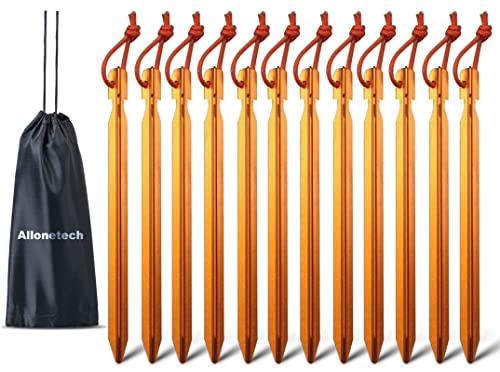
Its stated 14-gram weight per stake is notably oriented toward backpacking. That reduction in carried weight comes with a different use profile from the thicker steel stakes. If your priority is a compact load, aluminum deserves attention; if your priority is a substantial stake for canopies, the steel options offer more length and heavier-duty construction on paper.
Match length and thickness to the ground
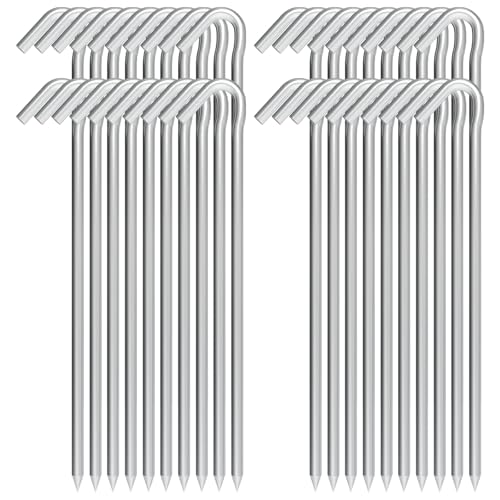
Length affects how deeply an anchor can be placed, but it is not the only consideration. The selected range runs from 7.1 inches on TEOYNGU to 12 inches on HOLANHING. OK5STAR and LOYORTY occupy the longer general-purpose range at 9 and approximately 10 inches, respectively. HOLANHING goes longer at 12 inches and supplies 24 pieces, which may suit large shelters or multiple anchor points.
Thickness is also worth checking when the listing supplies it. OK5STAR and VVOKGO specify 5 mm construction, while TEOYNGU lists a 6 mm diameter. HOLANHING lists a 1/4-inch diameter. These figures are not directly interchangeable with a claimed holding-force measurement, but they do help distinguish a compact stake from a thicker one. The published information does not support promising a particular wind rating for any product.
Choose a straight, hooked, or screw-in design
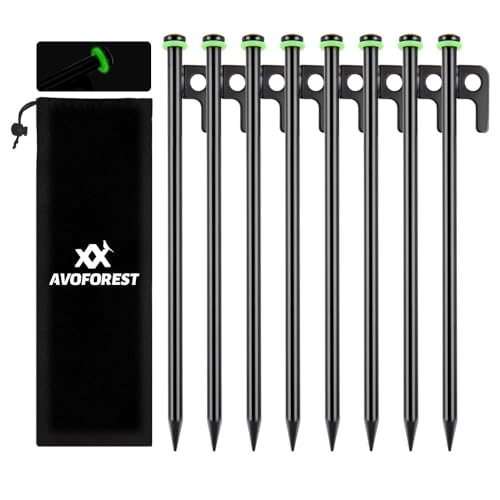
These designs are intended to be driven into the ground and provide a head or hook for attaching guylines. AVOFOREST specifically documents a curved rope-tie area and a circular section intended to help with removal.
Hooked steel stakes are especially practical when tying guylines is central to the setup. OK5STAR and VVOKGO both document 1-inch hooks, and LOYORTY uses a T-shaped flat head designed for striking with a mallet. Eurmax takes a different approach by including ropes and an orange stopper with its galvanized stakes, making it more of a canopy anchoring kit than a simple replacement pack.
Screw-in stakes are useful when you want a threaded anchor method. RIZENCE includes a hexagonal socket and puller, while Keovoker includes a driver, puller, protectors, and bag. These are not hands-free products: the listings describe cordless-drill or impact-driver use for installation, so check that your equipment and campsite setup make sense for this format.
Consider visibility and removal
Bright components can help you locate stakes and reduce the chance of leaving them behind. HOLANHING includes fluorescent rubber rings, AVOFOREST includes fluorescent silicone rings, TEOYNGU includes orange protective sleeves, and LOYORTY uses orange tops. Keovoker adds glow-in-the-dark tops, while All one tech includes reflective pull cords. These features improve identification, but they do not change the underlying anchor geometry.
Removal details also vary. Some products include a puller, while others describe a ring, hook, or circular section for extraction. A hammer or mallet is relevant for driven steel stakes, and pliers are specifically mentioned for TEOYNGU. Avoid pulling a stake by the shelter fabric or guyline. Use the stated removal feature where available, and inspect the stake before packing it for the next trip.
Think about pack count and storage
An eight-piece pack can be a good fit for a small tent, but a large shelter may require more anchor points. OK5STAR and LOYORTY provide 40 pieces, HOLANHING provides 24, and RIZENCE provides 20. These larger counts can also help with several shelters, tarps, or garden projects, though they add storage and transport considerations.
Storage accessories range from simple pouches to more complete kits. Eurmax includes ropes, and both RIZENCE and Keovoker include removal-related tools. Before buying, count the guylines on your shelter and decide whether you need stakes only or a broader anchoring kit.
How to use the specifications responsibly
A product listing can document material, dimensions, accessories, and intended applications. It cannot by itself prove how a stake will perform in a particular soil, wind, or weather situation. Treat claims such as high-wind suitability as manufacturer-provided positioning rather than an independent test result. For an important shelter, carry an appropriate number of stakes, select a design suited to the actual ground, and follow the maker’s installation instructions.
Final Recommendation
OK5STAR 9-Inch Galvanized Steel Stakes ranks first overall in this specification-based comparison under the published weighted criteria.
The final choice among the best metal tent stakes depends on the documented features that match your intended use.
OK5STAR 9-Inch Galvanized Steel Stakes are the highest-scoring first overall specification-based choice in this comparison. Their documented 5 mm galvanized steel core, 9-inch length, welded hooks, and 40-piece pack give them broad utility for larger tents, tarps, and canopies. They are among the top metal tent stakes here for shoppers who want a substantial steel design and many anchor points.
RIZENCE is the better fit when screw-in installation and included tools matter more than a conventional driven stake. HOLANHING is attractive for its 12-inch length and 24-piece forged-steel pack, while All one tech is the focused lightweight option for backpacking. Eurmax is the practical kit choice when ropes are needed, and Keovoker adds a useful low-light visibility feature. For a smaller general camping set, AVOFOREST or TEOYNGU offers visibility-oriented components without the largest pack counts.
Frequently Asked Questions
Start with material, length, diameter, head design, and pack count. Galvanized or forged steel options in this comparison emphasize durability-related construction, while the All one tech 7075 aluminum stakes emphasize low weight. Then match the design to your ground and shelter: longer stakes for deeper placement, hooks for guylines, and screw-in models when drill-assisted installation is acceptable.
Are screw-in tent stakes better for hard ground?
They may be a useful option when the ground and equipment suit them. RIZENCE documents use in grass, hard soil, and gravel and includes a socket and puller. Keovoker also lists sand, soil, and rocky ground. Both rely on a threaded design and drill-assisted setup, so they are not automatically preferable for every campsite or every user.
Which selected stakes are easiest to see at night?
Keovoker documents glow-in-the-dark tops. All one tech includes reflective pull cords, while HOLANHING and AVOFOREST include fluorescent rings. TEOYNGU and LOYORTY use orange components. Visibility features can help with locating gear and spotting trip hazards, but the listings do not provide independent visibility measurements.
Are steel stakes suitable for backpacking?
They can be, but weight and pack space should be checked against the shelter and terrain. VVOKGO lists each stake at 1 ounce, while All one tech lists 14 grams per stake and is explicitly positioned for ultralight backpacking. Longer or bulkier steel packs such as HOLANHING and LOYORTY may be more appropriate when carried weight is less important than quantity or deeper anchoring.
How many tent stakes do I need?
Use the number of guylines and anchor points on your shelter as the starting point, then allow for spares. Eight-piece sets can suit smaller setups, while 20-, 24-, or 40-piece packs fit larger shelters, multiple structures, or mixed camping and garden use. The correct count depends on your shelter design rather than the pack size alone.