Buying Guide
When you start shopping for the best metal decorative garden stakes, the differences between listings show up in the metal type, finish, height, and whether the design moves or stays still. Sorting those factors first will keep you from choosing a stake that looks right in a photo but reads too small or too quiet in your actual bed.
Material and Outdoor Finish
Metal garden stakes live outdoors year-round, so the metal itself and the surface treatment matter as much as the shape. Iron is the most common base, and many sets add a rust-proof coating, a hand-painted UV-resistant finish, or a deliberately rusted patina that is meant to keep weathering rather than flake. Listings that specify rust-proof metal, corrosion resistance, or a UV-proof coating tend to hold their finish through rain and sun better than untreated cut metal.
Height and Visual Presence
Stake height sets how each piece reads against your plants. Shorter stakes around 11 to 16 inches work well in front of low groundcovers or along the edge of a planter, while taller stakes in the 28 to 34 inch range stand out above small shrubs and along pathway centers. Coneflower and dandelion styles often fall in the 30 inch range, giving a stem-like silhouette that mimics a tall perennial. Choosing a height that matches the back of your bed helps the stake look intentional rather than lost.
Motion, Sound, and Special Features
Some of the most expressive metal decorative garden stakes use springs to attach wings, petals, or insects so they quiver when the wind moves through. Listings may also include cast iron bells underneath hummingbirds or bees, turning each stake into a small chime. If you prefer quiet, static pieces, rusted flower or coneflower designs focus on shape and patina instead of motion. Matching this feature to your garden’s mood avoids surprises after install.
Set Quantity and Layout
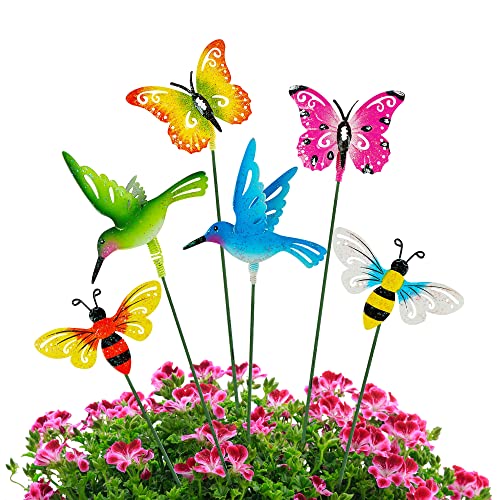
Set size influences how a stake reads across a full bed. A single tall stake works as a focal point, while a three-piece set gives you rhythm along a border, and a five or six piece set can carry color through an entire walkway. Sets with mixed motifs, such as butterflies, hummingbirds, and bees together, also let you vary the look from one stake to the next without buying multiple listings.
Installation and Stability
Most metal decorative garden stakes install by direct insertion into soil, but taller or wind-prone pieces may benefit from deeper stakes or two-prong bases. Some listings document detachable parts that tighten together before the stake goes into the ground, which can affect how you plan placement. Checking the listed dimensions, weight, and any assembly notes keeps the install a one-step process rather than a trial-and-error one.
Color, Finish, and Style Match
Color choices in metal stakes fall into three broad buckets: rustic rust patinas that lean vintage, bright painted colors that read more decorative, and metallic finishes like electroplated gold or copper that suit modern settings. Picking a finish that mirrors your existing planters, house trim, or furniture ties the yard together. Mixing finishes within one bed can work, but it usually pays to anchor the bed with one dominant style.
Final Recommendation
Juegoal 20 Inch Butterfly, Dragonfly and Hummingbird Stake Set ranks first overall in this specification-based comparison under the published weighted criteria.
The final choice among the best metal decorative garden stakes depends on the documented features that match your intended use.
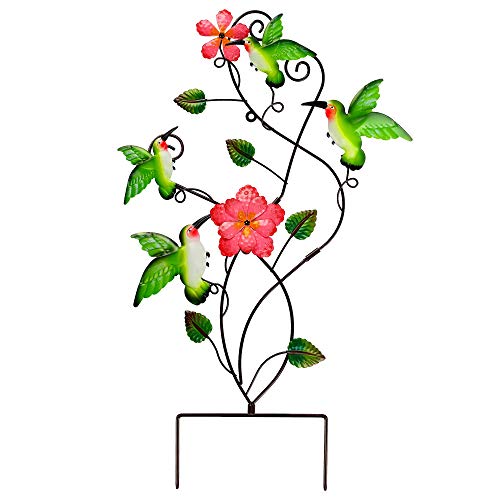
If you want the top metal decorative garden stakes choice based on these specifications, start with the Juegoal 28 Inch Hummingbirds Garden Stake. Its 28-inch height, four-bird composition, and rust-proof metal build deliver the kind of focal presence that suits many planting beds, and it also installs in soil or on a wall for flexible placement. For gardeners who want motion and sound, the MNRYLKB Metal Hummingbirds with Bells Garden Stake and the Juegoal 6 Pack Butterfly, Hummingbird and Bee Spring Stakes both bring spring-mounted movement, with the hummingbird stake adding chime bells to the experience. Pair the tall focal piece with one of the multi-stake sets to cover both the centerpiece and the rest of the bed.
Frequently Asked Questions
For a small flower bed, stakes in the 14 to 20 inch range usually sit at the right height to read against low groundcovers without disappearing. Taller 28 to 34 inch stakes work better when you want the piece to rise above small perennials or sit at the center of a pathway.
Rusted iron stakes are designed to stay outdoors and develop a stable patina over time rather than continue flaking. The rust is usually a surface treatment that protects the metal underneath, so the stake should keep its shape and color across seasons.
Listings that document spring mounts between the body and the wings or petals usually mean the pieces will quiver in light wind. The motion is subtle rather than dramatic, so the stake stays rooted while still adding a lifelike feel.
A pathway usually benefits from a stake every few feet, so a three or five piece set often covers a short run while a six piece set can carry color further. Mixing motifs within a set, like butterflies, hummingbirds, and bees, helps the pathway feel varied rather than repetitive.
Decorative stakes are built primarily for visual interest, with shapes like flowers, insects, or hummingbirds and finishes designed to weather outdoors. Supportive stakes focus on holding up plants, and may not carry the same decorative shapes or coatings. The best metal decorative garden stakes in this guide all fall into the visual category, with their metal builds and finishes chosen for looks as well as durability.