Buying Guide
Choosing the best oak millwork corbels starts with the surface they will meet, the amount of projection available, and the visual scale of the surrounding trim. This comparison uses public listing specifications for red oak corbels, not hands-on testing. The products are all listed as wood corbels, while adjacent urethane pieces, rubberwood pieces, and wood brackets were not included in the selected ten.
Match the corbel to the surface
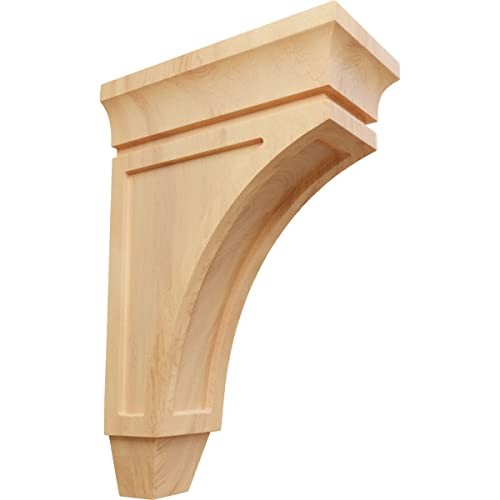
Start by measuring the available depth beneath the countertop, shelf, mantel, or cabinet. A corbel that projects too far can interfere with seating or circulation, while one that is too shallow may look disconnected from a deep surface. The Lucan has an 8-inch depth, and the Jefferson measures 5.75 inches deep, so both are aimed at more substantial visual compositions. The Diane, Traditional Recessed, and Devon provide mid-size proportions between 4 and 5 inches deep.
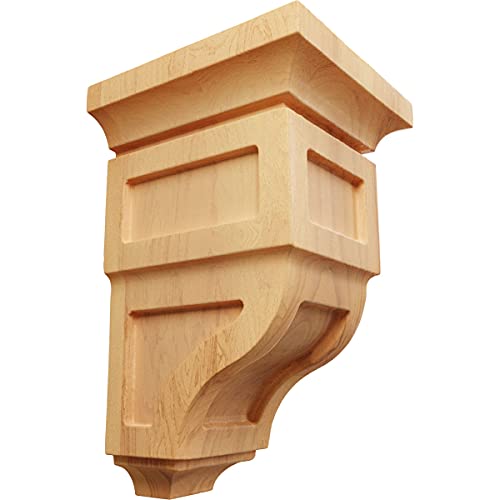
For compact projects, the Lawson, Reyes, and Dearborn are easier to place. The Lawson is 3 inches wide and 3.5 inches deep; the Reyes is 3.5 inches wide and 3.75 inches deep; and the Dearborn is only 1.75 inches wide with a 3-inch depth. These dimensions may be useful beside narrow trim, furniture components, or small shelves. The narrow Rojas is different: its 2-inch width is paired with a deeper 4.5-inch projection and an 8-inch height.
Consider height and visual scale
Height affects how prominently a corbel reads beneath a surface. The 12-inch Lucan and 10-inch Diane, Jefferson, and Traditional Recessed models create a taller architectural presence. The Rojas also reaches 8 inches, despite its narrow width. These taller pieces may suit large islands, mantels, bars, or shelves, but the surrounding cabinetry and trim should be measured first.
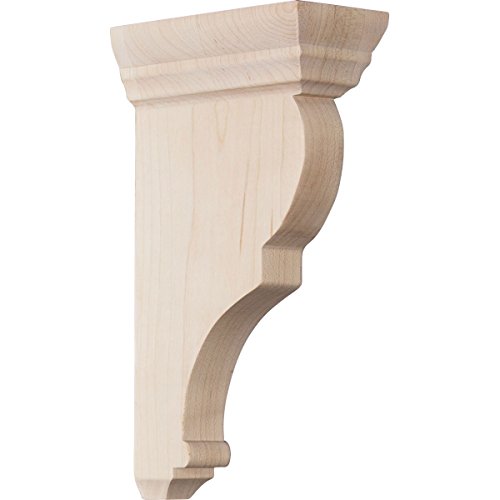
The Fluted, Devon, Lawson, Reyes, and Dearborn models range from 6 to 7.5 inches high. That shorter scale can be more appropriate for furniture, smaller shelves, and compact cabinet details. The Fluted corbel adds a specifically documented fluted pattern at 7 inches high, while the Devon provides a traditional profile at 7.5 inches.
Choose a documented design language
The selected range includes recessed, traditional, fluted, Jefferson, Lucan, Lawson, Reyes, Rojas, and Dearborn profiles. A recessed design, such as the Diane or Traditional Recessed, can add layered shadow lines. The Fluted model introduces vertical texture. Traditional profiles such as the Devon can coordinate with conventional cabinetry and furniture detailing. The named styles are useful for narrowing the visual search, but the supplied listings do not provide full architectural drawings or finish samples.
When comparing ornate versus restrained detailing, use the dimensions as well as the name. A small, detailed corbel can work as an accent, but it may look lost beneath a very deep top. Conversely, a large corbel can dominate a delicate furniture piece. Use the width and height to judge proportion rather than relying on the style name alone.
Plan the finish
All ten selected products are listed in red oak and are described as arriving sanded and ready to be painted or stained. That gives a buyer flexibility to preserve a wood appearance or coordinate the corbels with painted cabinetry. The listing evidence does not specify a particular stain color, grain appearance, or final color consistency, so those details should be confirmed before ordering.
The product specifications identify the color as Red Oak for the selected items. The Dearborn listing shows a different color field despite describing a red oak corbel, so buyers should verify the actual finish or material presentation with the seller when color matching is important. Finish readiness means preparation is documented; it does not establish how a particular stain will look.
Review support and installation notes
The listings describe these carved corbels as suitable for decorative or load-bearing applications and state support up to the current price with proper installation. That statement should not be treated as a project-specific capacity rating. The mounting surface, fasteners, spacing, substrate, and load path all matter. A professional should determine whether the installation is structural or merely decorative.
The supplied installation guidance mentions wood glue and nails or screws. Confirm the fastener type and attachment method for the actual substrate. A painted wall, cabinet panel, framing member, and masonry surface may require different preparation. Also check whether the selected width leaves enough flat contact area for secure attachment.
Buy one or plan a coordinated set
Each selected listing shows a unit count of one, so a pair or a larger run requires planning around the listed unit quantity. Measure the project before ordering and decide whether matching corbels will be needed at both ends of a shelf or countertop. The manufacturer listings also indicate that many styles are available in multiple sizes, but the comparison does not assume that every size or finish is available at the time of purchase.
The best oak millwork corbels for a project are therefore the ones whose dimensions, design, material, and installation plan all align. Do not select solely by appearance. Record the required width, depth, and height, then compare those measurements with the actual support location and adjacent trim.
Final Recommendation
Ekena Medium Jefferson Red Oak Corbel ranks first overall in this specification-based comparison under the published weighted criteria.
The Ekena Diane Recessed Red Oak Corbel is the first overall specification-based choice because it combines practical 4-by-5-by-10-inch dimensions, documented red oak construction, finish readiness, broad applications, and support information. It is a balanced starting point for counters, islands, shelves, mantels, and furniture when its size suits the project.
For a deeper and more substantial profile, choose the Ekena Medium Jefferson Red Oak Corbel or Ekena Medium Lucan Red Oak Corbel. The Jefferson has a 5.75-inch depth, while the Lucan extends to 8 inches and reaches 12 inches high. The Ekena Fluted Red Oak Corbel is the clearest choice when surface texture is a priority, and the Ekena Traditional Recessed Red Oak Corbel offers a classic middle-scale alternative.
Among the top oak millwork corbels for compact work, the Devon, Rojas, Lawson, Reyes, and Dearborn cover several different proportions. The Rojas is tall and narrow, the Lawson and Reyes are compact near-small formats, and the Dearborn is the narrowest selected option. Before purchase, compare the listed dimensions with the surface depth, attachment area, and intended load. The best oak millwork corbels should fit those practical constraints before decorative preferences decide between styles.
Frequently Asked Questions
Are these corbels solid red oak?
The selected listings identify the products as red oak wood corbels and describe them as precision carved. They also state that the corbels arrive sanded and ready to be painted or stained. The supplied evidence does not provide additional construction details such as a one-piece specification or grain-selection standard, so confirm those details if they are essential to the project.
Which best oak millwork corbels suit a deep countertop or shelf?
The Ekena Medium Lucan Red Oak Corbel has an 8-inch depth, and the Ekena Medium Jefferson Red Oak Corbel has a 5.75-inch depth. Those are the deepest selected red oak options. The Diane and Traditional Recessed models offer 5-inch depths and may suit a more moderate projection. Always verify the actual overhang and mounting surface before choosing.
Can these corbels be painted or stained?
Yes. The selected listings state that the red oak corbels arrive sanded and ready to be painted or stained. The evidence does not establish the final appearance of a particular coating, so test or confirm the finish system if matching existing millwork is important.
Can a corbel be used as structural support?
The listings describe the selected wood corbels as suitable for decorative or load-bearing applications and state support up to the current price with proper installation. That is not a substitute for project-specific structural planning. Substrate, fasteners, spacing, surface design, and load distribution should be evaluated before installation.
How do I choose between a small and large corbel?
Measure the available width, depth, and height first. The Lawson, Reyes, and Dearborn are compact choices, while the Lucan, Jefferson, Diane, and Traditional Recessed provide larger profiles. The Fluted and Devon sit closer to the middle of the selected range. The right choice is the one that fits the surface and maintains proportion with nearby cabinetry or trim.