Buying Guide
Choosing among the best paper archery targets starts with the face format rather than the brand name. A conventional 10-ring target is usually the simplest choice for general backyard practice, while 5-spot, 3-spot, and vertical layouts are more specialized. Check the printed dimensions, intended distance, paper description, and pack quantity before deciding.
Match the face to your practice
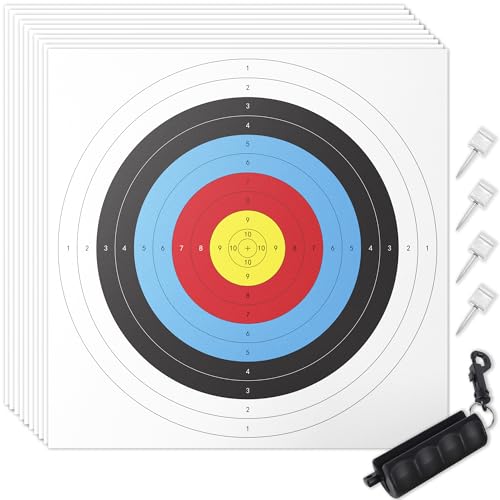
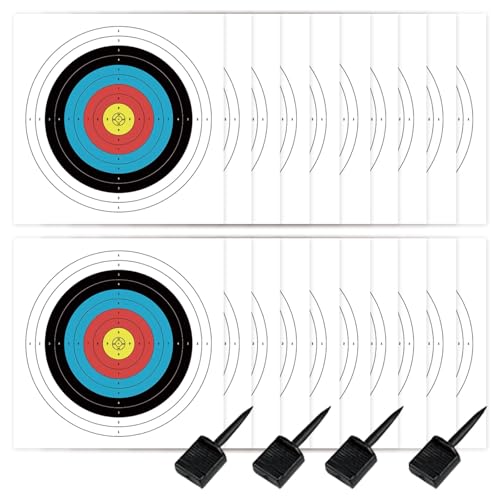
Single-spot 10-ring faces provide one central aiming area and are represented here by the Yummuely 40cm target, the THREE ARCHERS 40cm target, the MOLFUJ 60cm target, the KURUGEILI 60cm target, and the suituts 16-inch pack. These designs are straightforward for regular scoring and skill work. The larger 60cm sheets can make the face easier to see or provide a broader paper area, but they also need more room on the backstop.
Five-ring faces are a different training format. The Morrell target has five bullseyes on a 17x17-inch sheet and is identified as an NFAA official-size target. The THREE ARCHERS NFAA pack is a 5-ring single-spot face compatible with NFAA indoor 18-meter use. Choose one of these when your training plan calls for that layout; a 10-ring target is not a direct substitute for a 5-ring face.
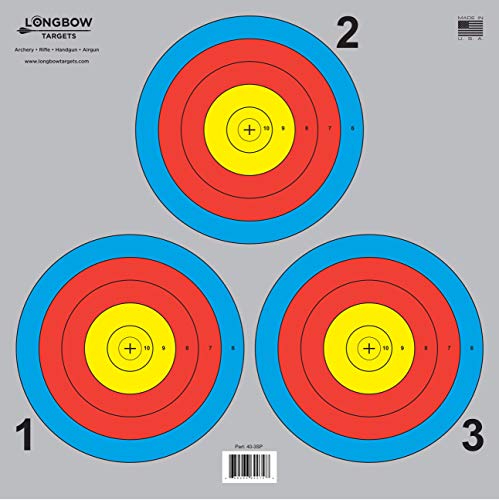
Three-spot designs spread the aiming points across the sheet. Longbow Targets supplies a 40cm 3-spot Vegas face on heavy-duty 7-point paper. The MOLFUJ 3-spot package adds four pins, while the THREE ARCHERS vertical target uses a 67x22cm layout intended for indoor 18-meter practice. A vertical face can suit a narrow indoor lane, but its shape is less flexible if your target stand expects a square sheet.
Check size and viewing distance
The selected products range from 40cm square faces to 60cm square faces and specialized 67x22cm vertical sheets. Size affects visibility and the space needed behind the target. The standard 40cm format is a practical middle ground for many practice setups. The 60cm choices are better suited to buyers who specifically want a large face, while the 16-inch and 17-inch options are compact alternatives.
Do not assume that a larger sheet automatically matches a particular competition setup. Look for the stated face size and ring format together. The Yummuely listing identifies a 40x40cm, 10-ring, 18-meter face, while the THREE ARCHERS vertical product identifies both its overall dimensions and indoor use.
Consider printing and glare control
Clear printing matters when the rings must be distinguished at distance. Several selected products specifically describe matte, non-reflective, or glare-reducing surfaces. These statements are specifications, not independent visibility tests, so treat them as design information rather than a performance guarantee.
A record section can also be useful for organized practice. The suituts 100-sheet bullseye pack documents space for dates, scores, and distances. That feature is different from the target face itself, but it may help archers track sessions without keeping separate notes.
Compare paper construction and storage
Paper descriptions vary from wood-free printed paper to thick paper, cardstock, and heavy-duty 7-point archery paper. Morrell provides a specific cardstock description at the current price. Longbow Targets provides a 7-point paper specification, while Yummuely, KURUGEILI, and several other listings describe thick or durable paper. These details can help distinguish a basic practice sheet from a more substantial target paper, although the supplied listings do not provide independent durability testing.
Packaging also affects convenience. Rolled packs from Yummuely, THREE ARCHERS, and the NFAA 5-ring model are intended to reduce creases. Pins are included with Yummuely, KURUGEILI, MOLFUJ 3-spot, and suituts selections; the other products require a separate mounting method based on the information supplied.
Choose quantity for your shooting schedule
Pack size is one of the clearest differences in this category. The Morrell and suituts options provide 100 sheets, making them suitable for clubs, schools, or frequent individual practice. Thirty-sheet packs from Yummuely, THREE ARCHERS, and MOLFUJ offer a middle ground. The 20-sheet choices are more appropriate when storage space or a specific face format matters more than maximum supply.
Quantity should be considered alongside layout. A large 100-pack is not automatically the right choice if you need a vertical 3-spot or NFAA 5-ring face. Conversely, a specialized 20- or 30-pack may be more useful than a larger general-purpose pack when it matches your training format.
Confirm the backstop and mounting plan
Paper targets are faces that must be mounted to a suitable backstop, target bag, foam target, hay bale, or another appropriate setup. The Yummuely listing explicitly mentions pins for securing the paper to backstops, foam targets, hay bales, or target bags. The other products should be evaluated according to the mounting method available to you. None of these paper sheets should be treated as a standalone arrow-stopping target.
Also confirm that your stand can accommodate the full sheet. A 60cm face needs more room than a 40cm face, and the 67x22cm vertical layout needs enough height for its long dimension. Follow the safety practices appropriate for your bow, arrows, range, and backstop.
Final Recommendation
Morrell 100-Count 5-Spot NFAA Target ranks first overall in this specification-based comparison under the published weighted criteria.
Yummuely 30 Pack Archery Target Paper is the first overall specification-based choice among these best paper archery targets. Its documented 40cm 10-ring 18-meter format, thick matte paper, rolled packaging, pins, and arrow puller create a complete general-purpose package in this comparison.
Choose Morrell if a 100-count NFAA 5-spot pack and 100-pound cardstock matter most. Longbow Targets is the focused pick for a heavy-duty 3-spot Vegas face. For a larger square face, compare MOLFUJ and KURUGEILI at 60cm. For vertical indoor practice, the THREE ARCHERS vertical target is the specialized option. The top paper archery targets are not interchangeable: format, dimensions, and quantity should follow your actual practice plan.
Frequently Asked Questions
Among the best paper archery targets, what size should I choose?
The selected range includes 40cm, 60cm, 16-inch, 17-inch, and vertical 67x22cm formats. A 40cm square target is a balanced general-purpose choice when your setup supports it. Choose 60cm when you specifically want a larger face, and verify that the backstop and stand have enough space.
Are these paper archery targets suitable for indoor practice?
Several listings specifically identify indoor or 18-meter use, including Yummuely, the THREE ARCHERS vertical target, and the THREE ARCHERS NFAA 5-ring target. Suitability still depends on having an appropriate indoor range, mounting surface, and arrow-stopping backstop. The paper face itself is not a complete target system.
What is the difference between a 10-ring, 5-ring, and 3-spot target?
A 10-ring face uses one bullseye divided into numbered scoring rings. A 5-ring target uses a different ring layout, while a 3-spot face places three aiming points on one sheet. The Morrell and THREE ARCHERS NFAA products document 5-ring formats; Longbow Targets and the MOLFUJ and THREE ARCHERS selections document 3-spot formats.
Do any selected targets include mounting accessories?
Yes. Yummuely includes four plastic pins and a silicone arrow puller. KURUGEILI lists four target-face pins, the MOLFUJ 3-spot package lists four pins, and the suituts 100-sheet bullseye pack lists four pins. Other selections should be paired with a mounting method appropriate for your backstop.
Which pack is most suitable for frequent practice?
Morrell and suituts each document 100-sheet packs. They are the quantity choices in this comparison, but their layouts differ: Morrell is a 5-spot NFAA-style target, while suituts is a 10-ring bullseye design. Select based on the face you intend to practice with, not quantity alone.