Buying Guide
Choosing among the best left-handed archery quivers starts with how the quiver will sit on your body. A hip quiver keeps arrows beside the shooting hand and is often the most direct format for target practice. A back quiver distributes the load behind the shoulder and may be more convenient when walking. Dual-carry bags add a belt clip or strap so the user can change positions.
Confirm the handedness label
The clearest choices are products whose listings explicitly identify left-hand use. The LEGEND XT320 and XT420 both specify a left-handed size, while the ZSHJGJR and JRONG Tols listings describe use by both left- and right-handed archers. The SAS listing also identifies a left configuration. These products provide stronger evidence for a left-handed recommendation than a generic bag with no orientation statement.
For the remaining adaptable designs, the evidence supports back, hip, waist, or belt-clip carry but does not explicitly name a dominant hand. That distinction matters. A dual-carry quiver may work for a left-handed archer, but the listing alone does not prove that every pocket, opening, or clip is optimized for left-side access. Buyers should check product photos and the seller’s current fit details before ordering when orientation is not stated.
Choose hip, back, or dual carry
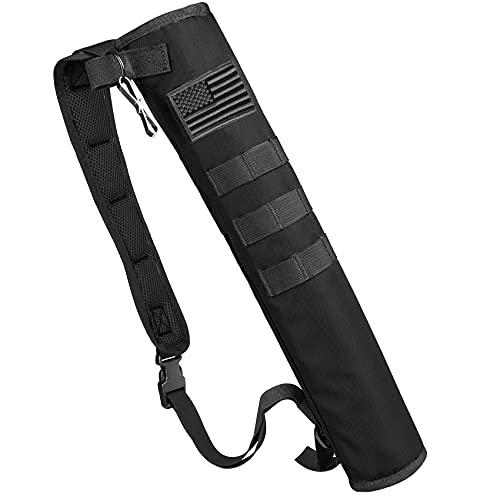
Hip quivers are the most direct fit for organized range sessions. The XT320 uses three arrow tube cases and a waist belt, while the XT420 uses individual compartments and a separate pocket layout. The SPG Molle Hip Quiver is another hip-focused choice, with a belt listed from 24 to 54 inches and modular attachment space.
Back quivers can provide a larger open storage area. SAS states that its left back quiver holds about 30 arrows depending on arrow size. That format may suit practice sessions where carrying a larger set is more important than keeping every arrow in a separate tube.
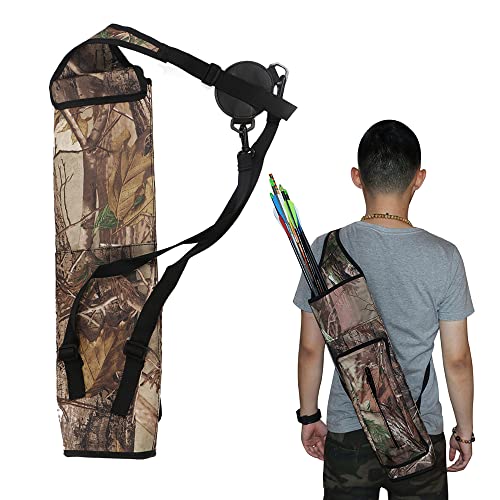
Dual-carry bags are useful when the same quiver must work for walking, practice, and storage. Ciltlurk, KURUGEILI, KRATARC, and TOPARCHERY document combinations of shoulder straps, belt clips, or hip mounting. These designs can be practical for left-handed users who want to choose the side or carry position, although the supplied listings do not independently verify left-specific geometry.
Match capacity to the session
Capacity should reflect the number and type of arrows you expect to carry. The JRONG Tols pocket quiver is explicitly sized for eight arrows, making it a compact choice for a smaller practice load. KRATARC lists 12 to 18 arrows, while the SPG three-tube model lists 15 to 20 arrows. Ciltlurk states up to 20 to 30 target arrows, KURUGEILI lists up to 30, and SAS lists about 30 depending on arrow size.
Capacity claims are not interchangeable. Arrow diameter, fletching size, and tube opening can affect practical fit, and several listings use approximate language. Checking the arrow dimensions and opening size is prudent when capacity is important.
Look for access and accessory storage
Separate tubes can keep arrows organized and upright. The XT320 is particularly suited to that use because its three tubes are paired with front-facing access. The XT420 instead emphasizes individual compartments, an inner mesh pocket, and an external zippered pocket. SAS adds one mesh pocket and one expandable pocket, while SPG provides a storage pocket plus MOLLE webbing and hook-and-loop attachment areas.
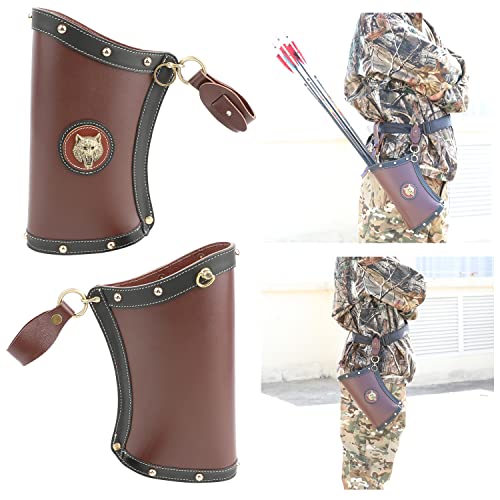
A simple pocket quiver may be preferable when you carry only arrows. The JRONG Tols model uses a curved leather body, an upper strap to restrict arrow spread, and a plastic sheet insert that can sit in a pocket or on a belt. These features favor compactness over the larger accessory layout found on field-oriented nylon bags.
Consider material, bottom protection, and portability
Material descriptions help explain trade-offs but do not replace hands-on durability testing. LEGEND lists water-resistant nylon, SAS lists 600D polyester, SPG lists 600D Oxford fabric with lining and foam padding, and TOPARCHERY lists 900D polyester canvas. Leather options such as ZSHJGJR and JRONG Tols offer a different structure and appearance.
Reinforced bottoms are relevant when arrow points could press against the bag. Foldable construction appears in Ciltlurk, KURUGEILI, and KRATARC, which may simplify storage or transport. These are specification-based advantages; the supplied evidence does not establish long-term wear or field performance.
Final recommendation
LEGEND XT320 Left-Handed Nylon Hip Quiver ranks first overall in this specification-based comparison under the published weighted criteria.
The final choice among the best left-handed archery quivers depends on the documented features that match your intended use.
The LEGEND XT320 is the highest-scoring returned product and the first overall specification-based choice. It combines explicit left-handed sizing with three arrow tubes, a waist belt adjustable up to 42 inches, quick-release hardware, accessory storage, and water-resistant reinforced nylon. Among the top left-handed archery quivers, it offers the clearest balance of orientation evidence and organized hip carry.
Choose the LEGEND XT420 instead if pockets and individual compartments matter more than tube cases. Pick SAS for a left-labeled back quiver with about 30-arrow capacity, ZSHJGJR for an explicitly two-sided leather design, or JRONG Tols for a compact eight-arrow load. If you need changing carry positions, Ciltlurk and KURUGEILI document the most useful back-and-hip flexibility, while SPG is the stronger modular hip option.
Frequently Asked Questions
Among the best left-handed archery quivers, what makes a quiver suitable for a left-handed archer?
The most specification-aligned evidence is an explicit left-hand size or a statement that both left- and right-handed archers can use the product. The LEGEND XT320, LEGEND XT420, SAS left model, ZSHJGJR, and JRONG Tols provide that type of listing evidence. Generic dual-carry bags may also be adaptable, but their listings do not prove left-specific access.
Are hip quivers or back quivers better for left-handed target practice?
Neither format is universally better. A hip quiver keeps arrows beside the waist and can provide direct access, especially when the belt and opening are positioned correctly. A back quiver offers a larger central storage area and may be convenient when walking. The best left-handed archery quivers are the ones whose documented carry position and access pattern match your shooting routine.
How much capacity do I need?
For a small session, the JRONG Tols listing specifies eight arrows. KRATARC lists 12 to 18, SPG lists 15 to 20, and several larger bags list approximately 20 to 30 or about 30 arrows. Allow for arrow diameter and fletching size because stated capacity may be approximate.
Do reinforced bottoms matter?
A reinforced or hardened bottom can add a protective layer where arrow points press against the quiver. Ciltlurk and KURUGEILI explicitly describe reinforced bottoms, while other selected products document reinforced stitching or thick materials instead. These features are useful specification signals, but they are not a substitute for inspecting fit and construction before use.
Can one quiver be worn on either the hip or back?
Yes, some selected models document both options. Ciltlurk, KURUGEILI, KRATARC, and TOPARCHERY list combinations of shoulder straps, belt clips, or hip mounting. That flexibility can help a left-handed archer choose a comfortable side, but buyers should confirm how the opening and pockets face because generic dual-carry evidence is not the same as an explicit left-handed label.