Buying Guide
Mechanical pendulum metronomes remain a favorite for musicians who want a visual tempo cue alongside the click. When shopping for the best pendulum metronomes, the differences come down to tempo range, bell options, build quality, and how portable you need the unit to be. The picks below keep that focus, comparing ten mechanical designs that span full-size wooden-look classics and compact practice timers built around a swinging pendulum rod.
How Pendulum Timing Works
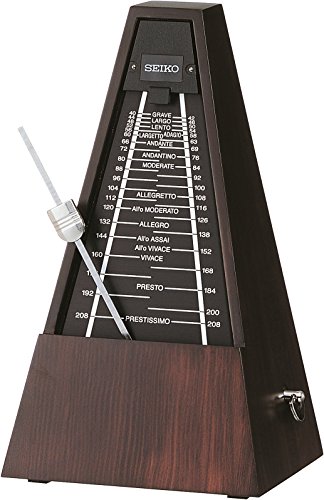
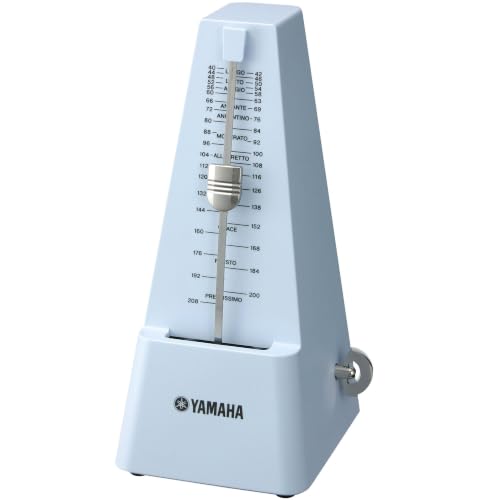
Every model in this comparison uses a spring-driven mechanism tied to a weighted pendulum. The position of the sliding weight on the rod sets the tempo, the winding key sets the runtime, and the audible beat comes from the escapement inside the housing. A taller pendulum and a heavier base tend to swing more steadily, which is why full-size units like the Seiko WPM1000B Forest Hibiki Classic Brown and the Yamaha Classic Pendulum Metronome MP-90BL2 Blue feel solid on a piano desk. The Seiko WPM1000B is listed with a 20 to 208 CFM tempo window and beat options of 0, 2, 3, 4, and 6, while the Yamaha MP-90BL2 uses a sliding brass weight with printed tempo markings and a configurable downbeat bell at every 2nd, 3rd, 4th, or 6th beat. Together they show the two common ways a metronome exposes its tempo controls.
Tempo Range and Resolution
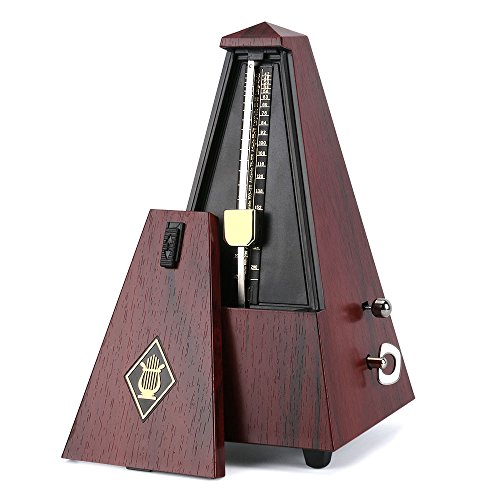
Tempo range is the first spec to compare because it sets the slowest and fastest practice speeds you can reach. The Seiko WPM1000B lists 20 to 208 CFM, which is the only candidate in this comparison that goes below 40 bpm, making it useful for very slow rubato practice and gradually accelerated exercises. The Nikko 713, the Teak mechanical metronome, the LiebeWH AM 706, the Btuty JX-V, the Baoblaze Pink, and the BORGBAR Solo S-320 all list or imply a 40 to 208 bpm tempo range, which covers the standard beginner to advanced range. The Yamaha MP-90BL2, the Ruilogod Burgundy, and the Baoblaze Black do not specify a tempo range in the supplied evidence, so they are treated as baseline tempo metronomes until the manufacturer confirms a number.
Bell and Beat Options
A bell or accent option lets you mark the downbeat in compound or changing meters. The Yamaha MP-90BL2 lists a configurable bell at every 2nd, 3rd, 4th, or 6th beat, and the Seiko WPM1000B lists 0, 2, 3, 4, and 6 beat patterns. The Nikko 713 intentionally drops the separate bell and folds the accent into the tempo tone, while the Btuty JX-V explicitly states a soft sound with no bell. The Baoblaze Pink and the LiebeWH AM 706 do not describe bell behavior in the supplied data, and the Teak mechanical metronome similarly omits a bell mention. The BORGBAR Solo S-320 is the only other candidate that explicitly mentions a bell ring feature in its description, while the Ruilogod Burgundy and the Baoblaze Black describe classic pendulum behavior without a bell feature being stated.
Build and Mechanism Quality
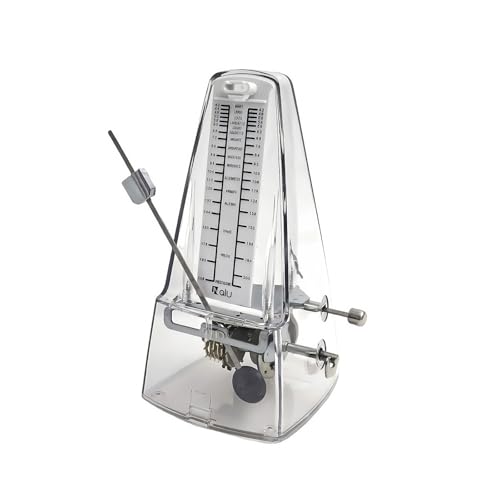
Mechanism quality controls how steady the click stays over a winding cycle. The Yamaha MP-90BL2 uses a mechanical spring tightened with a hand-turned key, and the description highlights a lightweight, durable plastic body with a matte finish that helps hide fingerprints. The Btuty JX-V uses a high-elastic nylon movement described as drop-resistant inside a high-impact plastic shell. The LiebeWH AM 706 lists a copper metal mechanism described as rust-resistant, and the Seiko WPM1000B is a full-size wooden-look classic at 1.29 lb. The Teak mechanical metronome has a wood-look plastic finish with a wind-up mechanism, while the Nikko 713 is described as about 14% lighter than the previous model, weighing roughly 14.2 oz. The Baoblaze Pink and Baoblaze Black use hand-wound spring mechanisms, and the BORGBAR Solo S-320 lists a precision spring mechanism in its pyramid tower.
Size and Portability
Full-size models like the Seiko WPM1000B at 9.4 inches tall and the Nikko 713 at 8.1 inches tall are designed to sit on a piano or practice desk. The Yamaha MP-90BL2 is described as lightweight and durable, which suits a typical tabletop, while the Teak mechanical metronome is heavier at about 1.45 lb. For travel, the Btuty JX-V stands only 11 cm tall, the Baoblaze Pink and Baoblaze Black are compact mini uprights, and the BORGBAR Solo S-320 is a pyramid tower around 7.9 inches tall. The Ruilogod Burgundy pyramid metronome is listed at 20.5 cm tall and 468 g, placing it in the middle of the size spectrum.
Visual Pendulum Clarity
Because the pendulum is the visual reference, the swing arc and contrast matter. The pyramid-shaped Ruilogod Burgundy and the vintage BORGBAR Solo S-320 display the pendulum prominently in front of the housing. The Seiko WPM1000B, Yamaha MP-90BL2, Nikko 713, and Teak metronome show a swinging pendulum through the front of the case. The mini designs like the Btuty JX-V, Baoblaze Pink, Baoblaze Black, and LiebeWH AM 706 keep the pendulum visible but at a smaller scale, which may be harder to read across a room.
Instrument Versatility
Pendulum metronomes pair with almost any practice instrument, but the listings state compatibility explicitly for some. The Teak mechanical metronome lists piano, violin, guitar, bass, and other instruments, while the LiebeWH AM 706 lists piano, guitar, violin, and ukulele. The Yamaha MP-90BL2, Seiko WPM1000B, Nikko 713, Btuty JX-V, Baoblaze Pink, Baoblaze Black, Ruilogod Burgundy, and BORGBAR Solo S-320 are general-purpose practice metronomes that work for piano, strings, fretted instruments, and singing practice based on how they are described.
Final Recommendation
Seiko WPM1000B Forest Hibiki Classic Brown Pendulum Metronome ranks first overall in this specification-based comparison under the published weighted criteria.
The final choice among the best pendulum metronomes depends on the documented features that match your intended use.
The Seiko WPM1000B Forest Hibiki Classic Brown Pendulum Metronome stands out as the first overall specification-based choice, thanks to its 20 to 208 CFM tempo range, its 0, 2, 3, 4, and 6 beat options, and its full-size wooden-look housing. The Yamaha Classic Pendulum Metronome MP-90BL2 Blue is the most specification-aligned runner-up when you want a Yamaha-built pendulum with a configurable bell at every 2nd, 3rd, 4th, or 6th beat and a lightweight plastic body. Together with the Nikko 713, the Teak mechanical metronome, the LiebeWH AM 706, the Btuty JX-V, the Baoblaze Pink, the Ruilogod Burgundy, the BORGBAR Solo S-320, and the Baoblaze Black, they represent the top pendulum metronomes available for US practice rooms in 2026.
Practical Tips Before You Buy
- Match the slowest tempo you need. If you practice below 40 bpm, the Seiko WPM1000B is currently the only listing in this comparison that confirms a 20 CFM low end.
- Decide whether you need a bell. The Yamaha MP-90BL2 and the BORGBAR Solo S-320 both confirm a bell, while the Nikko 713 and the Btuty JX-V intentionally do not.
- Think about footprint. Full-size units like the Seiko WPM1000B and Nikko 713 anchor a piano desk, while the Btuty JX-V and Baoblaze mini designs fit in a backpack.
- Check the mechanism material. The LiebeWH AM 706 lists a copper mechanism, the Yamaha MP-90BL2 uses a standard spring, and the Btuty JX-V uses a nylon movement.
Frequently Asked Questions
What makes a pendulum metronome different from a digital one?
A pendulum metronome uses a spring-driven weighted rod to set the tempo, so the visible swing of the pendulum acts as a visual cue alongside the audible click. Models like the Seiko WPM1000B and the Yamaha MP-90BL2 keep this classic design, while a digital metronome typically relies on a screen and electronic pulse instead.
How do I read the tempo markings on the best pendulum metronomes?
The tempo scale is printed on the face of the housing, and the sliding weight on the pendulum rod is moved to the marking that matches the bpm you need. The Yamaha MP-90BL2 specifically lists easy-to-read tempo markings on the front, and the Seiko WPM1000B, Nikko 713, Teak metronome, and LiebeWH AM 706 use the same sliding-weight concept.
Do any of the best pendulum metronomes include a bell for downbeats?
Yes. The Yamaha MP-90BL2 lists a downbeat bell at every 2nd, 3rd, 4th, or 6th beat, the Seiko WPM1000B supports 0, 2, 3, 4, and 6 beat patterns, and the BORGBAR Solo S-320 mentions a bell ring feature. The Nikko 713 and the Btuty JX-V intentionally omit a bell.
Are pendulum metronomes still useful for piano and violin practice?
Yes. The Teak mechanical metronome lists piano, violin, guitar, and bass compatibility, and the LiebeWH AM 706 lists piano, guitar, violin, and ukulele compatibility. The Seiko WPM1000B and Yamaha MP-90BL2 are designed for piano rooms, and the Btuty JX-V is small enough to keep in a violin case.
How portable are the top pendulum metronomes in this comparison?
The most portable options are the Btuty JX-V at 11 cm tall, the Baoblaze Pink and Baoblaze Black mini designs, and the BORGBAR Solo S-320 pyramid at around 7.9 inches. Mid-size options like the Yamaha MP-90BL2 and the Ruilogod Burgundy fit on a desk or shelf, while the Seiko WPM1000B and Nikko 713 are best suited to a fixed practice room.