Buying Guide
Selecting the best plastic mulch starts with understanding how film thickness, color science, and drainage design interact with the crops you grow. The ten films compared below were chosen for their technical specifications and category relevance, not for popularity or customer feedback. Each entry documents verifiable details such as mil thickness, dimensions, color technology, and engineered features.
Understanding Film Thickness
Film thickness, measured in mils, is one of the most important specifications when comparing plastic mulch films. Thinner 1.0 mil films are common in home-garden rolls and are flexible enough to hug raised beds. The Grower’s Solution Black Plastic Mulch 4ft x 100ft and the OWTWCNL Mulch Film with Pre-Cut Planting Holes both fall into this lighter category, while the NRWRTY 4 Mil Red Plastic Mulch and the Farm Plastic Supply Poly Mulch Black Sheeting step up to 4 mil for heavier-duty use. Thicker films generally resist tearing during installation and removal, though they can be harder to stretch over uneven soil.
Color and Light Management
Plastic mulch color is not just cosmetic. Black films block light to suppress weeds, while reflective films influence plant development through specific wavelengths. The NRWRTY 4 Mil Red Plastic Mulch and Adnee 4 Mil Embossed Red Mulch Film both reflect red light into developing crops, with documented yield benefits for tomatoes. The Grower’s Solution Silver Metallic Plastic Mulch adds an insect-deterrent element via its reflective upper surface, and the Grower’s Solution White on Black Plastic Mulch combines weed blocking with a cooling white top for heat-sensitive crops.
Weed Control and Soil Moisture
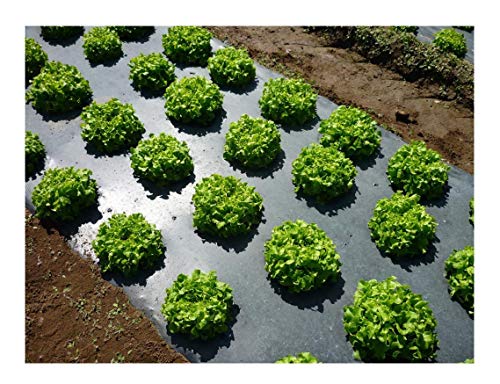
Every film in this comparison is engineered to block sunlight and reduce weed competition. Black films, including the Grower’s Solution Black Plastic Mulch 4ft x 250ft and The Berry Company Black Embossed Plastic Mulch, deliver full light blockage while limiting evaporation through the planting holes. Plastic films are impervious to water, so moisture loss is limited to plant openings, which can reduce irrigation frequency in dry climates.
Coverage and Bed Sizing
Roll length and width determine how much ground a single film covers. The Berry Company Black Embossed Plastic Mulch offers an industrial 2400 foot length for large plantings, while shorter rolls like the Adnee 4 Mil Embossed Red Mulch Film at 25 feet suit small raised beds. Width matters too: the Farm Plastic Supply Poly Mulch Black Sheeting uses a 3 foot width for tight row spacing, while most other entries use a 4 foot width that aligns with common raised-bed dimensions.
UV and Weather Resistance
Films exposed to direct sunlight degrade over time unless they include UV stabilization. The NRWRTY 4 Mil Red Plastic Mulch and Farm Plastic Supply Poly Mulch Black Sheeting both specify UV protection, which can extend usable field life across multiple growing seasons. Embossed films, like the Grower’s Solution line, also resist flopping in wind thanks to built-in elastic memory.
Drainage and Planting Layout
Drainage design separates basic films from engineered products. Pre-spaced drainage holes in the NRWRTY red mulch support water penetration without overwatering, and pre-cut planting holes in the OWTWCNL Mulch Film remove the need for manual cutting during installation. Solid films without pre-cut holes require the gardener to cut openings, which can be an advantage when you want custom spacing.
Final Recommendation
NRWRTY 4 Mil Red Plastic Mulch, 4 x 50 FT ranks first overall in this specification-based comparison under the published weighted criteria.
The final choice among the best plastic mulch depends on the documented features that match your intended use.
For gardeners prioritizing red-light reflection backed by documented yield research, the NRWRTY 4 Mil Red Plastic Mulch is the first overall specification-based choice in this comparison, combining 4 mil thickness, UV resistance, and engineered drainage holes. For traditional black weed control on long rows, the Grower’s Solution Black Plastic Mulch 4ft x 250ft delivers embossed strength at an extended length. Together with the rest of this list, these films represent some of the top plastic mulch options available for US gardeners planning the 2026 season, each offering a different balance of thickness, color science, and coverage.
Frequently Asked Questions
What mil thickness should I choose for the best plastic mulch in a home garden?
For most home gardens, films between 1.0 and 4 mil are sufficient. Lighter 1.0 mil films, like the Grower’s Solution Black Plastic Mulch 4ft x 100ft, are easier to handle and lay flat on smooth beds. Heavier 4 mil films, such as the NRWRTY 4 Mil Red Plastic Mulch, resist tearing better in rocky or uneven soils and may last across multiple seasons.
Does red plastic mulch really improve tomato yields?
Red mulch films reflect far-red and red wavelengths back into the plant canopy, which can stimulate photosynthetic activity. Both the NRWRTY 4 Mil Red Plastic Mulch and the Grower’s Solution Red Mulch 4ft x 250ft cite research linking red reflective mulch to increased tomato and eggplant yields.
How do I choose between black, silver, and white-on-black plastic mulch?
Black films are the standard for weed suppression and soil warming. Silver films, such as the Grower’s Solution Silver Metallic Plastic Mulch, add insect-deterrent reflection and may improve under-canopy light. White-on-black films cool the soil while still blocking weeds, making them a strong choice for heat-sensitive crops in warmer US regions.
Can I install plastic mulch over drip irrigation lines?
Yes. The Grower’s Solution Black Plastic Mulch 4ft x 250ft and similar films are designed for use with drip irrigation. Lay the lines first, then cover with the film and cut planting holes above each emitter so water reaches the root zone directly.
Are pre-punched planting holes a good idea?
Pre-punched films like the OWTWCNL Mulch Film with Pre-Cut Planting Holes save installation time and create uniform spacing, which is helpful for first-time mulch users. They may be less flexible if your planting plan changes, so consider whether fixed hole spacing matches the crops and spacing you plan to use.