Buying Guide
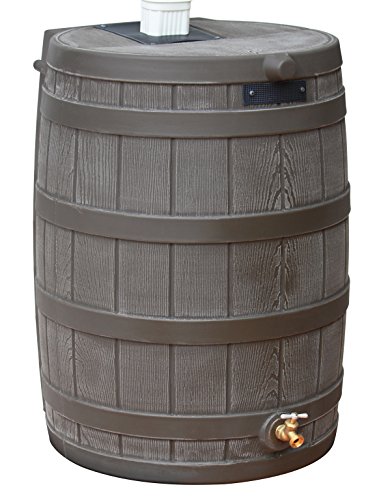
Picking the best plastic rain barrels for a home is less about brand prestige and more about matching a barrel’s shape, capacity, and material to the roof it serves. The selections above cover rigid flat-back tanks, faux-finish cylinders, and collapsible PVC designs, all of which qualify as plastic rain barrels under the comparison. Use the sections below to focus on what actually changes performance in the yard.
Match Capacity to Roof Area and Garden Demand
A rough rule is one gallon of storage per square foot of roof per inch of rainfall, though most homeowners simplify this to: a 50 to 60 gallon barrel suits a small-to-medium roof catchment area, while larger gardens or dry climates benefit from two linked barrels. The Step2 Lakewood leads this comparison at 60 gallons, while the RTS Home Accents Eco Rain Barrel offers 55 gallons in a slimmer recycled-plastic shell. Collapsible 53-gallon designs from VEVOR deliver similar volume without taking up winter storage space. Selecting top plastic rain barrels that match roof output means fewer overflow events and more water available during dry stretches.
Evaluate Material and UV Durability
All the best plastic rain barrels on this list rely on UV-resistant polyethylene or PVC to handle year-round sun exposure. Double-walled construction, found on the Step2 Lakewood and Fernway, adds rigidity that resists cracking and chipping. Recycled-content polyethylene in the RTS Eco and FCMP Catalina barrels reduces environmental footprint without sacrificing structural strength. Collapsible PVC barrels use 1000D fabric with high-temperature sealing to handle temperature swings from roughly -30 to 70 degrees Celsius.
Flat-back shapes are the practical choice along house walls, fence lines, or tight side yards where round barrels would block walkways. The FCMP Slim Line has the narrowest profile at 16 inches deep, making it ideal for shallow installations. Larger 24-inch-deep barrels work better when there is clearance to step around them. Collapsible barrels free up even more placement flexibility because their support rods can be repositioned on flat ground rather than needing a wide hard surface.
Check Water Access and Spigot Design
Spigot placement determines whether a watering can fits underneath or whether a hose can attach comfortably. Elevated designs like the Step2 Lakewood ship with a matching stand that improves water pressure at the spigot. Brass spigots, used on the RTS Home Accents walnut model, Step2 Lakewood, and Step2 Fernway, are built for long-term repeated hose connections. Plastic spigots on the RTS Eco barrel work fine for occasional can-filling but may wear faster under daily garden hose use.
Look for Debris Screening and Filtration
A mesh screen on top keeps leaves, twigs, and insects out of stored water. The Step2 Lakewood and Step2 Fernway use stainless steel screens for fine particulate filtration, while the FCMP Slim Line includes a plastic debris screen and the VEVOR collapsible barrel relies on a wide mesh top with scale markings. Good Ideas Rain Wizard and Impressions barrels pair mesh screens with routed overflow channels that divert excess water away from the foundation.
Plan for Expandability and Overflow Control
Overflow valves and linking ports allow daisy-chaining two or more barrels to multiply storage. The FCMP Raincatcher 4000 and FCMP Slim Line both include side spigots designed for in-series connection, so an initial install can grow into a 100 or 200 gallon system. Routed overflow channels on Good Ideas barrels serve a complementary purpose, redirecting overflow away from siding rather than just letting water spill at the back.
Consider Portability and Off-Season Storage
Rigid barrels sit outdoors year-round, but in freezing climates they need draining before winter. Collapsible PVC barrels fold flat, which is a major advantage for renters or homeowners with limited garage space. Rigid polyethylene barrels in the 18 to 25 pound empty weight range remain light enough to reposition by one person, while the Step2 Lakewood at 34 pounds benefits from being moved before filling.
Final Recommendation
Step2 Lakewood Rain Barrel with Stand ranks first overall in this specification-based comparison under the published weighted criteria.
The best plastic rain barrels for most homeowners in this comparison come from Step2’s Lakewood, which leads on storage capacity and pairs that volume with a mesh screen, brass spigot, and integrated stand. For tighter budgets or those prioritizing recycled content, the RTS Home Accents 55-Gallon Eco Rain Barrel offers strong capacity in a flat-back recycled-plastic shell. Side-yard installations are best served by the FCMP Slim Line 45-gallon model, while renters and seasonal gardeners should look to the VEVOR 53-gallon collapsible barrel for top plastic rain barrels that fold away when not in use. Whichever barrel fits the yard, the comparison above confirms that the best plastic rain barrels are defined by spec-driven choices rather than hype.
Frequently Asked Questions
Among the best plastic rain barrels, what size plastic rain barrel do most homes actually need?
A 50 to 60 gallon barrel is the practical baseline for a typical single-story roof section, while two linked barrels make sense for larger catchment areas or vegetable gardens with high summer demand. The best plastic rain barrels for medium yards start around 50 gallons, with the Step2 Lakewood and RTS Eco delivering 55 to 60 gallons in a flat-back footprint.
Are collapsible rain barrels as durable as rigid ones?
Collapsible barrels use reinforced PVC with support rods rather than rigid polyethylene walls, so they trade long-term rigidity for storage convenience. Modern 1000D PVC designs are UV-resistant and rated for wide temperature ranges, but rigid barrels still win on pure impact resistance and long-term shape retention.
Do plastic rain barrels need a debris screen?
A mesh screen on the inlet is strongly recommended for any rain barrel, because it keeps leaves, roof grit, and insects out of stored water. The best plastic rain barrels in this comparison all include either a stainless steel or plastic mesh screen, and barrels without a built-in screen can be paired with a simple gutter mesh insert.
Can multiple plastic rain barrels be connected together?
Yes, and it is one of the easiest ways to scale storage. Barrels from FCMP Outdoor, RTS Home Accents, and Step2 include side spigots or overflow valves that let water flow from one barrel into the next, effectively doubling or tripling total capacity along a single downspout run.
How should plastic rain barrels be stored in freezing weather?
Rigid polyethylene barrels should be drained fully and ideally stored indoors or inverted in freezing climates to prevent ice damage. Collapsible PVC barrels can simply be emptied, dried, and folded flat for compact winter storage, which is a useful option for the plastic rain barrels aimed at seasonal gardeners.