Buying Guide
Choosing the best playback earbuds starts with identifying how you will listen. Music at a desk, commuting, calls, running, and watching video place different demands on earbuds. The products in this comparison are ranked from public listing specifications, not from hands-on testing. Claimed battery figures, sound descriptions, and protection ratings should therefore be treated as documented specifications rather than independent measurements.
Match the design to your routine
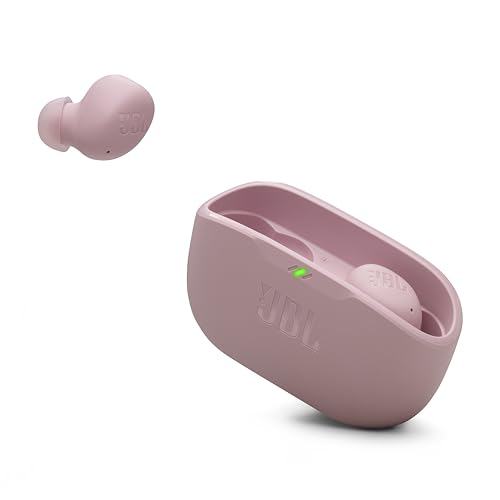
Standard in-ear earbuds are usually the most compact option and can create a more enclosed fit. The JBL Vibe Buds 2 and JBL Vibe Beam 2 use conventional true-wireless construction and add active noise cancelling plus Smart Ambient. That combination is useful when you want to reduce distractions but still have a way to hear surrounding sound without removing the earbuds.
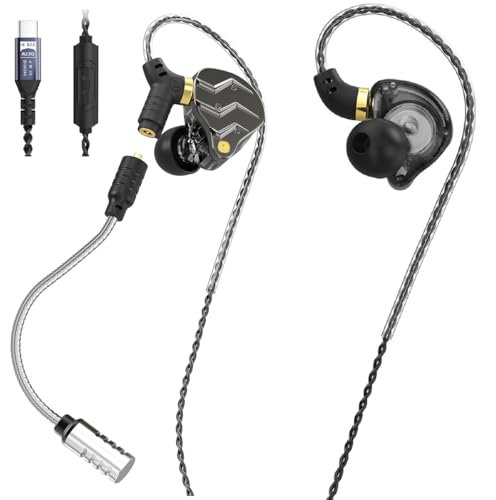
Sports ear-hook models take a different approach. GNMN V7, Matast C16, and occiam T19 list flexible hooks intended to help hold the earbuds in place during running or workouts. The hook adds external support, which may be preferable if ordinary earbuds tend to loosen during movement. TAGRY X08 is another sports-friendly option, but its listing emphasizes an ergonomic lightweight design rather than ear hooks.
The Monster Open Ear AC210 documents a true open-back design. It does not enter the ear, so it is a useful alternative for listeners who dislike sealed tips. The trade-off is that an open design may let in more surrounding sound, making it less suitable when isolation is the priority. KTGEE T08 and Jxrev J53 document semi-in-ear shapes that sit between conventional sealed tips and fully open-ear construction.
Compare playback claims carefully
Case-supported playback is not the same as single-charge playback. GNMN V7 lists up to eight hours on one charge and up to 96 hours with the case. Matast C16 lists eight hours per earbud and up to 60 hours overall. JBL Vibe Buds 2 and JBL Vibe Beam 2 list 10 hours per charge and up to 40 hours with the case when ANC is off. These figures are useful for comparing endurance, but actual runtime can vary with listening modes and volume.
If you rarely recharge, high-capacity options such as GNMN V7, Matast C16, and TAGRY X08 are attractive on paper. For lighter daily use, JVC Gumy HAA7T2W lists up to 24 hours, while Monster Open Ear AC210 lists up to 30 hours with its case. A shorter total can still be suitable if the earbuds are charged regularly or if a compact case matters more than marathon runtime.
Consider sound hardware and listening modes
Driver size appears throughout the listings, but size alone does not establish sound quality. JBL lists 8mm dynamic drivers with Pure Bass sound, while GNMN V7 lists 16mm drivers and Matast C16 lists 14.2mm graphene drivers. Monster specifies dual 12mm drivers, and KTGEE lists 13.2mm drivers with a titanium-plated diaphragm. These details indicate the hardware and advertised sound direction, but they do not replace an independent listening test.
Noise control is another important distinction. JBL Vibe Buds 2 and Vibe Beam 2 document active noise cancelling and Smart Ambient. GNMN V7 and occiam T19 also list ANC, while several other products specify ENC or noise-reducing microphones for calls rather than active listening noise cancellation. Those terms should not be treated as interchangeable: microphone noise reduction is primarily a call feature, whereas ANC is designed to address outside sound during listening.
Check fit options and controls
Fit affects comfort and stability. TAGRY X08, Matast C16, and occiam T19 list three ear-tip sizes. JVC Gumy HAA7T2W lists XS, S, M, and L earpieces, giving it the broadest documented size range in this group. Lightweight models such as Jxrev J53 and KTGEE T08 may appeal to users who prefer less weight, while hook-based designs provide additional retention for exercise.
Control type also matters. Most selected models use touch controls, but occiam T19 specifically lists physical button control. Physical buttons may be easier to operate without worrying about accidental taps, while touch controls can provide music, call, volume, and voice-assistant commands. JBL adds app-based EQ and voice prompts, giving it more documented customization than the simpler models.
Use protection ratings as a boundary, not a guarantee
Water-resistance ratings are useful when comparing workout options. Matast C16 and Jxrev J53 list IP7 protection, GNMN V7 and KTGEE T08 list IPX7, TAGRY X08 lists IPX5, and JVC Gumy HAA7T2W lists IPX4. Monster Open Ear AC210 lists IPX5. The KTGEE listing specifically says its IPX7 statement applies to the earbuds rather than the charging case. None of these ratings should be interpreted as permission to submerge the complete charging setup.
Final recommendation
Matast Wireless Earbuds, Bluetooth 5.4 Headphones Sports, 50H Playback Over-Ear ranks first overall in this specification-based comparison under the published weighted criteria.
The final choice among the best playback earbuds depends on the documented features that match your intended use.
JBL Vibe Buds 2 is the highest-scoring returned product and the first overall specification-based choice. It combines ANC, Smart Ambient, app EQ, four microphones, rapid charging, 40-hour case-supported playback, and IP54 protection. For the top playback earbuds for demanding workouts, GNMN V7 and Matast C16 offer secure hooks, strong protection ratings, and extended battery claims. JVC Gumy HAA7T2W is the fit-flexibility pick, while Monster Open Ear AC210 is the clearest choice for listeners who want an open design.
This ranking does not claim that one model will sound or fit best for every person. Instead, it organizes the supplied specifications around useful differences: sound hardware, endurance, fit, protection, and controls. Shoppers should prioritize the features they will actually use, especially whether they need ANC, ear hooks, an open design, visible battery information, or a large selection of ear-tip sizes.
Frequently Asked Questions
What should I look for in the best playback earbuds?
Start with single-charge and case-supported playback, then check the fit style, control method, and protection rating. If you commute, ANC and an ambient mode may be useful. For exercise, ear hooks and an IP-rated design may be more relevant. Also distinguish ANC from ENC: ANC concerns listening noise control, while ENC in these listings generally refers to microphone noise reduction for calls.
Are the best playback earbuds with ear hooks better for running?
Ear hooks can provide additional retention during movement, but they are not automatically better for every ear. GNMN V7, Matast C16, and occiam T19 document ear-hook designs, while JVC Gumy HAA7T2W emphasizes multiple ear-piece sizes. The best choice depends on whether you value external support, a smaller profile, or more fit-size flexibility.
Which selected earbuds have the longest documented playback?
GNMN V7 lists up to 96 hours with its charging case, the highest total in this selection. Matast C16 lists up to 60 hours, and TAGRY X08 also lists up to 60 hours. These are maximum case-supported figures. Single-charge claims are lower, so compare both numbers when deciding whether a model fits your schedule.
Is an open-ear design suitable for noisy travel?
Monster Open Ear AC210 is the selected model with a documented true open-back design. It may suit people who want to avoid an in-ear seal and remain more aware of surroundings, but an open design may provide less isolation than ANC or sealed in-ear earbuds. For noisy travel, the JBL models or ANC-equipped sports options may better match the stated feature needs.
Do water-resistance ratings cover the charging case?
Not necessarily. Ratings in this comparison are attached to the earbuds unless the listing says otherwise. The KTGEE T08 listing specifically limits its IPX7 statement to the earbuds, not the case. Keep charging cases away from water and follow the product documentation before using any model in wet conditions.