Buying Guide
Pocket pedometers are the simplest way to track steps without strapping on a watch or pulling out a phone. The best pocket pedometers share a few traits that matter more than flashy extras: a dependable sensor, a body you forget is there, and a battery that quietly does its job for months. This guide walks through the specifications that actually shape daily use so you can pick a pedometer that fits how you walk.
Sensor Accuracy Design
Every pedometer in this guide uses a 3D tri-axis accelerometer, which counts steps regardless of orientation. That matters in a pocket because the device may rest flat, on its edge, or upside down at different times of day. Picks like the GOMMIN and AVTREK add a 10-step error prevention filter that ignores brief movements such as fidgeting or car rides, then backfills the real steps once you get going. If you walk in stop-and-go city settings or share a pedometer with a child, look for documented 10-step filtering to keep totals honest.
Portability and Wear Options
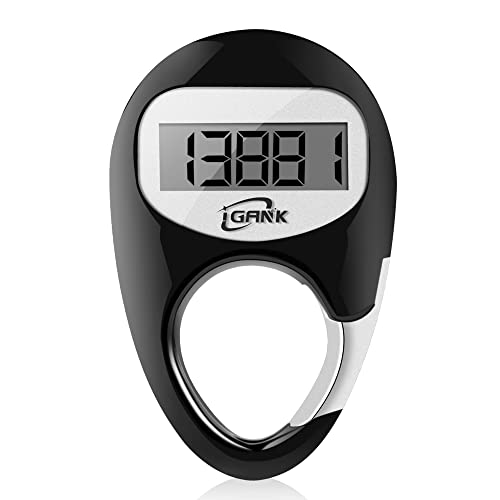
The whole point of a pocket pedometer is that you can forget it is there. Weight and dimensions matter more than you might think. The NESKLA documents about 26.5 grams and the Beroziyesi about 27 grams, both light enough to live in a pocket without pulling fabric. Carry attachments vary widely: the Realalt includes a clip and lanyard, the Jaxrium and U-Trak add a carabiner, and the iGANK folds the carry system into a single belt-loop hook. Choose based on what you already wear day to day. If you clip to a waistband, a flat removable clip works best. If you carry a small backpack, a carabiner gives more flexibility.
Display Readability
A pedometer you cannot read at a glance is one you stop checking. The 3DFitBud documents a full-screen digit layout, and the AVTREK pairs a large 4 x 2.3 cm screen with an automatic LED backlight between 6 PM and 6 AM for low-light walks. Larger numbers are particularly helpful for seniors and for anyone who checks their pedometer while moving. Pocket pedometers with documented one-button time displays, like the AVTREK, double as a quick clock without needing a phone.
Battery and Power Management
Most pedometers in this category run on a single CR2032 coin cell rather than a rechargeable battery. That is a quiet strength: documented lifespans range from about 6 months on the Beroziyesi up to 12 months on the Realalt, 3DFitBud, FOLDABALE, and iGANK. Auto sleep is the other half of the equation. Many of the picks here document one- or two-minute auto sleep timers that wake on motion, which keeps the battery focused on counting rather than lighting a screen.
Feature Set and Memory
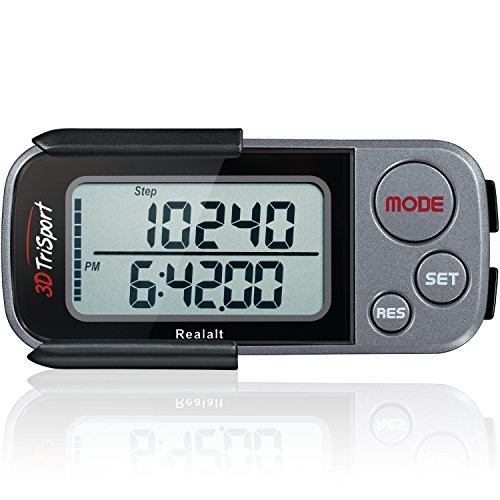
Step counting is the baseline, but some pocket pedometers go further. The Realalt 3DTriSport documents distance in miles and kilometers, calorie estimates, exercise time, and 30 days of memory, which is the deepest feature set in this group.
Pocket pedometers live a hard life. They get sat on, dropped, and tossed into bags with keys. The Realalt 3DTriSport documents an 18-month warranty, the 3DFitBud documents a 2-year manufacturer warranty, and several others document one-year warranties. Dimensions range from about 2.2 to 3.0 inches long, which is small enough for most pockets but large enough to read easily.
Final recommendation
Realalt 3DTriSport Walking 3D Pedometer (Grey/Black) ranks first overall in this specification-based comparison under the published weighted criteria.
The final choice among the best pocket pedometers depends on the documented features that match your intended use.
If you want the most complete specification profile in this group, start with the Realalt 3DTriSport Walking 3D Pedometer. It is the only pick that documents distance, calories, exercise time, and 30-day memory alongside a 3D tri-axis sensor, three carry options, and a 12-month battery. For shoppers who want pure simplicity, the 3DFitBud Simple Step Counter and NESKLA 3D Pedometer deliver press-and-go counting in a light pocket build. These three together cover most of the top pocket pedometers you will see in 2026 and give you a clear shortlist based on the specs above.
Frequently Asked Questions
Among the best pocket pedometers, are pocket pedometers accurate without a phone?
Pocket pedometers with 3D tri-axis sensors count steps independently and do not need a phone or app to work. Picks like the Realalt 3DTriSport, 3DFitBud, and NESKLA document 3D sensors that read steps in any orientation, which keeps totals stable when the device shifts inside a pocket or bag.
Which pocket pedometer is easiest to read?
For visibility, the AVTREK documents a large 4 x 2.3 cm display with an automatic LED backlight between 6 PM and 6 AM. The 3DFitBud documents a full-screen digit layout, and the NESKLA documents a large LCD multi-function display. All three are designed for quick at-a-glance reading.
How long does the battery last in a pocket pedometer?
Documented lifespans range from about 6 months on the Beroziyesi up to 12 months on the Realalt, 3DFitBud, FOLDABALE, and iGANK. Most pocket pedometers in this category use a single CR2032 coin cell with an auto sleep mode that wakes on motion, which extends runtime between changes.
Do pocket pedometers track distance and calories too?
Only some do. The Realalt 3DTriSport documents distance in miles and kilometers, calorie estimates, exercise time, and 30-day memory. Most other picks in this guide are step-only counters for a simpler experience.
What is the lightest pocket pedometer to carry?
The NESKLA documents a weight of about 26.5 grams and the Beroziyesi about 27 grams, making them two of the lightest pocket pedometers in this comparison. Both include a removable clip and a lanyard so you can attach them to clothing rather than carrying them loose.