Buying Guide
Choosing among the best professional laminators starts with the work you expect to process. A school making posters has different requirements from a small office protecting letter-size forms, while a studio may need cold lamination for heat-sensitive prints. The products above are ranked from documented specifications, not hands-on testing. Treat speed, output quality, and jam-related claims as listing-based descriptions rather than independently verified results.
Match the machine to document size
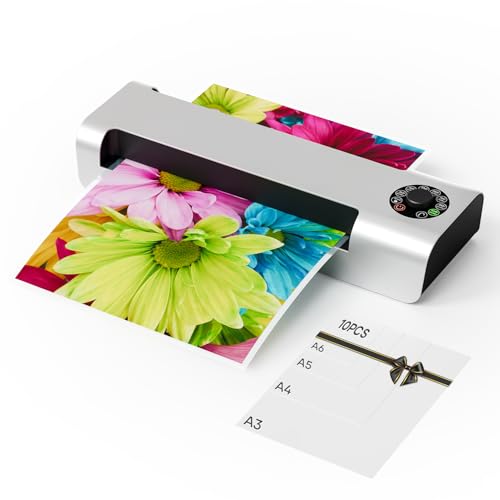
Working width is the first practical filter. A 9-inch machine such as the Scotch PRO TL906 is suited to letter-size documents, flyers, schedules, photos, and similar materials. It is compact, but it cannot accept A3 or 11x17 work. If your documents vary from A3 through A6, a 13-inch model such as the Scotch TL1302X, MAXDONE 13-Inch, either Chilino 13-inch model, either Qfun wide-format model, or the BONSEN L3402 gives you more room.
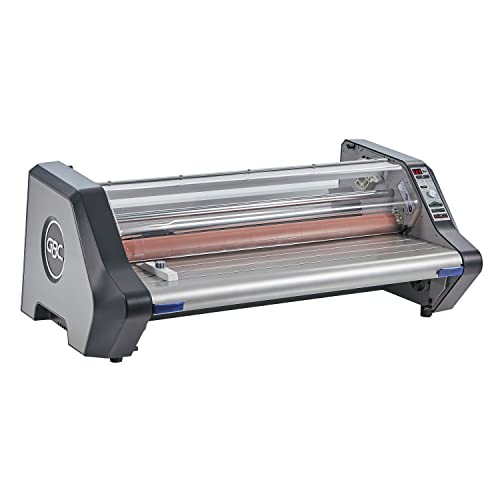
The GBC Ultima 65 is a different class of machine in the supplied evidence. Its 27-inch maximum width and roll-film design make it appropriate for posters, bus tags, teaching aids, and other wide materials. That capacity comes with a large footprint and a listed 111-pound weight, so it should be planned as a stationary production tool rather than a desk accessory.
Check pouch thickness and lamination mode
Pouch compatibility affects the materials you can process and the protection level you can select. The GBC 480HS supports 3–7 mil pouches, while the commercial Chilino model and Qfun heavy-duty model extend to 10 mil. Those broader ranges are useful when a workflow includes ordinary documents as well as thicker cards, IDs, menus, or presentation pieces.
Several selected machines document hot and cold operation: the MAXDONE 13-Inch, Chilino 9-in-1, and Qfun Office Presentation models. Cold lamination can be relevant for heat-sensitive items, but the listings specify that suitable self-adhesive pouches are needed. Do not assume that a cold-capable machine includes those pouches. The Scotch TL1302X, Scotch PRO TL906, and BONSEN L3402 are documented for thermal pouches, while the GBC Ultima 65 uses roll film.
Compare warm-up and working speed
Warm-up matters most when jobs arrive in short batches. The fastest listed warm-up times are about 55 seconds for the commercial Chilino model and about 60 seconds for the GBC 480HS, Qfun Office Presentation, and Chilino 9-in-1. The Qfun heavy-duty model lists one minute. The MAXDONE 13-Inch lists 90 seconds, and the Scotch TL1302X also lists one minute.
Speed figures are not directly interchangeable because manufacturers may describe them under different document or pouch conditions. Still, the listed numbers help identify the intended workflow. The GBC 480HS lists up to 31.5 inches per minute, the commercial Chilino and Qfun heavy-duty models list 1,000mm per minute, and several compact or dual-mode models list 320–450mm per minute. The GBC Ultima 65 uses variable speed and AutoSpeed rather than a single fixed figure.
Prioritize jam handling for repeated work
A jam-release feature is useful when a pouch is misaligned or inserted incorrectly. The GBC 480HS and commercial Chilino use automatic or button-assisted reverse functions in the supplied descriptions. The Qfun heavy-duty model also lists REV smart jam prevention. Other selected models use ABS levers or buttons, including the MAXDONE 13-Inch, Chilino 9-in-1, Qfun Office Presentation, BONSEN L3402, and Scotch PRO TL906.
These features describe how a jam can be cleared; they do not prove that jams will not occur. Correctly aligning the sealed edge and following the manufacturer’s instructions remain important. The MAXDONE listing specifically cautions against leaving a large empty area at the sealed edge, and the BONSEN listing advises using the proper setting for lighter paper, photo paper, and thicker items.
Consider controls, safety, and storage
Professional use is not only about rollers. The GBC 480HS includes AutoSpeed, color-coded EZ Load end caps, a pivoting table, AutoGrip shafts, pause controls, and a footage counter. Those features are relevant when managing roll film. The Qfun heavy-duty model adds an LCD touch interface, NTC temperature monitoring, high-temperature power-off, and a 30-minute auto-shutoff.
Auto-shutoff or temperature-control features also appear on the commercial Chilino, Scotch TL1302X, MAXDONE 13-Inch, Chilino 9-in-1, and Qfun Office Presentation listings. Compact models may be easier to store, but integrated accessories can change how much desk or cabinet space you need. The Chilino and Qfun kits include cutters, corner rounders, punches, binder rings, and starter sheets; choose those packages when the added tools fit your workflow rather than simply because the bundle is larger.
Final recommendation
Qfun 11x17 Heavy-Duty 10 Mil Laminator ranks first overall in this specification-based comparison under the published weighted criteria.
The final choice among the best professional laminators depends on the documented features that match your intended use.
Qfun 11x17 Heavy-Duty 10 Mil Laminator is the first overall specification-based choice in this comparison. Its combination of four rollers, quick warm-up, 11x17 capacity, 3–10 mil support, reverse release, LCD operation, and safety controls makes it the most specification-aligned documented fit for thicker business materials. The top professional laminators are not interchangeable, however. Choose the commercial Chilino when 10-mil support and a 55-second warm-up are central, the GBC Ultima 65 for 27-inch roll work, or the MAXDONE 13-Inch when cold lamination and quiet operation matter.
For mixed presentation tasks, the Chilino 9-in-1 and Qfun Office Presentation models offer useful accessories and multiple sizes. The BONSEN L3402 is a straightforward 13-inch thermal option with a large starter-sheet supply. If space and document size are the main constraints, the Scotch PRO TL906 remains a suitable 9-inch choice. These recommendations reflect public listing evidence and should be checked against current manuals and film requirements before purchase.
Frequently Asked Questions
What are the best professional laminators for 11x17 documents?
The GBC 480HS, commercial Chilino, Qfun heavy-duty, Scotch TL1302X, MAXDONE 13-Inch, Chilino 9-in-1, Qfun Office Presentation, and BONSEN L3402 all document approximately 13-inch or A3-class capacity. The GBC Ultima 65 is wider still, but it uses roll film rather than the pouch workflow described by those models.
Are four-roller laminators better for professional work?
Four-roller designs are documented on the GBC 480HS, commercial Chilino, and Qfun heavy-duty models. Their listings describe multiple heating and pressing rollers or flatter output. That makes them attractive for frequent work, but the supplied evidence does not establish a universal performance result for every material. A two-roller model can still be appropriate when its width, pouch range, speed, and controls match the job.
Which best professional laminators support cold lamination?
The MAXDONE 13-Inch, Chilino 9-in-1, and Qfun Office Presentation listings explicitly document hot and cold modes. Cold operation requires compatible self-adhesive pouches, and the supplied descriptions do not say those pouches are included. The GBC 480HS, Scotch TL1302X, Scotch PRO TL906, and BONSEN L3402 are described with thermal pouch workflows instead.
What pouch thickness should I choose?
Use the machine’s documented setting and the pouch manufacturer’s instructions. Common selected ranges include 3–5 mil, while the GBC 480HS supports 3–7 mil and the commercial Chilino and Qfun heavy-duty models support up to 10 mil. Thicker pouches may suit cards, IDs, or menu covers, but compatibility with the document and machine setting matters more than choosing the thickest option.
Does a faster warm-up mean faster overall production?
Not necessarily. Warm-up only describes how quickly the machine becomes ready. Ongoing throughput also depends on the listed laminating speed, pouch size, document handling, and whether the workflow includes trimming or other finishing steps. Compare both warm-up and speed, then consider jam release and controls if the machine will process repeated batches.