Buying Guide
A saucepan earns the “professional” label by combining a heating core that responds quickly with enough mass to keep temperature steady once food is added. When comparing the best professional saucepans, the main technical levers are construction, geometry, lid behavior, and ergonomics. The criteria below explain how each lever shows up in the specifications and how it translates to cooking performance.
Construction and Heating Core
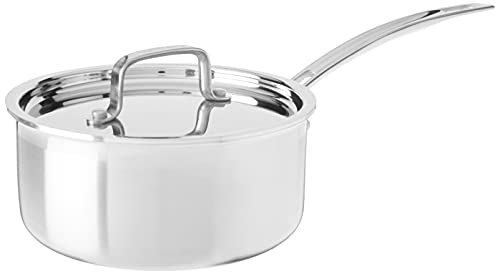
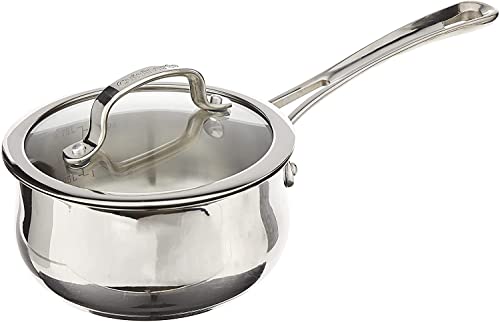
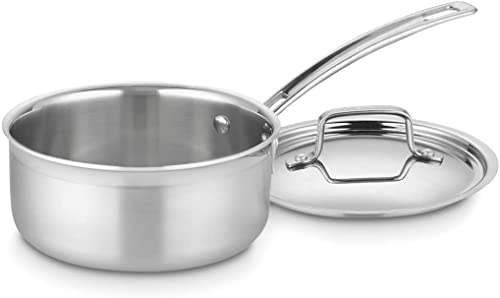
Tri-ply bonded designs, such as the All-Clad D3 Stainless 4-Quart Saucepan and the Cuisinart MultiClad Pro 2-Quart Saucepan, run stainless-aluminum-stainless from base to rim, so heat reaches the sidewalls as well as the base. Encapsulated-base designs, including several Cuisinart Chef’s Classic models and the Cuisinart Contour 1-Quart Stainless Saucepan, place aluminum in the base only and rely on the surrounding stainless body for structural strength. Enameled cast iron, like the Le Creuset Enameled Cast Iron Signature 2.25-Quart Saucepan, behaves differently, trading fast response for high heat retention and very steady simmering.
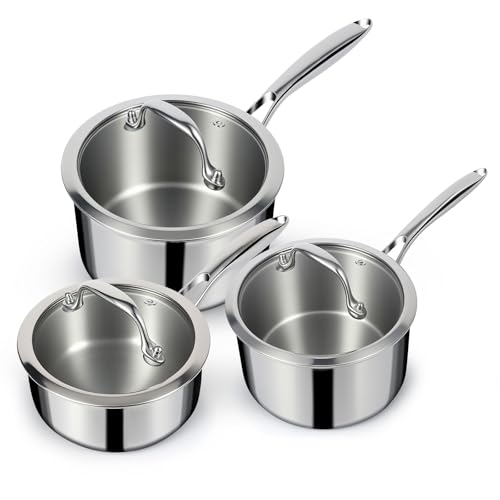
For induction kitchens, look for explicit induction compatibility in the specifications. Tri-ply stainless options, the Sunhouse 1.5-Quart Stainless Saucepan, and enameled cast iron typically work on every common stovetop. Hard-anodized nonstick models without a magnetic stainless plate, including the Cuisinart Chef’s Classic 1-Quart Nonstick Hard-Anodized, may not be induction compatible and require confirmation before purchase.
Capacity and Geometry
Smaller pans around 1 to 1.5 quarts, such as the Cuisinart Professional Series 1-Quart or the Cuisinart Chef’s Classic 1-Quart Stainless Saucepan, fit milk-based sauces, butter, and quick reductions. The 2-quart range, including the Cuisinart MultiClad Pro 2-Quart Saucepan and the Cuisinart Chef’s Classic 2-Quart Stainless Saucepan, is a versatile middle ground for small-batch reductions and reheating. Larger 4-quart pans like the All-Clad D3 give more headroom for pasta water, sauce volumes, and deglazing work, though they take longer to heat and weigh more.
Straight, high sides limit evaporation and concentrate heat, which supports classic sauce technique. Wider bases speed up boil times and make whisking easier. Match the pan diameter to the burner size you actually use, since an undersized burner on a wide pan can create uneven heating even in a tri-ply body.
Lid Design and Seal
A tight-fitting lid supports reduction by limiting moisture loss and is essential when baking or braising in cast iron. The Le Creuset Signature saucepan lists a lid engineered to circulate steam back into the food. Tempered glass lids, including those on the Cuisinart Contour 1-Quart and the Cuisinart Chef’s Classic 1-Quart Nonstick Hard-Anodized, let cooks monitor milk and butter without lifting and releasing heat.
The Cuisinart Chef’s Classic 2-Quart with Straining Lid adds pour spouts on the rim, which streamline draining pasta water or blanching vegetables without a separate colander. Choose the lid design based on the workflow you run most often, since lids are hard to swap across brands.
Handle and Ergonomics
Riveted stainless handles stay cooler on the stovetop and remain sturdy after repeated oven use. Long stick handles balance well for pouring, and helper handles on 4-quart pans reduce wrist strain. Cast iron handles, like the ergonomic knobs on the Le Creuset Signature Saucepan, are designed for easy lifting despite heavier weight, and stainless steel knobs can typically go into any oven.
Check listed dimensions and weight when small hands, low cabinets, or arthritis are factors. Tri-ply stainless pans at the 2-quart level, around 3 to 4 lb, can feel heavy when full of liquid, while cast iron in a 1-quart size may weigh 4 to 6 lb. Cookware specs commonly state weight without contents, so plan for adding water or sauce on top of the pan’s own weight.
Versatility and Cleaning
Dishwasher-safe stainless options, including the Cuisinart Professional Series 1-Quart and the Cuisinart Chef’s Classic 2-Quart with Straining Lid, keep maintenance simple for working kitchens. Nonstick interiors require gentler tools and may have a shorter functional lifespan than bare stainless. Enameled cast iron usually calls for hand washing to protect the finish. Confirm oven and broiler temperature limits in the specifications, since tri-ply stainless can often reach 500 to 600°F while cast iron and nonstick pans have lower or variable ceilings.
Matching the Saucepan to Your Cooking
The best professional saucepans are usually the ones that match how you cook each day. A tri-ply 2-quart pan, like the Cuisinart MultiClad Pro 2-Quart Saucepan, fits most routine reduction work, while a 4-quart tri-ly option, like the All-Clad D3, extends into deglazing and pan sauces. A cast iron saucepan, exemplified by the Le Creuset Enameled Cast Iron Signature 2.25-Quart Saucepan, complements stainless when slow, even heat matters. Adding a nonstick hard-anodized 1-quart pan, like the Cuisinart Chef’s Classic 1-Quart Nonstick Hard-Anodized, supports delicate sauces and eggs on separate equipment.
Final recommendation
All-Clad D3 Stainless 4-Quart Saucepan with Lid ranks first overall in this specification-based comparison under the published weighted criteria.
The final choice among the best professional saucepans depends on the documented features that match your intended use.
Across every criterion in this specification-based comparison, the All-Clad D3 Stainless 4-Quart Saucepan stands out as the first overall specification-based choice, with full-rim tri-ply bonding, broad stovetop compatibility including induction, and oven and broiler safety documented up to 600°F. For cooks who want a lighter stainless step up at a smaller size, the Cuisinart MultiClad Pro 2-Quart Saucepan is the logical second pick. If the goal is top professional saucepans with steady heat retention for slow simmers, the Le Creuset Enameled Cast Iron Signature 2.25-Quart Saucepan adds a complementary cast iron voice to any lineup built around stainless.
Frequently Asked Questions
What makes a saucepan professional?
Professional builds emphasize a heating core that responds quickly, even heat across base and sidewalls, ergonomic stay-cool handles, and tight-fitting lids that control evaporation. Materials commonly include tri-ply stainless or enameled cast iron, both well represented in the best professional saucepans shown here.
Is tri-ply stainless better than encapsulated-base stainless for sauces?
Tri-ply carries the conductive aluminum layer up the sidewalls, which supports more even heating during reductions and pan sauces. Encapsulated-base designs concentrate heat at the base and are usually lighter, which may suit small-task pans.
Are the best professional saucepans induction compatible?
Many are, but not all. Tri-ply stainless options, the Sunhouse 1.5-Quart Stainless Saucepan, and enameled cast iron typically list induction compatibility, while some hard-anodized nonstick models, including the Cuisinart Chef’s Classic 1-Quart Nonstick Hard-Anodized, document that induction is not supported.
How do I choose the right capacity for sauce work?
Use 1 to 2 quart pans for sauces and reductions for one to two people, and step up to 3 to 4 quart sizes for larger batches or pan sauces with more liquid. Choose based on the largest typical batch you make plus a margin to allow space for whisking and reducing without overflow.
What care routine supports the top professional saucepans long term?
Stick to dishwasher-safe stainless when cleanup speed matters, reserve nonstick tools for nonstick interiors, and hand wash enameled cast iron to protect its coating. Following the manufacturer’s listed oven and broiler limits also helps both stainless and cast iron pans hold up over time.