Buying Guide
Choosing among the best small saucepans starts with the jobs you actually perform. A 1-quart pan is well suited to one-person portions, melting butter, warming milk, reducing a small amount of syrup, or making a modest sauce. A 1.5-quart model gives more headroom for oatmeal, soup, or cooking for two. The Blue Diamond option expands that space to 2 quarts for users who want a small footprint without limiting batch size as much.
This comparison uses listing specifications and feature statements rather than hands-on testing or customer sentiment. The scores emphasize practical design information: capacity, heating construction, cooking-surface details, cooktop and oven compatibility, lid and handle design, and cleanup. Claims such as fast heating or easy release are treated as supplied product descriptions, not independently verified test results.
Choose the capacity for the task
One quart is the most compact choice. The Farberware, HexClad, Cuisinart Contour, and other 1-quart selections are aimed at sauces, hot chocolate, butter, soup for one, or other small portions. Their smaller volume can also make storage easier, although the handle and lid still need space in a cabinet.
A 1.5-quart saucepan is the most flexible middle ground. The Cuisinart Multiclad Pro, Sunhouse, CAROTE, and SENSARTE models document uses such as sauces, milk, oatmeal, soup, and other small-batch foods. This capacity leaves more room for stirring and helps reduce the chance of liquid reaching the lid during ordinary small servings. The 2-quart Blue Diamond is a better fit when you routinely prepare larger portions of soup, pasta sauce, or vegetables but do not want a full-size pot.
Compare stainless steel, ceramic, and hybrid surfaces
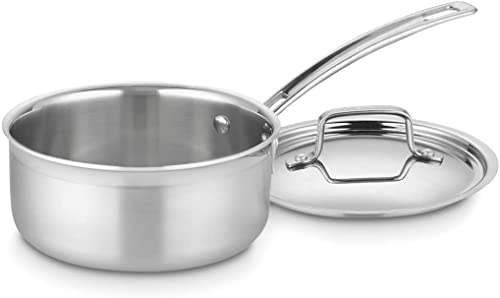
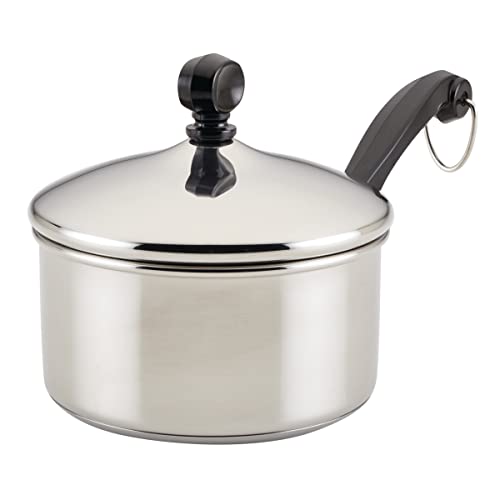
Stainless steel is the dominant choice for users who want an uncoated cooking surface. The Cuisinart Multiclad Pro, Cuisinart Chef’s Classic, Farberware, CAROTE, and Sunhouse pans document stainless bodies or cooking surfaces. Stainless steel does not offer the same food-release description as a coated pan, but it is a straightforward material choice for sauces and boiling tasks. Look for a base or core that adds aluminum, such as the Multiclad Pro’s solid aluminum core, the Chef’s Classic encapsulated base, the Farberware full-cap base, or the CAROTE tri-ply construction.
Ceramic and conventional nonstick surfaces are aimed at easier release and cleanup. SENSARTE’s Swiss granite model, the Cuisinart PURELYCERAMIC model, Blue Diamond, and SENSARTE Ceramic document coated interiors. Several also specify PFAS- or PFOA-free construction, but those descriptions should not be treated as a prediction of coating lifespan. The Cuisinart Contour and Blue Diamond provide higher listed oven limits than the SENSARTE Swiss granite pan, so check the temperature specification if oven finishing matters.
The HexClad pan takes a hybrid approach, combining a laser-etched stainless-steel pattern with ceramic coating. Its listing also specifies metal-utensil safety. That makes it a distinct option for shoppers who want some coating features without selecting a conventional smooth nonstick surface.
Check cooktop compatibility before buying
Induction compatibility depends on the base, not simply the word saucepan in a title. The Cuisinart Multiclad Pro, Cuisinart Chef’s Classic, Farberware, CAROTE, Sunhouse, HexClad, and both selected SENSARTE models explicitly document induction use. The Blue Diamond listing does not provide an induction statement in the supplied evidence, so it should not be assumed for that model.
Most selected pans are described for gas, electric, or multiple cooktops, but compatibility language varies by listing. If your kitchen uses induction, prioritize a product with an explicit induction-ready or compatible base.
Treat oven ratings as pan-and-lid specifications
Oven compatibility is not uniform. The Multiclad Pro is listed as oven-safe to 550 degrees F and broiler-safe. Blue Diamond lists oven and broiler use to 600 degrees F, while the Cuisinart Contour reaches 500 degrees F and the Sunhouse pan reaches 500 degrees F with the lid excluded. The Farberware is listed to 350 degrees F, and the SENSARTE Swiss granite pan to 302 degrees F.
A glass lid may have its own limit. HexClad lists a 900-degree pan limit but says its tempered glass lid is oven-safe to 400 degrees F. Sunhouse excludes the lid from its oven rating. Always separate the pan rating from the cover rating before moving a covered saucepan into an oven or broiler. A missing temperature specification is not evidence that oven use is supported.
Evaluate handles, lids, and pouring details
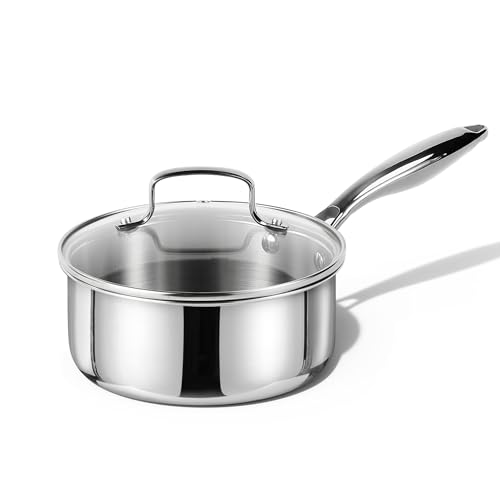
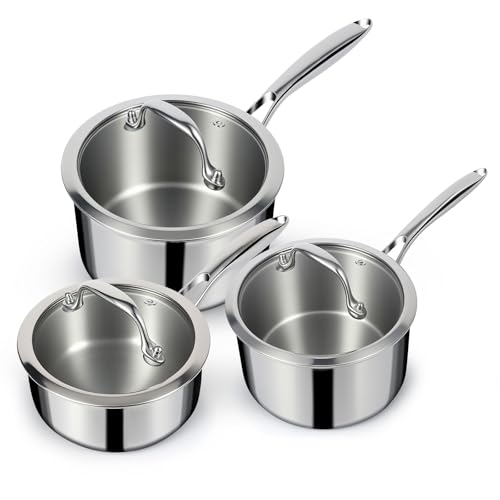
A lid helps retain heat and lets you simmer with less splatter. Glass covers on HexClad, Sunhouse, Cuisinart Contour, SENSARTE, and other selected models allow the contents to be monitored without lifting the lid. Stainless lids, such as the one supplied with the Multiclad Pro or Farberware, offer an opaque alternative and may fit the overall construction style of the pan.
Handle construction also differs. Riveted stainless handles are documented on the Multiclad Pro and the Cuisinart selections. The SENSARTE models specify stay-cool bakelite or wood-grain handles, while Sunhouse lists a stay-cool stainless handle. A stay-cool description can be useful for stovetop handling, but it does not mean the handle is safe to touch in every cooking situation. Use appropriate protection when moving hot cookware.
Pouring features are especially useful for milk, custard, sauces, and melted butter. The CAROTE flared rim, SENSARTE drip-free lip, Sunhouse rounded edges, and Cuisinart drip-free pouring features all address that task in the supplied listings. Measurement markings inside the Cuisinart Chef’s Classic and Sunhouse pans can also simplify small recipes.
Plan for cleanup and care
Dishwasher-safe specifications appear on the Cuisinart Multiclad Pro, Cuisinart Chef’s Classic, Farberware, CAROTE, Sunhouse, and Blue Diamond options. That can reduce routine cleanup, although the supplied evidence does not establish how any finish will look after repeated cycles. SENSARTE Ceramic recommends hand washing, and the SENSARTE Swiss granite model describes wiping with a sponge and warm soapy water.
No-rivet interiors on both selected SENSARTE pans can make the cooking area easier to wipe because there are fewer visible attachment points. Coated pans may offer easier food release, while stainless pans provide an uncoated surface. Match the care instructions to your habits: if dishwasher use is important, choose a listing that explicitly supports it; if you prefer a coated interior, follow the supplied cleaning guidance rather than assuming all nonstick pans receive identical treatment.
How the ranking was determined
The editorial ranking uses five category-specific criteria totaling 100 percent. Capacity and small-batch fit account for 20 percent, heating construction for 25 percent, cooktop and oven versatility for 20 percent, handling and lid design for 20 percent, and cleanup and cooking surface for 15 percent. Scores are based only on the supplied technical specifications and feature descriptions. Marketplace ratings, review activity, popularity signals, and volatile listing labels were not used as public criteria or described in this guide.
Final Recommendation
Cuisinart Multiclad Pro 1.5-Quart Saucepan ranks first overall in this specification-based comparison under the published weighted criteria.
Cuisinart Multiclad Pro 1.5-Quart Saucepan is the highest-scoring returned product and the first overall specification-based choice. Its 18/10 stainless steel, solid aluminum core, secure stainless lid, induction compatibility, dishwasher-safe design, and 550-degree oven and broiler rating give it the most balanced profile among these best small saucepans.
Choose HexClad if hybrid construction and a very broad listed oven range are priorities, while the Cuisinart Contour is a strong ceramic alternative with a PFAS-free PURELYCERAMIC surface and 500-degree oven rating. For extra room, Blue Diamond’s 2-quart capacity is the practical choice. Sunhouse and CAROTE suit shoppers who want stainless steel with useful pouring or measuring details. SENSARTE’s two models focus on coated cooking, visible lids, and compact everyday handling.
The top small saucepans are not interchangeable in every kitchen. Confirm the capacity, cooktop, oven, lid, and cleaning specifications that matter most before selecting one. If your routine centers on one-person portions, a 1-quart pan may be enough; if you regularly prepare food for two, 1.5 quarts offers more working room.
Frequently Asked Questions
What size should I choose for the best small saucepans?
Choose 1 quart for individual portions, melting, warming, and small amounts of sauce. Choose 1.5 quarts when you want more room for oatmeal, soup, or cooking for two. A 2-quart saucepan is still compact but better suited to larger small-batch portions.
Which selected saucepan works on induction?
The supplied listings explicitly identify the Cuisinart Multiclad Pro, Cuisinart Chef’s Classic, Farberware, CAROTE, Sunhouse, HexClad, SENSARTE Swiss granite, and SENSARTE Ceramic models as induction-compatible or suitable for all cooktops. Always verify the exact listing if your cooktop is induction.
Are glass lids oven-safe?
Some are, but the lid rating may differ from the pan rating. HexClad lists a 400-degree F limit for its glass lid, while Sunhouse excludes its lid from the 500-degree pan rating. The Cuisinart Contour listing describes its tempered glass cover and 500-degree oven use, but users should still follow the manufacturer’s specific care instructions.
Is stainless steel or ceramic easier to clean?
The supplied evidence generally describes coated surfaces as easy to clean and lists dishwasher-safe care for several stainless models. Ceramic and nonstick pans may provide easier food release, while stainless steel avoids a coating. Care requirements differ, so use the instructions for the selected model rather than applying one rule to every pan.
What makes the top small saucepans useful for pouring?
A shaped rim or rounded edge can help guide liquids. CAROTE documents a flared pour rim, SENSARTE lists a drip-free lip, Sunhouse describes rounded closed edges, and the Cuisinart stainless models include drip-free pouring language. These features are relevant for milk, sauces, melted butter, and other liquids.