Buying Guide
The best rectangular raised planter beds are easier to compare when you separate the bed’s footprint from its usable growing depth. A long, wide frame can hold many plants, but a deep profile matters more for crops with substantial root systems. The selected products range from compact 10-inch wood beds to galvanized models around 22 to 24 inches high. Start by measuring the intended site, then decide whether you need one large growing zone, several smaller zones, or a narrow bed along a wall.
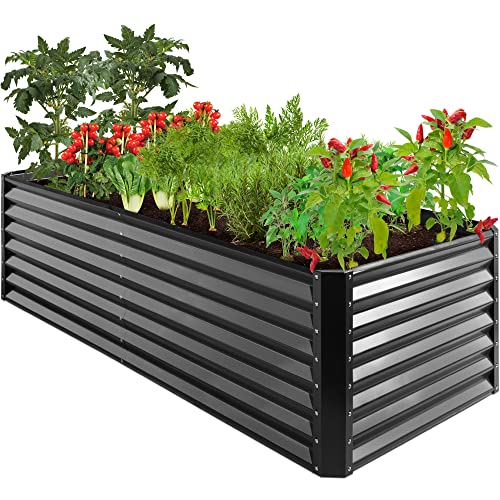
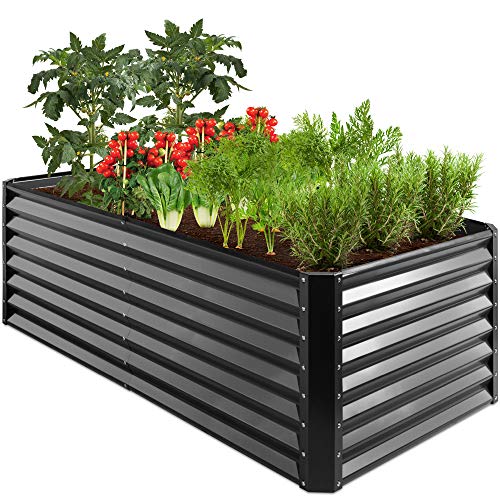
An 8-by-4-foot bed is a common large format in this comparison. The Land Guard 8×4×2 ft and Best Choice Products 8x4x2ft provide broad planting areas and 24-inch depth. They are appropriate when you have a stable location and want room for vegetables, herbs, or flowers. The PASAMIC 8x4x1ft keeps the same broad footprint but reduces height to one foot, making it a better fit for shallower planting.
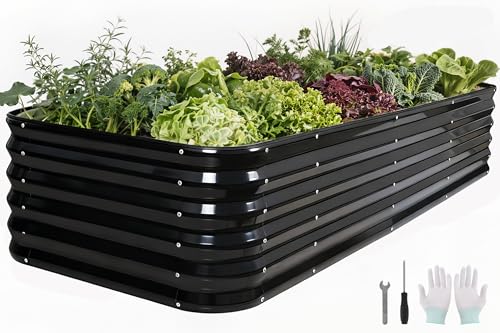
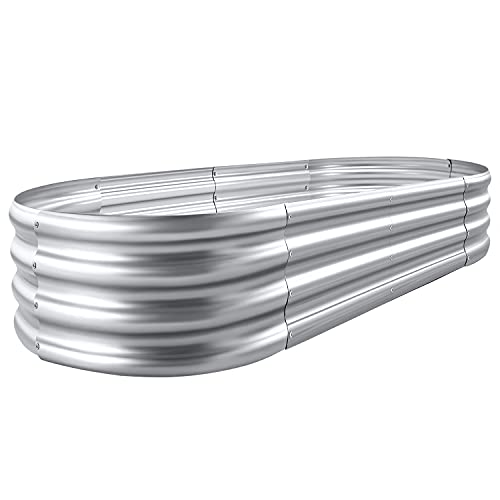
The DIIYIV bed extends to 12 feet in length, which can create long crop rows or a continuous flower area. That length is useful only when you can reach the interior from the sides and leave suitable paths. For narrower sites, the G GOOD GAIN 8x2x2 ft offers substantial depth in a two-foot-wide frame. The Kinddeer pair divides planting into two compact beds, which can make crop separation and placement easier.
Match depth to the plants
Depth is one of the most important specifications for the best rectangular raised planter beds. The 22- to 24-inch galvanized models provide more soil volume and are documented for medium- to deep-rooted crops. Land Guard identifies beans and broccoli as examples for its 24-inch bed, while Best Choice Products lists broccoli and beans among suitable plants. These beds can also support general seasonal crops, but their large soil requirement should be planned before assembly.
Beds around 10 to 16 inches high, such as GIANTEX, ScienGarden, PASAMIC, and BIRDSINYARD, are more appropriate when the planting plan centers on herbs, flowers, strawberries, and vegetables that do not require the deepest profile. The listing for ScienGarden specifically identifies herbs, flowers, strawberries, and small vegetables. Do not assume that a shallow bed will provide the same root volume as a two-foot bed simply because both are rectangular.
Compare materials
Galvanized steel appears throughout the selection because the listings commonly document corrosion or rust resistance, reinforced panels, and outdoor use. Land Guard, SnugNiture, G GOOD GAIN, Kinddeer, BIRDSINYARD, and DIIYIV all provide galvanized-steel or galvanized-surface details. Steel can be a practical choice for a permanent bed, but inspect the edge treatment and support system. Several listings mention protective trim, folded edges, rubber edging, corner pads, or polished edges.
Vinyl offers a different maintenance profile. PASAMIC states that its vinyl construction resists rust, rot, fading, and harsh weather without painting or sealing. That makes it worth considering when avoiding metal or recurring surface treatment is important. The product uses interlocking panels and a modular layout, but the listing does not give it the same depth as the largest steel beds.
Wood provides a natural appearance and can be suitable for patios, porches, and smaller garden areas. GIANTEX uses natural untreated fir wood, while ScienGarden describes solid fir wood with a water-based paint finish. Wood designs may need more attention to moisture and surface condition than vinyl or galvanized steel; the supplied listings do not establish a specific service life, so avoid assuming one.
Check the base and drainage
Many selected beds are open-bottom or bottomless. This design lets excess water drain into the native soil and allows roots to extend below the frame. It works best on a prepared site where the underlying soil is suitable for planting. The Land Guard 8×4×2 ft, SnugNiture, G GOOD GAIN, PASAMIC, and BIRDSINYARD listings all document open-bottom or open-base benefits.
The Best Choice Products metal bed explicitly does not include a bottom panel. That is not necessarily a defect, but it means the installation surface and soil plan matter. For elevated or patio use, a bottomless bed may not retain soil as expected, so confirm the design before choosing it for a hard surface.
Wooden options use different drainage approaches. GIANTEX describes an open-ended design, while ScienGarden lists four drainage holes and a fabric liner. These features are more relevant to raised planters that stand above or partly away from the ground.
Review stability and assembly
Large beds filled with soil place pressure on their panels. Look for documented reinforcement rather than assuming every metal frame has equal support. Land Guard lists cross bars and fixed piles; Best Choice Products lists three stabilizing rods; SnugNiture lists reinforced support bars; and G GOOD GAIN lists internal stabilizing bars and reinforced panels.
Assembly claims should also be read literally. PASAMIC uses interlocking panels, several galvanized models state tool-free or quick assembly, and SnugNiture includes hardware and accessories. Tool-free assembly may reduce the number of tools needed, but it does not remove the need for a level site, careful alignment, or safe handling of panels. Protective edges and corner treatments are useful considerations for gardens used by children or pets.
Plan the soil and access
A deep 8-by-4-foot bed can require a substantial soil fill. The Best Choice Products listing gives a 64-cubic-foot planting area, and Land Guard identifies a large volume for its 8-by-4-by-2-foot design. Use the documented capacity as a planning signal, not as a promise about plant performance. Leave enough room to reach the center without stepping into the bed, and consider paths before selecting the longest frame.
For a patio, balcony, porch, or narrow side yard, compact beds such as GIANTEX and ScienGarden are easier to place. Their smaller dimensions also make them more suitable for focused plantings. A pair of Kinddeer beds can separate herbs from flowers or create two planting zones without committing to one very large enclosure.
Final recommendation
Land Guard 8×4×2 ft Galvanized Raised Bed ranks first overall in this specification-based comparison under the published weighted criteria.
Land Guard 8×4×2 ft is the first overall specification-based choice among the best rectangular raised planter beds because it combines 24-inch depth, a broad footprint, open-bottom drainage, galvanized construction, and documented reinforcement. Best Choice Products 8x4x2ft is a close alternative when material-safety disclosures are a priority, while PASAMIC is the more maintenance-focused choice for a wide vinyl bed. The top rectangular raised planter beds are not interchangeable: choose a deep steel model for root space, a modular BIRDSINYARD or Kinddeer design for layout flexibility, or GIANTEX and ScienGarden when a compact wood planter better matches the site.
Frequently Asked Questions
Among the best rectangular raised planter beds, are deep galvanized beds better for vegetables?
They may be a better fit for medium- to deep-rooted vegetables because the selected galvanized beds document heights around 22 to 24 inches. Land Guard and Best Choice Products specifically identify crops such as beans and broccoli. The right choice still depends on available space, soil planning, and the plants you intend to grow.
Do open-bottom rectangular beds need a separate base?
Not when they are installed directly over suitable soil and the open-bottom design is desired. An open base supports drainage and can let roots reach native soil. On a patio, deck, or other hard surface, however, the absence of a bottom may allow soil to escape, so the installation surface should be considered first.
Which material needs the least surface maintenance?
PASAMIC states that its vinyl bed resists rust, rot, fading, and harsh weather without painting or sealing. Galvanized steel listings document corrosion or rust resistance, while the wood listings provide natural or finished fir construction. The supplied evidence does not establish a precise maintenance schedule or lifespan for any material.
Are wooden beds suitable for small spaces?
Yes. GIANTEX offers a 48-by-24-inch rectangular bed, and ScienGarden describes a long, narrow planter suited to walls, fences, walkways, decks, and railing-side areas. Their documented dimensions make them more space-conscious than the large 8-by-4-foot or 12-by-4-foot beds.
What should I check before assembling a large bed?
Measure the available footprint, confirm that the ground is level, plan access around the frame, and estimate the soil required. Also review the listing’s support and edge details. Reinforcing bars, fixed piles, protective trim, rubber edging, or folded edges are documented on selected products, but assembly still requires careful alignment and safe handling.