Buying Guide
Choosing among the best rectangular planters starts with the location, not the finish. A windowsill needs a relatively narrow container with controlled drainage and a manageable weight. A porch or patio can accommodate a taller, heavier design, while a raised garden bed needs enough interior length and depth for the plants you want to grow. The listings in this comparison cover all three situations, but their features are not interchangeable.
Measure the surface before choosing a container. Long planters can create a continuous line of color along a window, balcony, deck, or porch, but the listed outside dimensions may differ from the actual planting area. The Southern Patio boxes are described as 36-inch window boxes, while the Toriexon model is a 36-inch metal planter with a taller profile. Both are long, but they serve different layout goals.
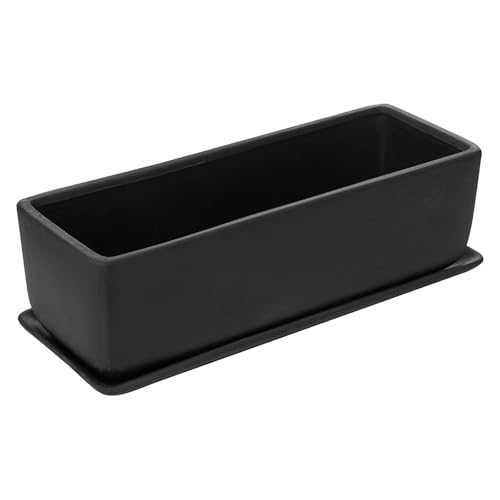
For a compact surface, the Fasmov pair and MyGift planter provide narrower formats. Fasmov lists each container at 16 by 5.5 by 5.5 inches, making it appropriate for herbs, flowers, and other smaller plants. MyGift is also a 14-inch window-box-style design, with dimensions and a removable drip tray suited to indoor displays. Check the width as carefully as the length: a container that fits the ledge from end to end may still overhang the front or back.
Consider planting depth and soil volume
Length alone does not determine how useful a planter will be. Plants with more substantial roots generally need more depth than a shallow windowsill box. The WIZWERK planter is listed at 16 inches high and is described for flowers, herbs, vegetables, and ornamental plants. The Yaheetech raised bed has approximately 9 inches of inner height and more than 40 inches of inner length, creating a broad planting area for vegetables and flowers.
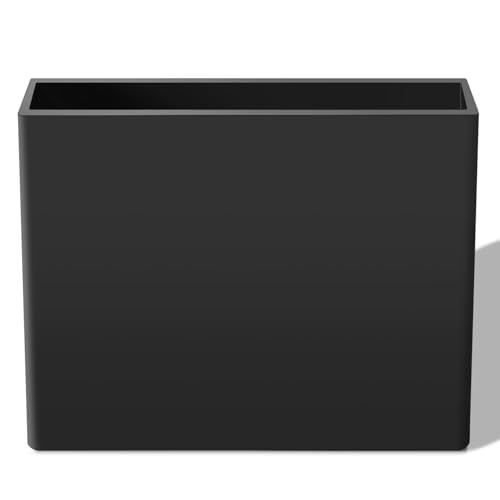
Tall decorative models can create a stronger visual screen or divide an area. Heyzier lists a tall resin planter with a removable insert tray, allowing the container to be filled partly or fully. Toriexon also includes two removable insert shelves. These features can make a deep container more adaptable, but they do not automatically indicate a larger usable root zone. Before buying, determine whether you want a full-depth bed, a raised display, or a container that can be partially filled.
Treat drainage as a central specification
Drainage protects against excess water, but the right setup depends on where the planter will sit. Toriexon, WIZWERK, and Southern Patio explicitly document drainage holes or a drainage system. MyGift lists two drainage holes and a removable tray, a combination that is particularly relevant for desks, shelves, and countertops. Fasmov takes a different approach with a self-watering design and a water-level indicator, so its watering system is more central to its use than simple open drainage.
Not every rectangular planter in this comparison documents drainage in the same way. Veradek Block lists a removable insert bucket but does not provide a drainage specification in the supplied evidence. Veradek Demi also documents its stand and composite material without specifying drainage holes. Bloem lists a sealed base, which can help contain soil and water but means you should pay close attention to watering practices and the needs of the selected plants.
For indoor use, consider where excess water will go. A removable saucer or tray can protect furniture, but it should not be treated as proof that a plant can tolerate standing water. For outdoor use, confirm that the holes will not drain directly onto a surface where water could stain or collect.
Compare material choices
Plastic is often useful when low weight and easy movement matter. Fasmov uses plastic for its self-watering planters, while Bloem specifies BPA-free, UV-resistant plastic. Veradek Block uses polypropylene described as weather resistant and UV stable. These materials may suit balconies, porches, and indoor areas where a heavier container would be inconvenient.
Metal gives a different visual and structural profile. Toriexon lists thick steel construction and a UV-resistant coating, while WIZWERK uses a galvanized steel core with a powder-coated finish and describes the planter as rust resistant. Metal may fit modern patios and privacy-screen arrangements, but the container and soil together can be heavy. Plan its final position before filling it.
Composite materials can provide a stone-like appearance without the same listed weight as solid concrete. Heyzier uses a resin plastic-stone composite, and Veradek Demi uses a plastic-stone composite with a textured finish. Ceramic, as used by MyGift, provides a more traditional indoor decorative look, but its rigidity and weight may make frequent repositioning less convenient. Wood, as used by Yaheetech, gives the raised bed a natural appearance and a broad planting format; place it where its outdoor conditions and maintenance needs are appropriate.
Decide whether you need a stand or insert
An included stand changes how a planter occupies a room. Veradek Demi is supplied with an acacia wood stand, raising the planter to a listed overall height of 18.75 inches. That can help create a visual divider or make a low-profile container more prominent. It also introduces a separate material and another component to assemble and position.
An insert is useful for controlling soil volume and changing arrangements. Heyzier has a removable insert tray, Veradek Block includes a removable insert bucket, and Toriexon supplies removable shelves. These features can be helpful when you want a decorative outer container without filling its entire body with soil. Read the dimensions carefully, because the outside size is not necessarily the same as the insert’s planting area.
Think about pack size and layout
A single large planter can anchor an entryway or patio, while a two-pack or larger set can create symmetry. Fasmov and Bloem each provide two containers, and Southern Patio also supplies a pair of long boxes. Sets can make coordinated displays easier, but confirm that the dimensions and planting depth work for the same type of plant in every container.
The best rectangular planters for a small herb collection may not be the best choice for a privacy screen or vegetable bed. Select the format that fits the job, then compare the documented drainage and material details rather than choosing by appearance alone.
Final Recommendation
Among the top rectangular planters, the ranked products differ under documented size and shape utility, drainage and water control, material and weather design, planting flexibility, and placement and style.
Toriexon 36-Inch Metal Planter Box ranks first overall in this specification-based comparison under the published weighted criteria.
Toriexon 36-Inch Metal Planter Box is the first overall specification-based choice among the best rectangular planters. Its combination of a long steel body, UV-resistant coating, drainage holes, and removable shelves gives it unusually broad outdoor flexibility. Heyzier is a close alternative when adjustable soil volume and a tall resin profile matter more. For large capacity, Veradek Block is compelling because its 141.5-liter capacity and removable bucket support substantial arrangements. Choose WIZWERK for a deeper steel container, Yaheetech for a raised garden-bed format, or Fasmov when visible water-level monitoring is the priority.
The remaining picks target more specific spaces. Southern Patio is suited to coordinated window displays, Bloem to matching plastic containers with a sealed base, Veradek Demi to an elevated modern arrangement, and MyGift to a compact indoor display with a drip tray. Before ordering, verify the intended location, available width, drainage path, and the amount of soil your plants require.
Frequently Asked Questions
Which of the best rectangular planters is suited to a narrow windowsill?
MyGift is the most directly documented indoor option in this group. Its 14-inch window-box style, two drainage holes, and removable drip tray are intended for windowsills, shelves, desktops, and countertops. Fasmov is another compact option, especially when a self-watering design and water-level indicator are useful. Measure the sill’s depth and check whether the tray or reservoir extends beyond the available surface.
The selected metal models are documented for outdoor applications, but their specific construction differs. Toriexon lists thick steel, a UV-resistant coating, and drainage holes. WIZWERK lists a galvanized steel core, powder-coated finish, and rust-resistance claims. These features support outdoor placement, but a filled metal container can be heavy. Choose the final position carefully and ensure the drainage path is appropriate for the surface.
Do rectangular planters need drainage holes?
Planting needs vary, but excess water management is an important specification to check. Southern Patio, Toriexon, and WIZWERK explicitly document drainage features, while MyGift includes drainage holes and a removable tray. Fasmov uses a self-watering system with a water-level indicator. Other models, including Veradek Block and Veradek Demi, do not specify drainage holes in the supplied listing evidence, so confirm the intended watering setup before purchase.
What is the benefit of a removable insert or shelf?
A removable insert or shelf can change the amount of soil placed inside a large outer container. Heyzier documents a removable insert tray that can be filled partly or fully. Veradek Block includes a removable insert bucket, and Toriexon includes two removable shelves. These features may make soil changes or mixed arrangements more manageable, but they do not prove the exact usable planting depth. Review the internal dimensions when available.
The Yaheetech raised bed provides a broad, long planting area and is specifically described for vegetables, flowers, and other plants. WIZWERK is another suitable documented option because its 16-inch height and drainage holes are paired with stated suitability for vegetables, herbs, and ornamental plants. The right choice still depends on the vegetable variety, available sunlight, soil requirements, and whether the container will be placed on soil, a deck, or another hard surface.