Buying Guide
A kick plate is a protective panel fitted to the lower portion of a door. The best satin door kick plates should be evaluated by fit first, then by material, finish, mounting method, and the amount of evidence supplied for installation. Satin aluminum, satin silver, satin nickel, brushed nickel, and brushed stainless finishes are related visual categories, but the listing language is not identical. Check the stated finish against nearby door hardware before ordering.
Measure the door before choosing a plate
Measure the door slab itself rather than relying only on a nominal door size. The plate length should suit the available width without interfering with the door edge, weatherstripping, hinges, or other hardware. The Prime-Line J 4620 is 10 by 34 inches and is listed for a 36-inch door. The Prime-Line J 4702 is 6 by 34 inches and is also intended for 36-inch hinged doors. The CANGETS plate is 6 by 32 inches and is specifically described for 34-inch doors.
Height is a design and coverage decision. Six- and eight-inch plates are common choices for routine shoe, pet, and scuff protection. The 10-inch height of the J 4620 covers more of the lower area, while the Rockwood K1050 reaches 16 inches high. That taller format may make sense where a larger section of the door needs protection, but it can look more prominent. The 28-inch Deck The Door Decor Kwik Plate and 30-inch options from Randall Manufacturing and Designers Impressions are better considered for doors where a shorter horizontal span is appropriate.
Compare aluminum and stainless steel
Aluminum appears across several selected products, including the J 4620, J 4702, CANGETS, Deck The Door Decor, Randall Manufacturing, and Docik plates. Anodized aluminum is specifically documented for both Deck The Door Decor designs. The Docik set identifies 5052 aluminum and 17-gauge thickness, while CANGETS supplies a 1.0 mm thickness. These details are useful when comparing construction, but they should not be treated as interchangeable measurements.
Stainless steel is documented for the Rockwood K1050, which is listed at 3/64-inch thickness and described as resistant to corrosion in most mild environments. Material names alone do not establish that one plate will perform better in every setting; door location, installation quality, and exposure all matter.
Choose screw, adhesive, or another mounting style
Screw mounting is the conventional choice when a permanent attachment and supplied fasteners are wanted. The J 4620 has pre-drilled holes and included hardware. CANGETS specifies screw mounting, while Deck The Door Decor’s 8-by-34-inch selection includes matching screws. Randall Manufacturing and Docik also document pre-drilled or included screw hardware.
Adhesive mounting avoids drilling. The Deck The Door Decor Kwik Plate uses a 3M adhesive backing and is described as drill-free. That can be useful for a finished door where holes are undesirable, but surface preparation and correct positioning become especially important. Adhesive and screw systems are not direct substitutes for every door or environment. Review the manufacturer’s directions and ensure the surface is compatible before installation.
Magnetic mounting is another documented design in the candidate pool, but it is not represented in the selected 10. It is intended for steel doors and non-permanent installation, so do not assume that a screw- or adhesive-mounted model offers the same behavior.
Look for installation details
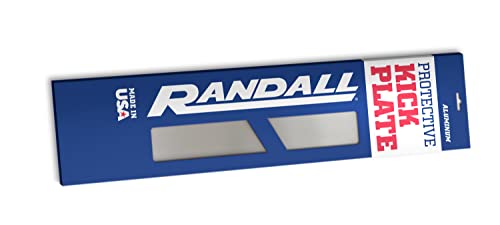
The most specification-aligned listings identify dimensions, mounting hardware, and a compatible door size together. The J 4620 additionally says a Phillips screwdriver is required and asks buyers to compare the line-art drawing with their needs. Docik supplies 24 stainless-steel screws for its two-plate package. Randall Manufacturing includes a protective film, and CANGETS describes rounded corners and removable film. Remove any shipping film before judging the final finish.
If the listing does not identify material thickness, mounting style, or door compatibility, treat those as open questions rather than filling in the gaps. The Designers Impressions plates provide finish, size, kick-plate type, and hardware information, but their supplied evidence does not identify material. That makes them reasonable basic picks, not fully specified commercial-duty conclusions.
Match the plate to the project
For one standard wide door, an 8-by-34 or 6-by-34 plate may be a practical starting point. For two doors, the Docik two-pack documents a clear use case. For a 34-inch door, the 6-by-32 CANGETS model offers direct fit guidance. A 30-inch plate can work when the door and desired coverage call for it, while the Rockwood’s 16-inch height is aimed at a much broader protective area.
Finish terminology also deserves attention. Satin nickel and satin aluminum are not necessarily the same color, and satin silver is another label used in the listings. Compare samples or product images when an exact hardware match matters. The word satin generally signals a lower-luster appearance in the supplied evidence, but it does not guarantee identical sheen across manufacturers.
Installation checklist
Confirm the door width and plate dimensions. Check whether the door is wood, steel, metal, or composite when the listing provides that guidance. Select screw mounting if holes and permanent hardware are acceptable; select adhesive when drill-free installation is the priority and the surface supports it. Wear appropriate hand protection where the manufacturer advises it, keep the plate aligned, and remove protective film after installation. These steps are practical precautions, not test results.
Final Recommendation
Rockwood K1050 16 x 34 Satin Stainless Steel ranks first overall in this specification-based comparison under the published weighted criteria.
Prime-Line J 4620 is the highest-scoring returned product and the first overall specification-based choice among these best satin door kick plates. Its 10-by-34-inch size, satin aluminum finish, pre-drilled holes, included hardware, and stated 36-inch-door use create the clearest all-around specification profile.
Choose the Rockwood K1050 when a tall stainless-steel plate is the priority, or the Deck The Door Decor Kwik Plate when drill-free adhesive mounting matters. For a screw-mounted satin nickel accent, the 8-by-34-inch Deck The Door Decor model is a well-documented option. Buyers comparing the top satin door kick plates should still measure first, because the best material and mounting system cannot correct a size mismatch.
Frequently Asked Questions
Among the best satin door kick plates, what size kick plate fits a 36-inch door?
Several selected products document 34-inch lengths for 36-inch doors, including the Prime-Line J 4620, Prime-Line J 4702, Deck The Door Decor 8-by-34 model, and Docik set. Measure the actual door and review the manufacturer’s placement guidance before buying. A nominal door width does not replace checking the slab and surrounding hardware.
Are satin nickel and satin aluminum the same finish?
No. They are separate finish descriptions in the supplied listings. Satin nickel appears on the Designers Impressions and Deck The Door Decor products, while Prime-Line identifies its finish as satin aluminum. Satin silver is used by other listings. Compare the finish wording and product images when coordinating with existing hardware.
Is adhesive or screw mounting better for a door kick plate?
Neither is universally better. Adhesive mounting, such as the Deck The Door Decor Kwik Plate, avoids drilling and is described as suitable for indoor and outdoor use. Screw mounting, used by products such as the J 4620 and Rockwood K1050, provides a conventional fastened installation. Consider the door material, surface condition, permanence, and the manufacturer’s instructions.
Can a kick plate be used outdoors?
Some selected listings explicitly describe interior and exterior use, including Deck The Door Decor, CANGETS, and Docik. The Rockwood listing discusses corrosion resistance in most mild environments. Outdoor exposure varies, so use only a product whose supplied instructions or listing supports the intended location and confirm that the finish suits the conditions.
How tall should a kick plate be?
Six- and eight-inch heights are common compact formats in this comparison. A 10-inch plate provides more lower-door coverage, while the Rockwood K1050 is 16 inches high. Choose based on the area you need to protect and the appearance you want; a taller plate is not automatically the right choice for every door.