Buying Guide
Choosing among the best schedule planners starts with the way you actually divide time. A person booking appointments needs a different page than a student tracking assignments, a family coordinating chores, or a desk user managing a short weekly task list. This comparison uses public listing descriptions and specifications only. It does not represent hands-on testing, durability testing, or customer-opinion analysis.
Choose the planning horizon first
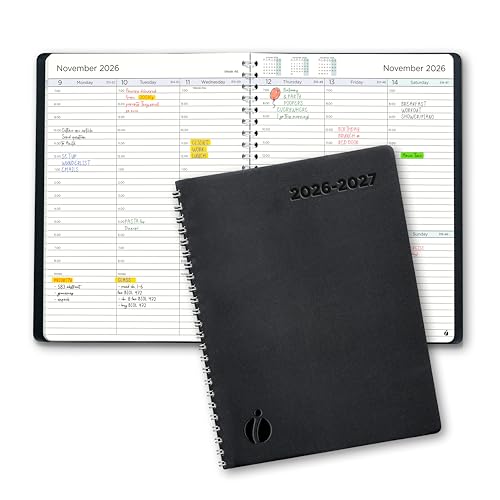
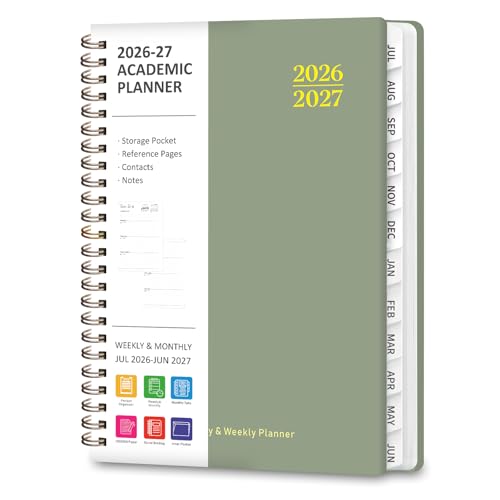
Dated academic planners are built around a defined school-year cycle. Dunwell covers July 2026 through June 2027 and adds daily appointment pages, while inamio and Blue Sky also cover the 2026-2027 academic period. VALOME follows the same July-to-June range. These formats are useful when your work, classes, or projects follow that cycle, but they are less adaptable if you want to skip several months or begin at an arbitrary date.
Undated options trade calendar continuity for flexibility. ZICOTO offers 80 days, Asten provides undated daily pages, and Of a Happy Kind also avoids fixed dates. Hadigu uses undated tear-off weekly sheets. An undated planner can be a sensible choice for irregular work, seasonal routines, or anyone who does not want unused dated pages. The trade-off is that you must add dates yourself and may need a separate long-range calendar.
Match schedule detail to your day
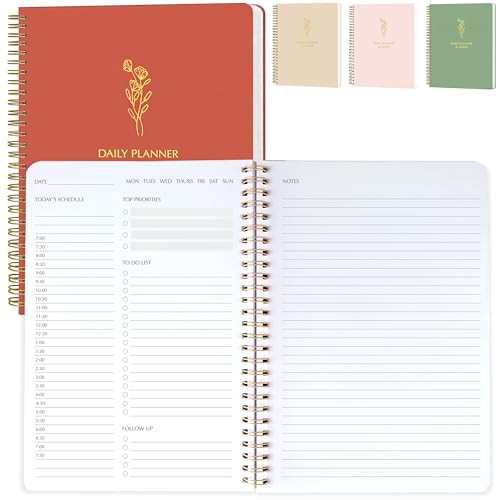
Hourly grids are valuable when appointments have defined start times. Dunwell documents 15-minute weekday intervals from 8 a.m. to 8 p.m., making it the most granular paper choice here. Inamio uses 30-minute intervals from 7 a.m. to 8 p.m. ZICOTO also documents half-hourly focus blocks. Asten provides a 6 a.m. to 9 p.m. daily schedule, while KAICN extends from midnight through 11 p.m.
A full-day grid is not automatically better. It can create unused space if your routine fits within normal business hours. Conversely, a narrow daytime schedule may not capture night shifts, commuting, study sessions, or overnight responsibilities. KAICN is the clearest fit for a complete-day timeline, while Dunwell and inamio are better aligned with appointment-heavy daytime planning.
Decide whether you need weekly and monthly context
Daily pages help with immediate execution, but weekly and monthly views reveal conflicts and deadlines. These can help users move from a broad deadline to specific daily actions.
The digital AVIFOX calendar takes a different approach. Its 15.6-inch touchscreen is designed for shared household scheduling and can sync with Google, iCloud, Outlook, Cozi, and Yahoo according to the listing. It also documents color-coded tasks, chore assignments, meal planning, custom lists, and a choice of wall or desk placement. That breadth makes it a household hub rather than a portable personal notebook.
If you mainly need a weekly checklist, Hadigu is simpler. Its A4 tear-off pages separate days and provide space for weekly tasks and to-dos. Because the sheets are designed to be removed, it is better for active desk planning than for building a permanent record.
Consider writing space and portability
Large planners are easier to read and can provide more room for handwriting. Dunwell measures approximately 8.5 by 11 inches, and Blue Sky uses an 8.5-by-11-inch format. Hadigu is also a large A4 desk pad. These choices are appropriate when the planner stays at a workstation or when detailed entries matter more than carrying convenience.
A5-sized options take less room in a bag. VALOME measures approximately 6.3 by 8.5 inches, while Asten states an A5 format. ZICOTO lists 9.3-by-6.3-inch inner pages. These planners may be easier to carry, but smaller pages can require shorter entries or more abbreviated notes. Check the available writing areas against your usual appointment length, task volume, and handwriting size.
Small features affect how easily a planner fits into a routine. Dunwell documents monthly tabs, a movable bookmark, contacts, notes, pockets, a yearly overview, and a USA time-zone map. Asten lists an elastic closure, two rear pockets, twin-wire binding, and 100gsm paper. VALOME includes an elastic closure, inner storage pocket, laminated tabs, and a stated 100gsm FSC-certified paper specification.
ZICOTO uses a ring-bound format and provides daily priorities, to-dos, follow-up duties, and notes. Of a Happy Kind documents a blank notes page alongside its hourly schedule. These features are useful when the planner must hold meeting notes or flexible ideas as well as appointments. They do not replace a calendar view, so prioritize them according to your workflow.
Final recommendation
Dunwell 2026-2027 Appointment Book ranks first overall in this specification-based comparison under the published weighted criteria.
Dunwell 2026-2027 Appointment Book is the first overall specification-based choice among these best schedule planners. Its 15-minute weekday intervals, daily pages, weekly overview, monthly tabs, notes, contacts, pockets, and reference material give it the broadest documented paper-planner toolkit. AVIFOX is the better choice for a household that wants a shared digital display with chores and synced calendars. For portable paper planning, VALOME and Asten offer compact formats with useful organization features. Choose ZICOTO or Of a Happy Kind when undated daily planning matters most, KAICN when a full 24-hour grid is essential, and Hadigu when a large tear-off weekly desk pad fits your routine. These are the top schedule planners for distinct planning styles, not interchangeable products.
Frequently Asked Questions
What should I look for in the best schedule planners?
Start with the time scale you need: monthly and weekly context, hourly appointments, or a simple daily checklist. Then check whether the dates fit your planning year, whether the size gives enough writing room, and whether extras such as tabs, pockets, notes, or an elastic closure matter. A planner with many features may be less useful if its schedule grid does not match your typical day.
Are undated schedule planners better for irregular routines?
They may be. ZICOTO, Asten, Of a Happy Kind, and Hadigu document undated formats, so a missed day or week does not correspond to a printed date that has already passed. The trade-off is that you must enter dates manually and may not get a built-in annual overview. Undated pages are a practical fit for changing schedules, while dated academic planners offer faster calendar orientation.
Which selected planner covers the most hours?
KAICN documents an hourly timeline from 12 a.m. to 11 p.m., covering a complete 24-hour day. That makes it the most explicit choice for overnight work, extended study, or schedules with late activities. Dunwell, inamio, and Asten document narrower daytime ranges with more conventional appointment planning. Select based on the hours you actually use rather than choosing the broadest grid by default.
Should I choose a digital or paper planner?
AVIFOX is the selected digital option and documents calendar synchronization, a touchscreen, family task assignments, meal planning, custom lists, and wall or desk installation. Paper options such as Dunwell, Blue Sky, and VALOME offer handwritten planning and do not require a shared display. The right choice depends on whether you prioritize household synchronization and visibility or portability, writing, and a physical record.