Buying Guide
This guide compares the best pocket planners using documented portable form factor, layout coverage, page quality and writing feel, navigation and extras, date span and relevance, and build and durability.
Why pocket planners still matter in 2026
The best pocket planners earn their place by balancing a small footprint with serious planning depth. In a year when 2026-2027 academic planners and 2027-2028 monthly planners both ship alongside multi-year 36-month organizers, the difference comes down to layout, paper quality, and the extras that survive daily carry.
Match the layout to how you plan
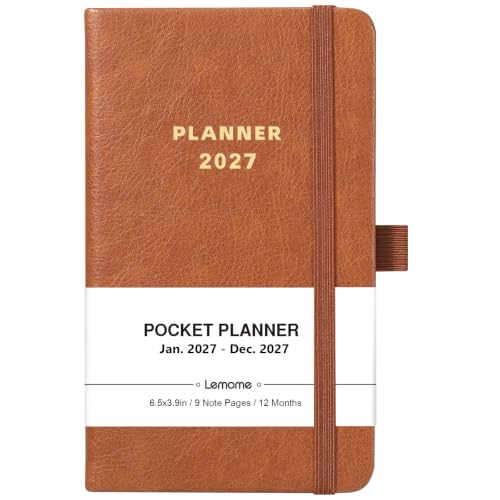
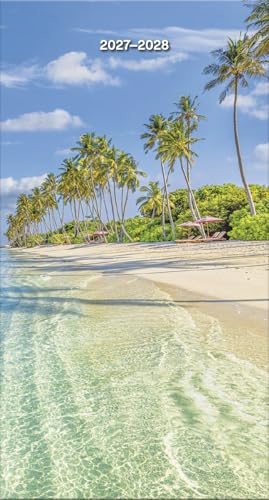
If you track classes, meetings, or workouts day by day, a weekly and monthly planner like the SUNEE Pocket Weekly Planner, Forvencer Pocket Planner, or Lemome 2026-2027 Pocket Planner gives you a two-page weekly spread plus monthly overviews. If you mostly jot down appointments and travel dates, a monthly-only design such as the TF Publishing Susan Branch planner, DateWorks Beaches planner, or Indeme Pocket Planner may be enough. Buyers who prefer to set goals across several years often gravitate to 3-year monthly planners like the Pinchoco, Urneeds, or Indeme organizers.
Check the size and weight honestly
A true pocket planner should fit where you intend to carry it. The most purse-friendly options sit in the 3.5" x 6" to 3.5" x 6.5" range, including the Forvencer, SUNEE, TF Publishing, and DateWorks entries. The 6.3" x 3.8" to 6.4" x 3.8" class, used by Lemome, Pinchoco, Youthamazing, and Urneeds, balances writing space with portability.
Paper quality and writing feel
Heavier paper reduces ink bleed and ghosting. The SUNEE Pocket Weekly Planner documents 100 gsm paper, which is meaningful for fountain-pen and marker users. Several multi-year planners, including Pinchoco, Urneeds, and Indeme, advertise thicker paper without naming the exact weight, so treat those claims as a design direction rather than a specification.
Navigation and organization extras
Small details have an outsized impact on daily use. Look for two ribbon bookmarks to jump between current and future pages, an inner or back pocket for receipts and cards, a pen loop to keep a pen attached, and an elastic closure to keep the planner shut in a bag. Planners like the Pinchoco, Youthamazing, SUNEE, Indeme, and Urneeds cover most of this cluster. Hardcover and elastic designs, including the Forvencer and SUNEE planners, also tend to handle backpack transfers better than staple-bound paperbacks.
Date span and academic alignment
The right coverage window depends on your schedule. Academic-year planners from Forvencer, SUNEE, and Lemome cover July 2026 to June 2027, which suits school and program calendars. Calendar-year options like the Lemome 2027, Youthamazing, TF Publishing Susan Branch, and DateWorks planners cover a single or two-year January-to-December cycle.
Cover style and licensed artwork
Cover style affects whether a planner feels personal. The TF Publishing Susan Branch planner and the DateWorks Beaches planner lean into artist-led and theme-led covers, while floral hardcovers such as the Youthamazing planner add a softer look without leaving the pocket format.
Durability and daily carry
Hardcover planners with elastic closures, including the Forvencer, SUNEE, and Indeme entries, generally handle rough daily carry better than staple-bound paperbacks. Waterproof hardcovers on the Pinchoco and Urneeds planners add further protection. If you tend to toss a planner into a backpack with keys and laptops, those protective features may matter more than extra notes pages.
Final recommendation
SUNEE 2026-2027 Pocket Weekly Planner (3.5" x 6") ranks first overall in this specification-based comparison under the published weighted criteria.
The final choice among the best pocket planners depends on the documented features that match your intended use.
Among the top pocket planners compared, the SUNEE 2026-2027 Pocket Weekly Planner stands out as the first overall specification-based choice thanks to its hardcover build, documented 100 gsm paper, two ribbon bookmarks, and combined weekly plus monthly layouts within an academic-year window. For buyers who want long-range coverage, the Pinchoco 3-Year Pocket Planner 2027-2029 and the Urneeds Pocket Calendar 2027-2029 deliver strong 36-month monthly planning with waterproof hardcovers and full carry extras. The TF Publishing Susan Branch planner and the DateWorks Beaches planner round out the top pocket planners for art- and theme-driven picks, while the Forvencer Pocket Planner and the Lemome 2026-2027 Pocket Planner remain reliable choices in the small hardcover weekly segment.
Frequently Asked Questions
Among the best pocket planners, what size counts as a true pocket planner?
Most of the best pocket planners sit between 3.5" x 5.5" and 6.5" x 4", with the 3.5" x 6" and 6.3" x 3.8" formats being the most common.
Should I choose a weekly, monthly, or multi-year pocket planner?
Weekly and monthly planners, such as the SUNEE, Forvencer, and Lemome entries, work best for tracking classes, meetings, and habits in detail. Monthly-only planners, including the TF Publishing Susan Branch, DateWorks Beaches, Pinchoco, and Urneeds planners, suit users who mainly log appointments. Multi-year planners like the Pinchoco, Indeme, and Urneeds organizers are ideal for long-term goal tracking without annual replacement.
Which paper weight should I look for in a pocket planner?
If you use fountain pens, markers, or brush pens, prioritize planners that state a paper weight. The SUNEE planner documents 100 gsm heavyweight paper, while planners like the Pinchoco and Urneeds describe thicker paper without naming a specific weight. Planners that only describe paper as “thick” should be evaluated for your specific writing tools.
How important are extras like pen loops and ribbon bookmarks?
Extras affect whether a planner stays usable after weeks of daily carry. Two ribbon bookmarks, elastic closures, pen loops, and inner pockets, all featured on planners like the Pinchoco, Youthamazing, SUNEE, Indeme, and Urneeds, make it easier to find the current page, keep a pen handy, and store loose items. These features are especially valuable in the smallest pocket sizes.
Hardcover designs such as the Forvencer, SUNEE, and Indeme planners typically survive backpack and purse carry better than paperback booklets. Waterproof hardcovers on the Pinchoco and Urneeds planners add further protection. If you primarily carry a planner inside a protective sleeve or a dedicated organizer compartment, a paperback may be sufficient.