Buying Guide
Choosing among the best set-your-own combination locks starts with the object being secured. A compact lock for a backpack has different requirements from a lock for a gate, shed, bike, or commercial locker. The products above are ranked from their listed specifications and intended uses, not from hands-on testing or customer sentiment. Treat the ranking as a structured way to narrow the field, then confirm the lock body and shackle dimensions against the opening on your own item.
Match the lock to the application
For school and gym lockers, the Master Lock 1500iD and Master Lock 1535DWD are the most specialized choices in this selection. The 1500iD uses directional movements, while the 1535DWD uses four letters that can form a word. Both are described for indoor lockers. The Master Lock 643EC4 is another locker-oriented option, especially when several cabinets, employee lockers, or indoor storage points need locks.
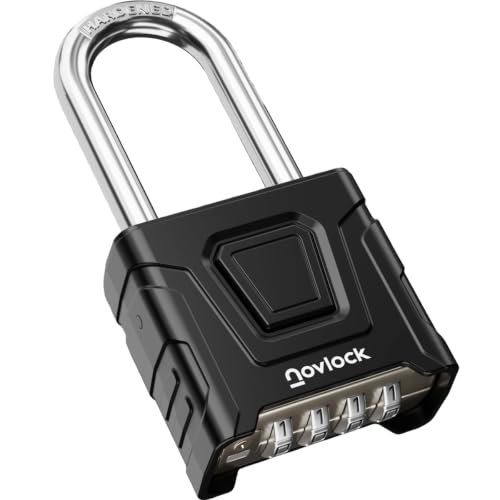
Outdoor uses call for a different set of documented features. The Master Lock 175D and 178EC2 are identified for indoor and outdoor applications, including gates and lockers. The disecu HD04 is also described for gates, sheds, fences, garages, toolboxes, and similar locations, with weatherproof and rust-resistant language in its listing. These descriptions establish intended use, but they do not replace checking the actual exposure, hasp design, and maintenance needs at your location.
For bicycles or equipment that requires the lock to wrap around an object, the Master Lock 8370D is the relevant design. Its 5-foot cable offers more routing flexibility than a fixed shackle. A cable can be useful when the locking points are separated or awkwardly positioned, but it is not interchangeable with a compact padlock for every application.
Compare three-digit and four-digit codes
Three-digit locks are common in compact travel and small-item designs. The Master Lock 630D uses three dials and is listed for backpacks, cabinets, zippers, and travel. The Forge locks also use three-digit combinations and are designed around luggage cables. These formats can keep the lock small and simple, but they provide fewer possible code positions than four-digit products.
Four-digit designs appear throughout the heavier locker and outdoor portion of the list. The Master Lock 175D, 178EC2, 643EC4, 8370D, and disecu HD04 all document four-digit combinations. The Master Lock 1177D also specifies a four-digit combination and states that 10,000 combinations are possible. More digits do not by themselves establish that one lock is physically stronger; they describe the code format and recall options.
The word and directional alternatives may matter more than the number of positions for some users. A word can be easier to associate with a locker, while directional movements offer a different memorization method. Choose the system you can use consistently without writing the code on the lock or nearby item.
Check body and shackle dimensions
A lock must fit before its material details matter. The Master Lock 630D has a 1-3/16-inch body and a 3/16-inch-diameter shackle, supporting the small-item uses stated in its listing. The Master Lock 1535DWD has a 1-1/2-inch body and 1/4-inch shackle, while the Master Lock 643EC4 has a 1-9/16-inch body and a 1/4-inch shackle. These are locker-friendly dimensions in the context of their listed applications, but the opening on a particular locker can vary.
The outdoor padlocks are larger. Both the Master Lock 175D and 178EC2 list 2-inch bodies with 5/16-inch shackles. The disecu HD04 specifically calls out a wider shackle, which may help with some broader attachment points. Measure the hasp opening, clearance, and material thickness rather than relying only on a product category label.
Cable locks solve a different fit problem. The Master Lock 8370D lists a 5-foot length and 1/2-inch cable diameter. The Forge models use flexible cables intended for luggage zipper pulls and hard-case lock holes. These locks should be evaluated by cable routing and end clearance, not only by body width.
Consider construction and exposure
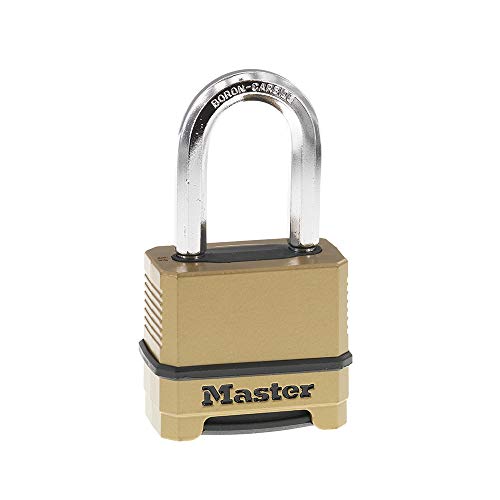
The evidence uses several construction types. Aluminum appears on the Master Lock 630D, which keeps that compact model lightweight. Solid metal bodies appear on the Master Lock 643EC4, while the 175D and 178EC2 list solid bodies with hardened steel shackles. The 1177D uses a commercial-grade brass design and adds a shackle seal and dial dust cover.
The 8370D uses braided steel cable with a protective vinyl coating intended to help prevent scratching. The Forge travel locks use alloy bodies and sheathed steel cables. The disecu HD04 lists a zinc alloy body and plated steel construction, along with rust-resistant and weatherproof descriptions. These differences are useful for matching a design to a use, but the supplied data does not provide independent durability testing or a universal security grade.
If the lock will remain outside, prioritize products whose listings explicitly mention outdoor or weather-related use. The 175D, 178EC2, disecu HD04, and 8370D have the clearest outdoor-oriented evidence among the selected products. For indoor lockers and bags, compactness and operating style may be more important than weather language.
Review operation and portability
Dial size and reading direction affect daily handling. The Master Lock 1177D lists large ergonomic dials and a blind feature for gloves, low light, or darkness. The disecu HD04 lists front-facing numbers and a jog dial. The Master Lock 1500iD uses directional movements, and the 1535DWD uses letters. These are meaningful operating differences, not simply cosmetic variations.
Portability favors the smaller models. The Master Lock 630D lists a 0.15-pound weight and is aimed at backpacks and cabinets. The Forge locks are also travel-focused, with a two-lock package and flexible cable format. Larger outdoor and commercial padlocks may be easier to place on substantial hasps but less convenient to carry daily.
Pack size can also influence the purchase. The Master Lock 178EC2 includes two locks, the Master Lock 643EC4 includes four, and the Forge package includes two. A multi-lock package can be practical for multiple storage points, but each lock still needs a suitable opening and its own code-management plan.
Specification-based methodology
The scoring criteria were chosen for this category: combination flexibility, construction and shackle, application fit, weather readiness, and operation and portability. Each selected product receives a score from 0 to 10 on every criterion, with combination flexibility and construction receiving the largest weights. The scores use only the supplied feature and specification fields. They do not use customer opinions, ratings, current listing information, purchase activity, marketplace labels, or hands-on performance.
The highest-scoring returned product is therefore the most specification-aligned documented match within this supplied pool, not a guarantee of real-world results. Before ordering, verify the current listing, dimensions, reset instructions, and whether the intended lock point accepts the stated shackle or cable format.
Final Recommendation
Master Lock ProSeries 1177D ranks first overall in this specification-based comparison under the published weighted criteria.
Master Lock ProSeries 1177D is the first overall specification-based choice among these best set-your-own combination locks. Its four-digit resettable code, large ergonomic dials, blind operating feature, brass construction, shackle seal, and dial dust cover give it a broad documented feature set, particularly for commercial or demanding indoor use.
Choose the Master Lock 175D when a full-size lock for an indoor/outdoor gate, shed, or locker is more important than compact portability. The Master Lock 178EC2 makes sense when two similar outdoor-capable locks are needed. For a bike or equipment, the Master Lock 8370D is the logical cable design. The Master Lock 1500iD and 1535DWD cover directional and word-based locker access, while the Master Lock 630D remains a practical compact option for bags and cabinets.
Among the top set-your-own combination locks, the best match depends on fit and code style as much as body material. Confirm the opening first, then select the format—numeric, directional, word, or cable—that suits the way the lock will be used.
Frequently Asked Questions
What should I check before buying one of the best set-your-own combination locks?
Measure the opening, clearance, and material thickness where the lock will attach. Then compare the listed body and shackle dimensions. For cable designs, check the cable length and whether the ends fit the zipper pulls, holes, or attachment points. Finally, confirm that the intended use is indoor, outdoor, travel, locker, or bike-related as appropriate.
Are four-digit combination locks preferable to three-digit models?
Four-digit models provide more code positions than three-digit models, and several selected products document four-digit operation. That can be useful for lockers, gates, and storage. Three-digit locks may be better for compact travel items where small size and portability are priorities. The right choice depends on the application rather than the digit count alone.
Which selected locks are intended for outdoor use?
The Master Lock 175D and 178EC2 are listed for indoor and outdoor uses, including gates. The disecu HD04 is described for outdoor locations such as fences, sheds, garages, and toolboxes and includes weatherproof language. The Master Lock 8370D is a cable lock for bicycles and outdoor equipment. Indoor-only or primarily indoor products should not be assumed to have the same exposure suitability.
What is the difference between a padlock and a cable combination lock?
A padlock uses a rigid shackle that passes through a hasp or opening. A cable lock uses a flexible cable that can route around a frame or through separated attachment points. The Master Lock 8370D is the selected bike and equipment cable design, while the Master Lock 175D and 178EC2 are full-size padlocks. Cable flexibility helps with routing, but the two designs are not interchangeable in every setup.
Are TSA combination locks useful outside luggage?
The Forge locks are listed for luggage, backpacks, briefcases, gym lockers, purses, and laptop bags. TSA functionality is most relevant when authorized airport inspection is expected. These compact travel designs are not the same choice as a larger outdoor gate padlock.