Buying Guide
Choosing among the best silent alarm clocks starts with defining what “silent” means for your bedroom. A non-ticking analog clock keeps the time display quiet but usually still uses a beep or bell for the wake alarm. A vibrating clock or wearable can provide a non-audible wake mode, which is more suitable for partners, roommates, dorms, and people who need tactile reminders.
Silent timekeeping versus silent waking
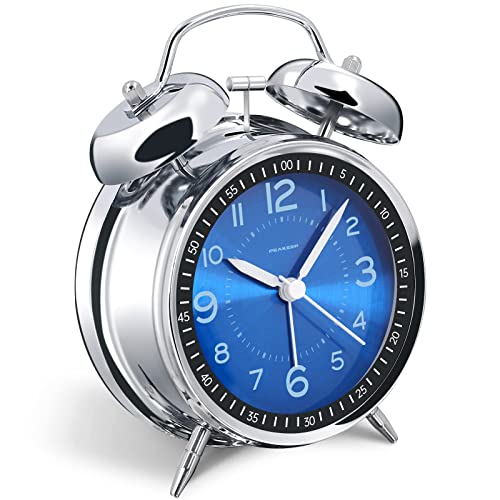
Analog models such as JALL, Peakeep MHP-315, Tinload, AMIR, Lamisola, and Peakeep’s antique model document non-ticking or silent quartz movements. These clocks remove the repeated tick-tock sound that can bother light sleepers. Their alarms, however, are described as loud, beeping, ascending, or gradually increasing. They are quiet timekeepers with conventional audible alarms.
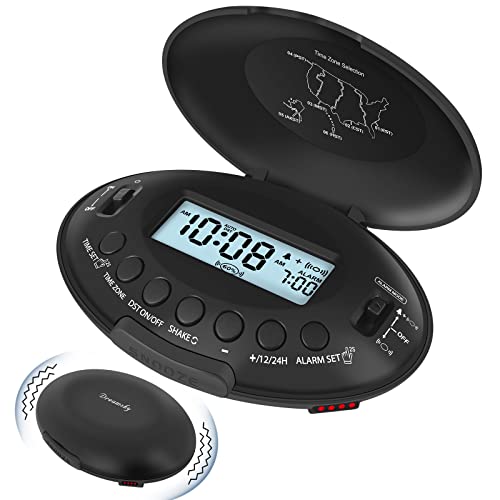
The REACHER Super Loud Vibrating Alarm Clock and DreamSky DS2202 are different. Both document vibration-only options, so they can wake one person without automatically disturbing another. REACHER adds a cordless under-pillow design and five vibration levels. DreamSky offers five shaking levels and lets you choose vibration only or vibration plus beeping. These are appropriate when the alarm itself needs to be quiet.
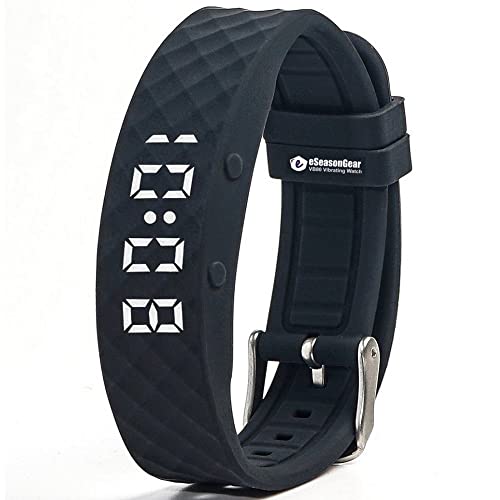
The eSeasonGear VB80 is a wearable rather than a traditional bedside clock. It documents 12 daily vibrating alarms and a silent wake alarm, making it useful for medication reminders or recurring routines. Its listing warns that it will not work for deep sleepers, so it should not be treated as a universal replacement for a bed shaker.
Match the alert to your sleeping arrangement
For a shared bedroom, start with vibration-only settings. REACHER and DreamSky are the clearest matches because their listings explicitly describe silent vibration modes. A cordless design also helps you position the alert where it is likely to be felt without running a cable across the bed.
For a private bedroom, an ascending audible alarm may be more practical. Peakeep MHP-315, AMIR, Tinload, Lamisola, and Peakeep’s antique model describe alarms that begin more gently and increase in volume or speed. This can provide a less abrupt wake-up than an alarm that begins at one fixed level, although the supplied evidence does not establish how any individual sleeper will respond.
For reminders during the day, the VB80’s 12 daily vibrating alarms are more relevant than a single wake-up alarm. The eSeasonGear model is included because its alarm count and wearable format are clearly documented.
Check readability
Analog clocks vary in how much information they provide at a glance. Tinload documents a large-numbered white dial, while AMIR and Peakeep MHP-315 describe bold or large numbers. Equity 33100 adds an adjustable lighted dial and a visible alarm hand. These details can matter for seniors, children, or anyone who wants to identify the time without reaching for a phone.
Night lighting is handled differently across the group. JALL uses a night-light button, Lamisola keeps its light on for four seconds after activation, and Tinload provides five seconds of soft illumination. Peakeep MHP-315 has a backlight, while the antique Peakeep model uses a rear light button. On-demand lighting avoids a continuously glowing display, but it requires pressing a control when checking the time.
REACHER documents auto-brightness, which adjusts its digital display according to room light. DreamSky’s listing includes auto DST but does not provide display dimensions or brightness controls. If display visibility is important, favor models with explicit large-number, bold-dial, or brightness evidence rather than assuming all compact clocks are equally readable.
Consider power and placement
Battery-operated analog clocks are easy to place away from an outlet. This supports travel, guest rooms, and backup use, but batteries are not supplied for the listed models and must be monitored.
Equity 33100 uses electric operation, making it better for a fixed nightstand where avoiding battery changes matters more than portability. DreamSky and REACHER use rechargeable power. REACHER documents a magnetic charging dock, while DreamSky describes a rechargeable battery and low-power indicator. eSeasonGear is also rechargeable, but its listing says the required USB charger is not included.
Placement is especially important for vibrating clocks. REACHER is designed for cordless under-pillow use, and DreamSky is described for a nightstand, bed, mattress, or under-pillow placement. Analog clocks are generally better suited to a stable bedside surface, where their dial and buttons remain easy to reach.
Look for sleepy-time controls
Simple physical controls are a strength of the analog group. AMIR has a top snooze/light button, Tinload has a large top light button and side alarm switch, and JALL documents an on/off switch. Peakeep MHP-315 also uses separate alarm and time-setting controls.
REACHER adds raised tactile points around the alarm-off and snooze controls, which may help locate them in the dark. DreamSky documents a dedicated shake-off button. Wearable choices require a different setup approach: eSeasonGear uses a two-size silicone band and supports 12/24-hour time, but its evidence does not describe a phone app or advanced display controls.
Understand the trade-offs
No single design is ideal for every sleeper. Vibration-only clocks are quieter for partners but may require closer contact or a suitable bed position. Conventional analog clocks are simple to power, but their alarms are audible. Plug-in models avoid routine battery changes but cannot be placed as freely. Wearables keep alerts on the wrist but may have limitations for deep sleepers.
This comparison uses listing specifications and feature descriptions, not hands-on testing. The rankings reward documented capabilities and practical flexibility rather than claiming that any alarm will wake every user.
Final recommendation
REACHER Super Loud Vibrating Alarm Clock ranks first overall in this specification-based comparison under the published weighted criteria.
REACHER Super Loud Vibrating Alarm Clock is the first overall specification-based choice among these best silent alarm clocks.
REACHER documents vibration-only operation, five vibration levels, cordless under-pillow placement, auto-brightness, magnetic charging, and tactile controls. It also offers audible modes when a stronger alert is wanted, though those modes are not silent.
For a portable vibrating option, DreamSky DS2202 provides five shaking levels and a rechargeable wireless design. If your priority is a quiet, non-ticking analog clock rather than a silent alarm, Tinload offers a large dial, crescendo alarm, snooze, and on-demand light. Peakeep MHP-315 is a compact travel choice, while Equity 33100 suits a fixed outlet-based setup.
The top silent alarm clocks are not all the same product type. Choose vibration-only operation for shared rooms, a non-ticking analog movement for quiet timekeeping, or a wearable such as eSeasonGear VB80 for multiple scheduled tactile reminders. Review the documented limitations, especially audible alarm modes, charger requirements, battery needs, and the VB80 warning for deep sleepers.
Frequently Asked Questions
What makes the best silent alarm clocks different from regular alarm clocks?
A silent alarm may refer to a non-ticking clock movement or an alarm that uses vibration instead of sound. Analog models in this comparison, including JALL and AMIR, document silent or non-ticking movement but use audible alarms. REACHER and DreamSky document vibration-only wake modes, which address sound from the alarm itself.
Which selected model is suitable for a shared bedroom?
REACHER is a specification-aligned match because it documents vibration-only operation, five vibration levels, and cordless under-pillow placement. DreamSky is another suitable choice because it offers vibration-only mode and five shaking levels. Both also document audible alternatives, so the selected mode matters.
Are silent analog alarm clocks completely silent when they ring?
No. In this comparison, “silent” analog clocks primarily describe the movement. JALL, Peakeep MHP-315, Tinload, AMIR, Lamisola, and Equity document non-ticking or silent sweep operation, but their alarm descriptions include loud, beep, ascending, or gradually increasing sounds. They reduce ticking noise rather than eliminate alarm sound.
Is a vibrating watch suitable for a deep sleeper?
The supplied evidence does not support a universal answer. eSeasonGear specifically warns that the VB80 will not work for deep sleepers, while other wearable listings make stronger wake-up claims without independent testing. A bed-shaker design such as REACHER or DreamSky provides more directly documented placement and intensity controls, but this comparison does not verify real-world wake performance.
What should I check before buying a battery-operated silent clock?
Check the battery type, whether batteries are included, and whether the light or alarm affects battery replacement needs. The selected AA models generally list battery operation but do not include the batteries. Rechargeable models such as DreamSky and REACHER reduce disposable-battery use, while eSeasonGear requires a USB charger that its listing says is not included.