Buying Guide
The best silicone dog slow feeders combine a food-safe surface, a food-obstacle pattern, and enough stability to keep the bowl from moving. Silicone is useful because it is soft, flexible, quieter than rigid bowls, and often compatible with everyday cleaning routines. The options above also show why the shape, capacity, and base design matter as much as the material.
Start with food-safe construction
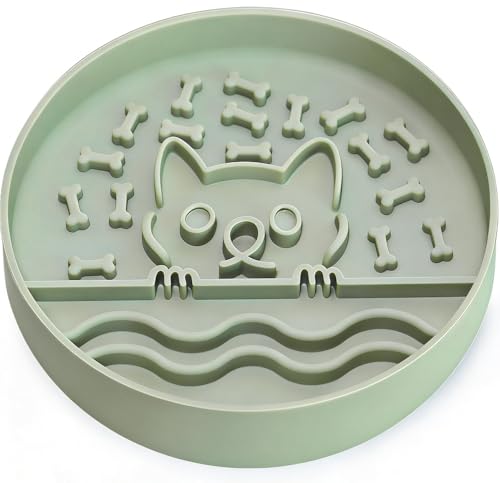
Look for listings that explicitly identify food-grade silicone and state whether the material is BPA-free or free from listed toxins. The ZOURYNUA, Zonopy, KOAIDOLMO, and Lesipee bowls all make those material claims. A clear material description helps you compare construction details across products.
Silicone is not automatically identical across designs. Some listings describe soft silicone that is gentle on gums and noses, while others emphasize flexibility or resistance to cracking.
Match the maze to the meal
A slow feeder should make food reachable without allowing large pieces to disappear all at once. Dual-zone trays add a second type of obstacle, while the PEGGY11 Volcano uses a raised center to create a larger central structure.
The depth and spacing of the pattern matter. Dense mazes can slow access more aggressively, but they may also frustrate dogs that use their tongues more than their noses. A shallow pattern is often easier to clean and may suit wet food, while deeper channels can keep loose kibble more contained. The ZOURYNUA dual-zone design is a good specification-based starting point for a textured challenge.
Check stability on your floor
A non-slip label alone does not tell you how a bowl will behave on every surface. Suction cups generally work best on smooth floors, while textured mats may reduce their grip. Zonopy specifies 37 suction cups, and KOAIDOLMO specifies a 37-cup base. These are the most clearly documented high-count suction systems in the selected group.
Other products use a non-slip base rather than listing the number of cups. AXEFUN, Lesipee, and PEGGY11 describe that approach. If your dog routinely pushes a bowl around, choose a model with a clearly specified suction or non-slip design and test it on the surface where meals are served.
Choose the right size and capacity
Most compact silicone slow feeders are approximately 7.5 to 7.9 inches across. The KOAIDOLMO bowl states that it holds up to two cups and is intended for pets from 5 to 30 pounds. Lesipee states a 1–2-cup capacity, while Bifeaw also states 1–2 cups. These figures help compare feeding volume, but they do not replace checking the actual food shape and the dog’s portion.
The PEGGY11 Volcano is the clearer large-dog option: it has a 9.4-inch base and a 3.1-inch raised center. That larger footprint gives medium and large dogs more room, although it may not fit as neatly in a crate. The Zonopy bowl is shallower at 7.5 inches and is positioned for small to medium dogs, puppies, and cats.
Consider food type and enrichment
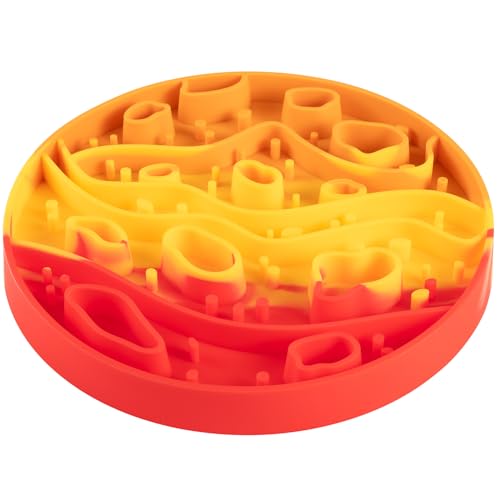
Many silicone feeders accept dry kibble, wet food, treats, or mixed meals. KOAIDOLMO explicitly lists dry, wet, raw, and liquid foods, while Zonopy lists dry, wet, and raw diets. A flat lick-mat surface can be useful for spreading wet food or liquid treats, which is why the reversible PEGGY11 Mars is more flexible than a single-purpose maze.
Its rounded, unbreakable silicone construction is particularly relevant for owners who want a quieter, softer alternative to ceramic or metal.
Make cleaning part of the decision
Dishwasher compatibility is the most common convenience feature. ZOURYNUA, Zonopy, KOAIDOLMO, and the PEGGY11 designs all state that they are dishwasher safe. Lesipee, Azxb, and Bifeaw also list microwave compatibility, while Bifeaw lists freezer use.
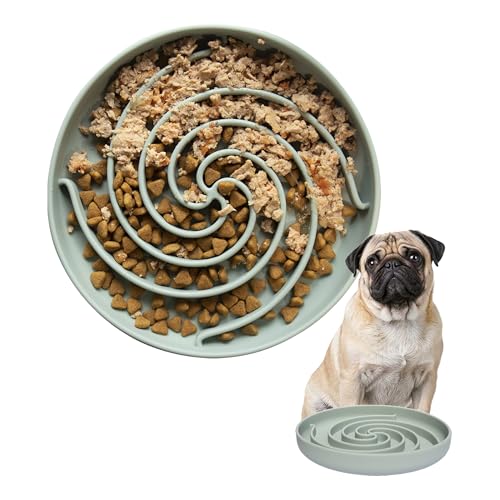
A smooth silicone surface can be rinsed after dry food, but grooves and raised patterns require attention. Cleaning becomes more involved when food reaches deep channels or around a raised center. If easy cleanup is a priority, consider a simple labyrinth bowl such as XAQMHSW, or choose the reversible PEGGY11 Mars if you want two surfaces in one product.
Final recommendation
The final choice among the best silicone dog slow feeders depends on the documented features that match your intended use.
ZOURYNUA Dual-Zone Silicone Slow Feeder ranks first overall in this specification-based comparison under the published weighted criteria.
The first overall specification-based choice is the ZOURYNUA Dual-Zone Silicone Slow Feeder, which combines food-grade silicone, dual-zone enrichment, suction stability, and dishwasher-safe cleaning in a compact bowl.
Among top silicone dog slow feeders, the ZOURYNUA model offers a specification-aligned balance of slowing design and everyday practicality. Choose KOAIDOLMO for a compact bowl with a stated two-cup capacity and 37-cup suction base. Choose Zonopy when a shallow feeder and documented high-count suction setup are priorities. Choose the PEGGY11 Volcano for medium and large dogs that need a broader 9.4-inch base, or the PEGGY11 Mars when reversible slow feeding and lick-mat functions are useful.
No single bowl suits every feeding situation. Match the obstacle design to your dog’s size and food, confirm that the stated capacity fits the portion, and make sure the base works on your floor. These criteria make the top silicone dog slow feeders easier to compare without relying on unsupported claims about eating speed or health outcomes.
Frequently Asked Questions
What makes the best silicone dog slow feeders different from ordinary bowls?
The best silicone dog slow feeders use raised obstacles, channels, or a dual-zone surface to make food take longer to access. A stable base and food-safe silicone are also important because the bowl must remain usable and easy to clean during daily feeding.
Can silicone slow feeders handle wet food and treats?
Many selected models document compatibility with wet food, dry food, treats, or mixed meals. KOAIDOLMO lists dry, wet, raw, and liquid foods, while Lesipee states that its bowl works with dry kibble, wet food, and treats. Check the individual listing for the exact food formats supported.
Which selected feeder is best for a larger dog?
The PEGGY11 Volcano has clear large-dog specifications: a 9.4-inch base, a 3.1-inch raised center, and a design for medium to large dogs. Its larger footprint may be less convenient in a small crate or compact feeding area.
How many suction cups should a slow feeder have?
There is no universal number, and grip also depends on the floor. Zonopy and KOAIDOLMO specifically document 37 suction cups, while other selected bowls use a non-slip base without giving a cup count. Smooth flooring generally provides the most consistent surface for suction-based stability.
Are silicone slow feeders dishwasher safe?
Most selected products state that they are dishwasher safe, including ZOURYNUA, Zonopy, KOAIDOLMO, and both PEGGY11 designs. Lesipee, Azxb, and Bifeaw also document microwave compatibility. Follow the product’s care instructions and place items on the recommended rack when specified.