Buying Guide
Selecting the best intermediate algebra books for 2026 depends on the format you prefer, the depth of problems you need, and how much publisher support you expect. The titles in this comparison range from hardcover classroom editions to flexible paperbacks and digital Kindle releases, so matching the book to your study style is the first step. Below are practical considerations to weigh before choosing.
Print editions from publishers like Pearson, McGraw-Hill, Cengage, and Brooks/Cole are well suited for classroom or reference use, with hardcovers offering durability and paperbacks offering portability. The McGraw-Hill and OpenStax Kindle editions give readers a digital option that works across devices, which is helpful for distance learners and commuters. If you prefer underlining and margin notes, a paperback or hardcover is generally easier; if you prefer search and built-in dictionary tools, a Kindle edition may be a better fit.
Evaluate Subject Emphasis
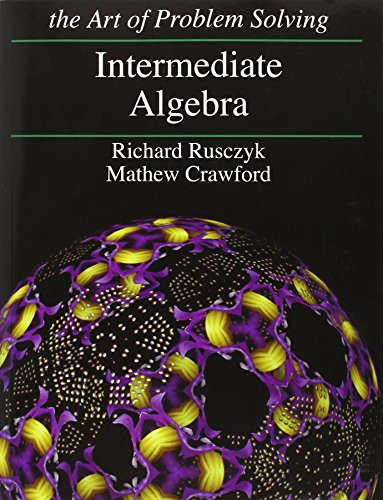
Some titles in this list, such as the Art of Problem Solving books, emphasize reasoning and structured problem-solving, while Cengage’s Intermediate Algebra: An Applied Approach is built around applying algebra to real-world contexts. If your goal is contest preparation or proof-style rigor, the Art of Problem Solving single-volume and two-book sets are designed around layered exposition and deliberate problem sets. If your goal is connecting algebra to practical applications, the applied focus may match your needs more naturally.
Consider Supplements and Companion Materials
Bundled sets like the Art of Problem Solving Intermediate Algebra Books Set and the AoPS Intermediate Algebra Text and Solution Set include a solution manual alongside the textbook, which helps with self-paced study. Standalone textbooks typically require a separate solution manual or rely on instructor resources, which may matter if you are studying without a classroom. The OpenStax edition is widely used in community colleges and may be paired with instructor-supplied materials.
Look at Publisher Curriculum Support
Major publishers, including Pearson, McGraw-Hill, Cengage, and Brooks/Cole, offer companion websites, test banks, and instructor resources that can add value to a textbook. The Art of Problem Solving titles are supported by a publisher community built around math competitions and structured problem-solving. If you want ongoing resources beyond the page, publisher curriculum support is a meaningful factor.
Check Edition Recency
Recent editions, like the 2022 Pearson Kindle edition and the 2021 McGraw-Hill paperback, often reflect updates to examples, problem sets, and chapter sequencing. Older editions may still be effective for self-study, but a newer release date can indicate refreshed content and alignment with current course standards.
Balance Coverage and Extras
Books with broader exercise sets and chapter review sections can support longer study plans, while shorter workbooks tend to focus on targeted practice. If you are comparing the best intermediate algebra books for a full course, a full textbook usually offers more topic coverage than a workbook-style title. Think about whether you need a single-volume textbook or a paired text and solution manual for your study schedule.
Final Recommendation
AoPS Intermediate Algebra Text and Solution Set ranks first overall in this specification-based comparison under the published weighted criteria.
The final choice among the best intermediate algebra books depends on the documented features that match your intended use.
For readers who want a research-driven, exposition-rich single text, Intermediate Algebra: Art of Problem Solving is the first overall specification-based choice, with the bundled textbook and solution manual sets offering built-in support for self-study. If you prefer a classroom-grade hardcover, the Pearson Intermediate Algebra Hardcover and the Pearson Intermediate Algebra 2019 Edition are structured for institutional use, while the McGraw-Hill Intermediate Algebra Paperback and the Cengage Intermediate Algebra: An Applied Approach bring alternative publisher and pedagogical angles. For digital learners, the OpenStax and Pearson Kindle editions round out the top intermediate algebra books by extending the list into flexible formats. Choosing between these options depends on whether you value bundled supplements, applied emphasis, or digital access most.
Frequently Asked Questions
Focus on topic coverage, exposition style, exercise variety, and whether the publisher provides a solution manual or companion resources. Matching the format, print or digital, to your study habits is also useful.
Are textbook and solution manual bundled sets worth it for self-study?
For self-paced learners, a paired text and solution manual set can help you check work without waiting for an instructor. The Art of Problem Solving Intermediate Algebra Books Set and the AoPS Intermediate Algebra Text and Solution Set are designed around that kind of study flow.
Do I need a print textbook if a Kindle edition is available?
That depends on how you study. Kindle editions from OpenStax and Pearson are convenient for search and cross-device access, while print editions can be easier for long-form reading and margin notes. Some readers rotate between both formats during a course.
Which book is best for applied, real-world algebra practice?
Cengage’s Intermediate Algebra: An Applied Approach is built around applying algebra to practical contexts, making it a natural fit if you want to see how equations connect to real situations. The Art of Problem Solving titles are generally better for proof-style reasoning and competition preparation.
Hardcovers from Pearson and Brooks/Cole are well matched to classroom shelving and long-term reference, while paperbacks from McGraw-Hill, Cengage, and Art of Problem Solving are lighter and easier to carry. Consider where and how often you will read the book when deciding.