Buying Guide
Choosing the best stackable wastebaskets starts with the space available for both use and storage. A container can be advertised as stackable yet still be too tall, wide, or deep for a cabinet, desk, or service area. Compare the listed dimensions with the intended location, then consider capacity, material, handling, and whether the bin will be used alone or as part of a sorting system.
Confirm the stacking arrangement
Stackable wastebaskets are useful in two different ways. Some are designed to nest or stack when empty, reducing the space needed for transport and storage. Others are selected in multiples so several bins can remain in a recycling or collection station. The Rubbermaid Commercial model explicitly describes nesting for transport and storage. The Dowell 35-quart and 50-liter containers also identify stackable or nestable storage, while the Glownary models specify built-in reinforcements intended to prevent jamming when stacked.
Do not assume that every stackable bin is meant to remain securely piled while full. The Detectalia model specifically says it stacks when empty, so it is best treated as a storage-friendly bin rather than a permanently tiered container. For any model, keep the stack stable and follow the practical limits implied by its shape and placement.
Match capacity to the room
Small bins are generally easier to place near a desk, bathroom fixture, or bedroom. The Tomedny 8-liter model is aimed at tight spaces, while the Detectalia 13-liter bin and the 7-quart Glownary model offer compact alternatives. The 7-quart Glownary container is particularly narrow in its listed profile, making it relevant to counters, host stations, and small office areas.
Mid-size containers offer more room without the scale of a commercial barrel. The Dowell 35-quart model, Glownary 7-gallon model, Sintuff 8-gallon bins, and Rubbermaid 10.25-gallon model fit this general range. These sizes may work well in kitchens, offices, bathrooms, or shared rooms, but actual fit depends on the opening and floor clearance.
Large containers are better suited to busy locations where emptying frequency matters. The Glownary 10-gallon recycling bin, its black 10-gallon counterpart, and the Mix.Home 22-gallon round bin provide more capacity. The Mix.Home model is also listed at 31 inches high, so it should be considered for open floor areas rather than low furniture.
Measure width, depth, and height
Capacity alone does not determine whether a wastebasket will fit. Rectangular bodies can sit against a wall or align with a cabinet, while round bodies may leave unused corners but can be easier to position in open areas. The Tomedny model is explicitly described as fitting against walls, under desks, or inside cupboards. The Glownary rectangular designs are listed for desks, counters, or commercial spaces, and the Rubbermaid model is described as fitting under a standard-height desk.
Pay attention to conflicting dimension fields in public listings. When a feature description and a specification field differ, use the more conservative measurement or verify the current product listing before ordering. Also allow room to lift the container out, remove a liner, or carry it by the rim. A bin that fits exactly may be difficult to use in practice.
Choose plastic, HDPE, or mesh construction
Plastic is a common choice for kitchens, bathrooms, offices, and other areas where wiping the surface matters. The Dowell, Glownary, Rubbermaid, Sintuff, and Tomedny listings describe smooth or wipe-clean surfaces. The Mix.Home model specifies HDPE and smooth interior and exterior surfaces, while Sintuff describes crack-resistant plastic and surfaces that can be wiped with a damp cloth.
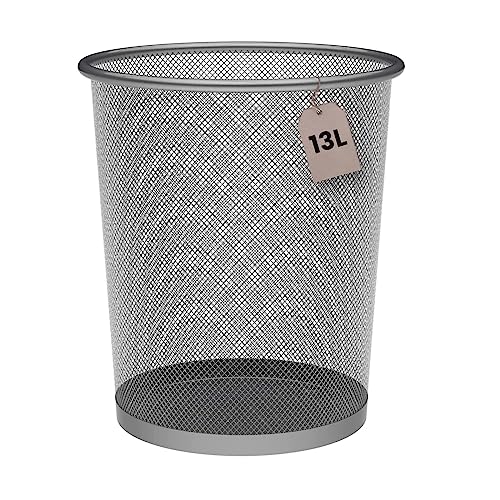
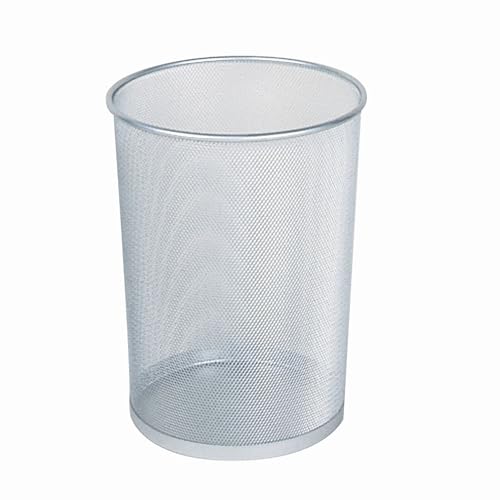
The Detectalia metal mesh design provides a different maintenance profile. Its listing describes ventilation, moisture resistance, a flat bottom, and cleaning with a damp cloth. Mesh may be useful where airflow is desirable, but it does not provide the same solid-sided containment as a plastic bin. Select the construction based on the waste type, cleaning routine, and location rather than appearance alone.
Consider rims, bases, and carrying
A rolled rim can serve more than one purpose. Several selected products describe it as adding strength or providing a grip for carrying. This includes the Rubbermaid, Dowell, Glownary, Mix.Home, and Sintuff containers. A reinforced or raised bottom is also useful when a bin needs a stable base; Glownary, Mix.Home, and Sintuff listings describe raised-edge or stable-base features.
For a set of bins, handling and identification become more important. The Sintuff four-pack includes black, green, red, and blue containers, which can support color-coded general waste, recycling, or room-specific organization. The Glownary recycling model uses green coloring for a similar visual distinction. These colors identify the intended organization concept, but the listing does not establish a universal recycling standard, so label the bins according to your own system.
Decide whether you need a lid or a set
All reviewed products are wastebaskets or waste containers, but not all include lids. The Dowell 35-quart and 50-liter listings mention optional lids available separately. The Mix.Home listing also describes use with compatible accessory lids. Treat these as basket-only purchases unless the listing explicitly includes the lid.
A single bin is usually simpler when replacing an existing container. A multipack can make more sense for an office, classroom, cabinet system, or sorting station. The Sintuff product includes four bins, while the Glownary 10-pack listings are intended for larger organized installations. Multipacks may improve consistency, but they also require enough storage and matching floor or cabinet space.
Final Recommendation
Rubbermaid Commercial 41QT Stackable Wastebasket ranks first overall in this specification-based comparison under the published weighted criteria.
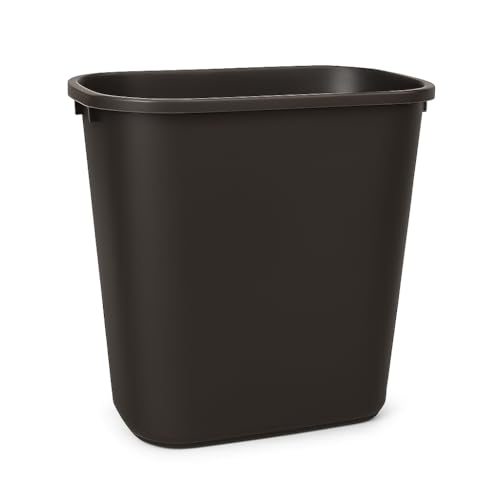
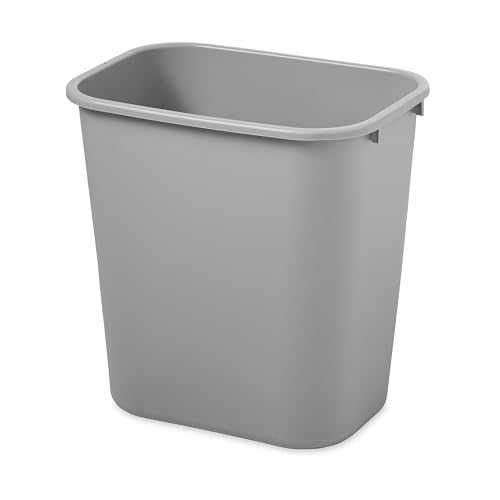
Rubbermaid Commercial Wastebasket Trash Container is the best stackable wastebaskets first overall specification-based choice in this comparison. Its combination of documented nesting storage, heavy-duty plastic, smooth resin, rolled rims, broad room compatibility, and under-desk guidance makes it the most balanced option for many buyers.
For large-volume areas, the Mix.Home 22-gallon round wastebasket and Dowell 50-liter model provide more capacity, though their height should be checked carefully. The Glownary 10-gallon recycling model and Sintuff four-pack are better suited to organized sorting. For tighter spaces, the Tomedny 8-liter bin, Detectalia 13-liter mesh bin, and compact Glownary models offer more manageable formats. Among the top stackable wastebaskets, the right choice depends mainly on clearance, capacity, and whether you need one container or a coordinated group.
Frequently Asked Questions
Among the best stackable wastebaskets, are stackable wastebaskets suitable for permanent stacked use?
It depends on the documented design. Glownary, Dowell, Rubbermaid, Mix.Home, Sintuff, and Tomedny listings describe stackable or nestable storage, while Detectalia specifically states that it stacks when empty. The evidence does not establish a universal safe height or a guarantee of stability when full, so use a stable surface and avoid assuming that empty-storage guidance means permanent loaded stacking.
What capacity is best for a home office?
A smaller container may be appropriate beside a desk, especially where floor clearance is limited. The Tomedny 8-liter bin, Detectalia 13-liter bin, and compact Glownary models are the smallest selected formats. A Rubbermaid 10.25-gallon or Glownary 10-gallon container may be more appropriate for a shared office or a room with heavier daily waste. Measure the available space before choosing by capacity alone.
Are lids included with these wastebaskets?
Not necessarily. The Dowell 35-quart and 50-liter listings identify optional lids separately, and the Mix.Home listing describes compatible accessory lids. The supplied evidence does not show a lid included with those reviewed products. Confirm the package contents if covered waste storage is important.
Which design works best for recycling organization?
Color-coded containers can simplify sorting. The Glownary green recycling wastebasket is specifically described for recyclables, while the Sintuff four-pack includes black, green, red, and blue bins for color-coded organization. The Glownary 10-pack also combines black and blue bins for trash and recycling. These systems can be useful, but assign labels that match your household, office, or facility rules.
How should I compare a round bin with a rectangular one?
Rectangular bins can align closely with walls, desks, and cupboards, as described for the Tomedny model and several Glownary products. Round bins may work better in open floor areas or locations where access from multiple directions is useful; the Mix.Home model is a large round commercial example. Compare the actual width, depth, height, and clearance for removing liners before selecting a shape.