Buying Guide
The best small wastebaskets are defined less by a single capacity number than by how well their shape, opening, and maintenance features fit the room. Start by measuring the available floor, cabinet, or under-sink space. Then decide whether you need a covered container, an open top, or a decorative basket that can serve another storage role.
Width is often the limiting measurement in a bathroom or office. The Purexa is listed at 5.91 inches wide, while the MOPALL is listed at 5.1 inches wide and the TIPGO 2.1-Gallon Under-Sink Wastebasket at 5.5 inches wide. These narrow profiles can suit gaps beside a vanity or beneath a sink, but depth and height still need to be checked against doors, plumbing, and furniture.
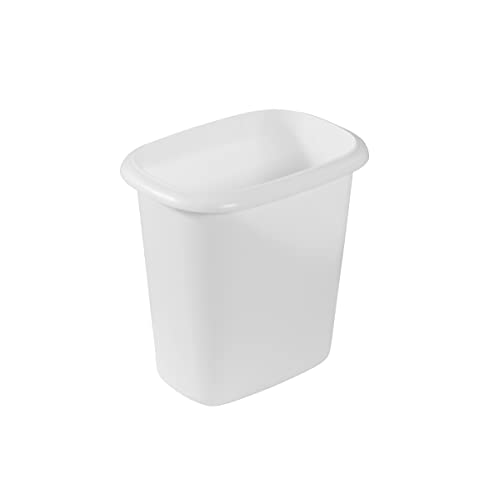
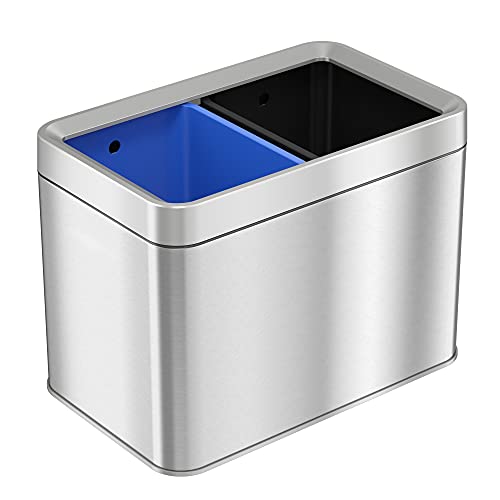
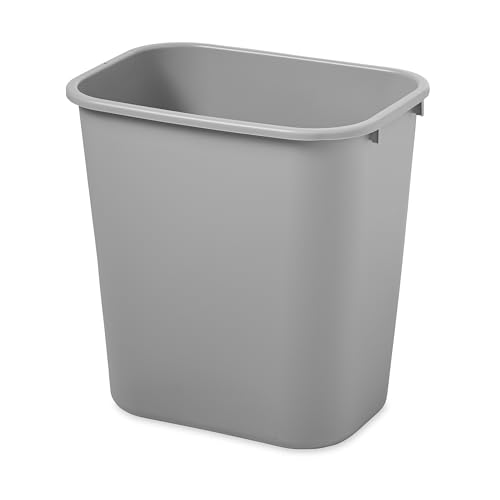
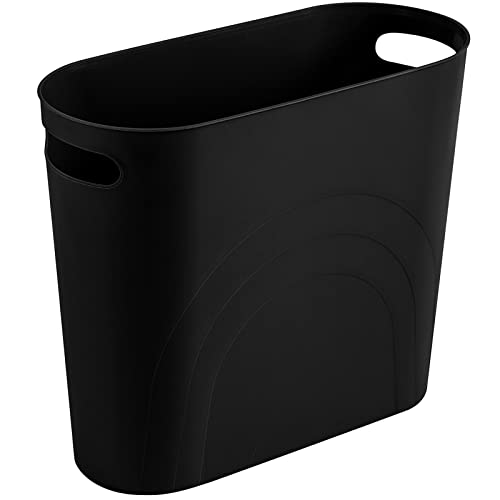
A rectangular profile is usually easier to position against a wall or next to a toilet. The Rubbermaid Vanity has a documented 7-inch width and rectangular shape, and the iDesign Mono uses a tapered rectangular form intended for cabinets and desks. Round models can work well in corners, but they may use floor space differently. The selected products show that a compact bin is not automatically short: the iDesign reaches 12 inches high, while the TIPGO 2.1-Gallon model is listed at 8.8 inches high.
Capacity should match the waste produced in the room. A 1.5- or 1.6-gallon bin can be suitable for light bathroom or office waste and may encourage more frequent emptying. The 2.1- to 2.7-gallon options provide more room without moving into a large household-bin format. The Coeasy 3-Gallon Wicker Can with Liner offers the largest listed capacity among the selected products, but its decorative construction also has a larger footprint than the narrowest plastic designs.
Choose between covered and open-top designs
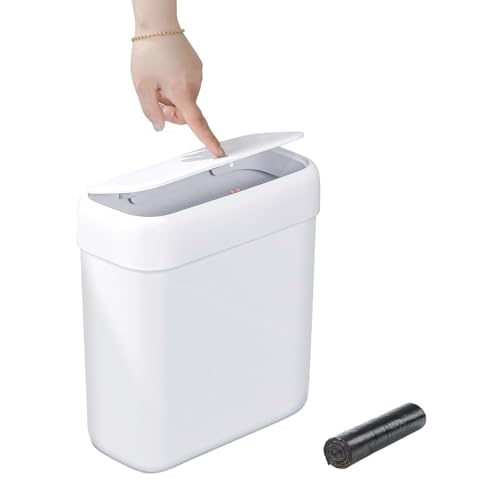
A lid is useful when you want to conceal waste or create a barrier between the contents and the room. The Cesun uses a foot pedal and soft-close lid, while the Purexa, TIPGO 2.6-Gallon Slim Pop-Up Can, MOPALL, and funest use press or pop-up mechanisms. The Coeasy adds a fitted integrated lid to a water-hyacinth exterior. These designs can be a better match for bathrooms, bedrooms, or homes where visible waste is distracting.
Lid mechanisms differ in daily use. A pedal model allows hands-free opening, and the Cesun also documents a stay-open feature for longer chores. Press-top models open from above without batteries, and the MOPALL documents a lid that can remain at 90 degrees. A removable lid, as listed for the TIPGO 2.6-Gallon and funest, can make liner changes and cleaning easier. A covered bin may be less immediately accessible than an open basket, so consider how often the container will be used and whether quick disposal is the priority.
Open-top bins are simpler. The Rubbermaid Vanity, Veelesa, TIPGO 2.1-Gallon, and iDesign Mono all avoid lid hardware. The Veelesa documents a 5.5-inch opening, and its rolled rim is described as helping protect hands and bags. These models are convenient for paper waste, tissues, and other dry refuse where visible contents and odor containment are not major concerns. The trade-off is that an open top does not conceal waste or provide the covered containment described for the lidded alternatives.
Compare materials and cleaning requirements
Plastic is common in this category because it is light and usually easy to wipe. The TIPGO 2.6-Gallon, MOPALL, funest, and iDesign products all document plastic construction or plastic components and removable lids. The Rubbermaid Vanity specifies a smooth inner surface, while the MOPALL lists a smooth surface that can be cleaned with a cloth or water. These details matter when the bin may receive damp bathroom waste.
Metal offers a different appearance and material profile. The Cesun lists an anti-rust, anti-fingerprint metal surface. The Veelesa uses stainless steel and describes a matte coating that resists fingerprints, scratches, and rust. The TIPGO 2.1-Gallon model also uses stainless steel and lists a rust-resistant finish. Metal can suit modern rooms, but the Veelesa notes that its body weighs about the current price, so it may be less lightweight than the plastic options.
Decorative wicker requires a different approach. The Coeasy uses a water-hyacinth exterior around a water-resistant plastic liner, so the liner rather than the woven shell is the documented place for waste containment and rinsing. This format can coordinate with boho or natural decor, but the woven exterior may call for more careful handling than a smooth plastic bin. Use the documented liner and avoid assuming that the natural exterior itself is waterproof.
Think about liners, access, and extra parts
A liner should stay in place and be reasonably easy to remove. The Coeasy has a removable liner with hidden handles. The Purexa uses a dual-bucket system that conceals liner edges and an air-press feature intended to help the bag fit closely against the inner bucket. The MOPALL lists bag-holder holes, and the Cesun has a removable inner bucket. These features can reduce the awkwardness of taking out a full bag, although the more specialized systems may require more steps than a basic open bin.
Extra included items can also affect setup. Purexa lists 75 drawstring bags and spare latches, while MOPALL lists a roll of trash bags and a replacement latch. The funest includes a spare latch. Treat these as documented package features, not as proof of long-term performance. For the simplest replacement routine, a removable lid or inner bucket is generally easier to understand than a concealed multi-part liner system.
Match the bin to the room
For a bathroom, prioritize the footprint, lid preference, and cleaning access. The Cesun is particularly feature-rich for hands-free use, while MOPALL and Purexa focus on narrow covered placement. In an office or bedroom, an open top such as the Rubbermaid Vanity or iDesign Mono may be sufficient and faster to use. For under-sink areas, compare height as carefully as width; the TIPGO 2.1-Gallon model is listed at 8.8 inches high, making it one of the lower options here.
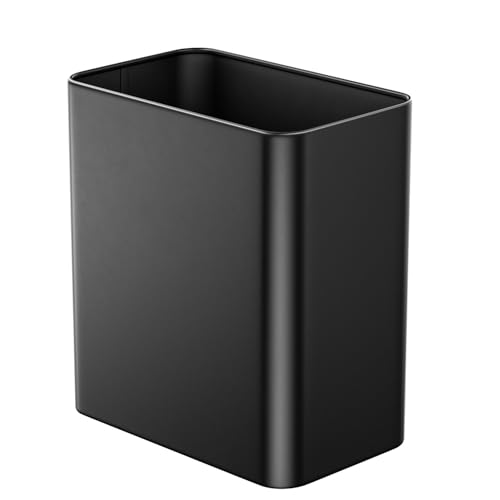
For decor-led spaces, the Coeasy adds a woven natural-material look and a covered top. For a metal finish, Veelesa offers an open-top stainless-steel format, and Cesun provides a matte-black lidded metal alternative. A small wastebasket can also serve as a recycling container or general organizer when the product description explicitly supports those uses, as with the iDesign and Coeasy listings. Do not assume that every bin is suitable for liquids, sharp objects, or heavy household refuse; the supplied specifications primarily describe light indoor waste use.
Final recommendation
Cesun 1.6-Gallon Soft-Close Bathroom Can ranks first overall in this specification-based comparison under the published weighted criteria.
Cesun 1.6-Gallon Soft-Close Bathroom Can is the first overall specification-based choice among these best small wastebaskets because it combines a narrow rectangular footprint, hands-free pedal, soft-close lid, stay-open function, anti-rust surface, and removable inner bucket. For the top small wastebaskets in a very narrow gap, choose MOPALL or Purexa after checking the complete available space. MOPALL is especially narrow at a listed 5.1 inches wide, while Purexa adds concealed liner management and an air-press bag expander.
Choose the TIPGO 2.6-Gallon, funest, or Coeasy when covered waste containment is more important than the simplest possible opening. Coeasy is the decorative choice, with a water-hyacinth exterior and removable liner. If you prefer an open top, the Rubbermaid Vanity is a straightforward compact pick, Veelesa brings a stainless-steel body and wide opening, TIPGO 2.1-Gallon suits lower placements, and iDesign offers a tapered plastic shape. The right selection depends on the measured space and whether you prioritize concealment, access, or easy maintenance.
Frequently Asked Questions
What size is best for a small bathroom?
A 1.5- to 2.7-gallon bin is a practical range represented by the selected products. Smaller capacities, such as the Rubbermaid Vanity at 1.5 gallons and Cesun at 1.6 gallons, can suit light waste and frequent emptying. A 2.6- or 2.7-gallon model provides more room while remaining compact. Measure the gap beside the toilet or vanity before choosing by capacity alone.
Are lidded wastebaskets better than open-top models?
Neither design is universally better. Lidded models such as the Cesun, Purexa, MOPALL, and TIPGO 2.6-Gallon can conceal contents and are described with odor or pet-related containment features. Open-top models such as the Rubbermaid Vanity, Veelesa, TIPGO 2.1-Gallon, and iDesign Mono offer quicker access and fewer parts. Choose a lid when concealment matters; choose an open top for fast disposal of mostly dry waste.
Which best small wastebaskets are easiest to clean?
Look for a smooth interior, removable lid, removable bucket, or removable liner. The Rubbermaid Vanity lists a smooth inner surface, while the TIPGO 2.6-Gallon and funest have removable lids. Cesun has a removable inner bucket, and Coeasy has a removable water-resistant plastic liner. These documented features can make cleaning and bag changes more manageable, though the outer materials still require care appropriate to their construction.
What should I measure before buying a narrow wastebasket?
Measure width, depth, and height at the exact placement point. Also check whether a lid needs clearance to open and whether a pedal can be reached. The narrowest listed widths among the selected covered designs include MOPALL at 5.1 inches and Purexa at 5.91 inches; the TIPGO 2.1-Gallon and Veelesa each list a 5.5-inch width. Confirm those dimensions against baseboards, plumbing, doors, and nearby furniture.
Can a decorative wicker wastebasket be used for more than trash?
The Coeasy listing explicitly describes uses including magazine holding, toy storage, and toilet-paper storage, while its removable plastic liner is intended for waste management. That makes it a flexible decor piece, but the supplied evidence does not establish suitability for wet laundry, liquids, or heavy objects. Use it for the documented light-storage purposes and keep the liner clean and dry as appropriate.